
"How do I start a new swimwear brand?"—a frequent question from aspiring fashion entrepreneurs. Successfully launching a swimwear brand requires a strategic blend of market research, custom design, and manufacturing partnership. First, understand your target market's preferences and demands. Conduct surveys and analyze trends to pinpoint what designs, colors, and functionalities are popular. Partnering with a reliable manufacturer, like Joysportwear, that offers eco-friendly fabrics and low MOQs can be crucial. Consider seeking suppliers who can assist with the transition from design to bulk production, focusing on ensuring both quality and sustainability. Certification standards such as OEKO-TEX and GRS further enhance brand credibility and appeal to environmentally conscious consumers. Each decision, from design to distribution, impacts the brand's market entry and growth potential. Navigating the complexities of launching requires thorough planning, making every step crucial to achieving success."
How do I identify trends in the swimwear market?
To effectively identify trends in the swimwear market, start by leveraging tools like Google Trends and industry-specific reports. These resources provide real-time data on what consumers are currently searching for and purchasing. For instance, Google Trends can highlight spikes in interest for sporty bikinis or animal print swimsuits, allowing you to tailor your designs accordingly.
Next, delve into consumer preferences through targeted market research. Gathering data via social media platforms where your target demographic is active is essential. Engage in direct conversations through polls or surveys to understand their likes and dislikes, which can guide the development of swimwear features that resonate with your future customers.
Understanding seasonal design changes is critical to predicting upcoming styles. Swimwear trends often reflect broader fashion trends, influenced by seasonal colors and patterns. Keep an eye on fashion weeks and major retail releases to spot innovations like cut-out designs or one-piece swimsuits that may take over the coming season.
Sustainability trends are increasingly significant in fabric and design choices. OEKO-TEX and GRS-certified fabrics are becoming standard preferences for eco-conscious consumers. Incorporating recycled materials not only meets customer expectations but also positions your brand as environmentally responsible, a key differentiator in today’s market.
Lastly, engage with potential customers beyond the digital realm. Attend trade shows and fashion expos to gauge firsthand the direction in which the industry is moving. Face-to-face interactions can uncover nuanced details about consumer desires that aren't obvious in online research.
What is the importance of choosing the right fabric?
Selecting the right fabric is critical for any swimwear brand, significantly impacting both the product's performance and sustainability profile. Eco-friendly fabrics like OEKO-TEX and GRS certified materials have become essential in the industry, providing assurance to consumers who are increasingly eco-conscious. These certifications denote that the fabrics have been tested for harmful substances and are made from recycled content, positioning brands to meet modern sustainability demands.
The durability of swimwear fabrics under stress is another pivotal factor. Swimwear is routinely exposed to stretching, chlorine, and salt water, demanding materials that maintain integrity and elasticity over time. Fabrics need to withstand multiple wash cycles and prolonged exposure to sunlight without degrading, aligning with standards like ISO 105‑B02 for light fastness and ISO 105‑E03 for chlorinated water resistance, which measure their endurance.
Additionally, fabric choice directly influences the functionality and feel of swimwear. The right textile contributes to comfort, fit, and flexibility, foundational qualities for pieces like bikinis and sports swimwear. A misstep here can translate to dissatisfied customers and returns, affecting brand reputation and profitability.
Color retention and resistance to elements are equally important. High-quality fabrics ensure vibrant hues don’t fade quickly, enhancing the longevity and visual appeal. Consideration for these aspects is vital, particularly for swimwear that promises aesthetic durability.
Lastly, fabric selections can majorly influence production costs and final pricing. While high-grade, certified materials often come at a premium, investing in them can justify a higher retail price by offering value in sustainability and performance. Thus, choosing the right fabric is not just a matter of quality, but a crucial cost and branding decision.
What are the steps in the swimwear production process?
The steps in the swimwear production process begin with initial design and prototyping based on thorough market research. Identifying key trends and consumer preferences sets the stage for creative and successful designs. Designers craft key silhouettes and styles that resonate with targeted demographics and current aesthetics. This rigorous stage helps shape the swimwear's ultimate direction, ensuring it matches brand goals and market needs.
Next, material selection is crucial. Choosing fabrics that meet both functional and aesthetic goals is essential. Factors like stretchability, colorfastness, and water resistance must align with design intentions. Eco-friendly options like OEKO-TEX and GRS-certified fabrics are popular choices among brands focusing on sustainability.
Sampling involves creating initial pieces to refine designs and evaluate fabric performance in real-world conditions. This stage allows for testing fabric durability, stretch recovery, and color retention, and it may involve multiple iterations to perfect the final design.

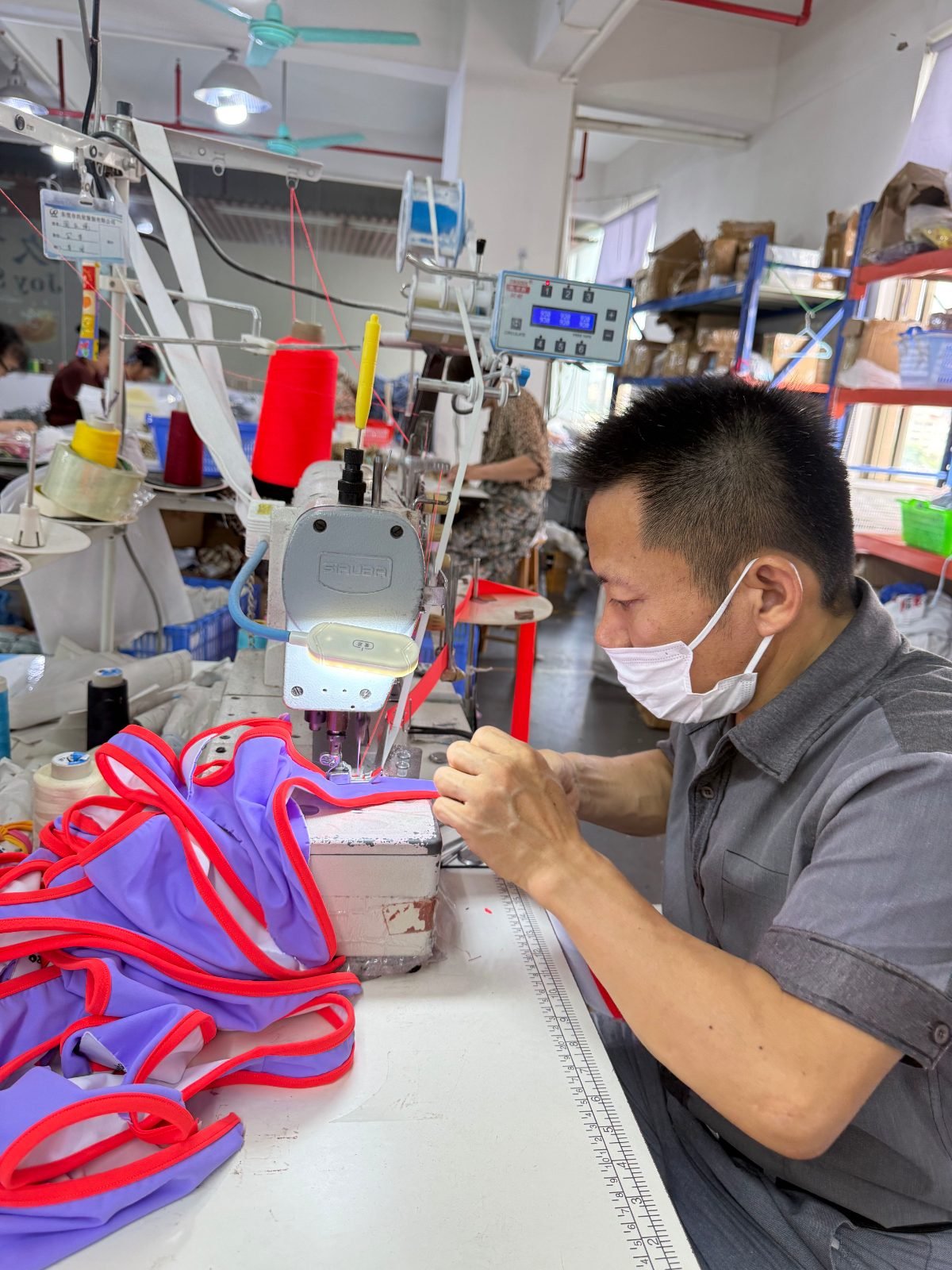
Bulk production encompasses assembly, stitching, and other manufacturing techniques. These processes must be efficient and precise to uphold quality standards. Using high-capacity sewing machines and skilled laborers ensures the manufacturing processes meet design specifications seamlessly.
Quality control is non-negotiable. This stage implements rigorous checks at different production phases to guarantee consistency and adherence to set sizes, finishes, and functionality. Inspections may involve checking seam integrity, fabric quality, and measurement accuracy, ensuring each piece upholds the brand's quality promise.
A thorough understanding of these processes is crucial for successful swimwear production. For further insights, explore our comprehensive resource on Navigating Custom Swimwear Production in Dongguan.
Swimwear Production Steps Overview
| Step | Purpose | Tools Required | Decision Point | Key Outcome |
|---|---|---|---|---|
| Design & Prototyping | Capture market demand | Sketches, 3D software | Evaluating initial designs | Aligns with market needs |
| Material Selection | Aligning functionality with design goals | Fabric samples, testing | Assessing fabric certifications | Ensures fabric performance |
| Sampling | Refine designs based on tests | Prototype tools | Identifying and refining fit and fabric performance | Prototypes achieve final product standards |
| Bulk Production | Efficiently assembling products | Sewing machines | Determining production approach | Products match design specifications |
| Quality Control | Maintaining product standards | Inspection tools | Setting quality benchmarks | Consistent product quality assurance |
How does MOQ affect a startup swimwear brand?
Minimum Order Quantity (MOQ) plays a pivotal role in determining a startup swimwear brand's scalability and overall financial strategy. Emerging brands, often with constrained budgets and an evolving design portfolio, find MOQs integral to planning their product launches. A lower MOQ allows startups to test different styles in the market without overcommitting to inventory that might not sell quickly. It’s especially beneficial for brands aiming to offer a diverse product range to gauge consumer preference before diving into large-scale production.
Partnering with manufacturers that provide low MOQs, like Joysportwear, can provide several advantages. These manufacturers help startups minimize initial financial outlays, balancing cash flow effectively. Lower MOQs also reduce the risk of overproduction, thereby limiting potential waste and storage costs. This strategy can be crucial in maintaining operational agility and enabling the business to pivot according to consumer response and trends. Furthermore, manufacturers with flexible MOQs often foster a more collaborative relationship, enhancing the startup's ability to iterate on designs swiftly.
However, understanding the implications of MOQs on pricing is essential. Typically, higher MOQs could lead to reduced production costs per unit due to economies of scale. Startups must assess the trade-off between the per-unit pricing benefits of higher MOQs and the cash flow or inventory risks presented by larger orders. Therefore, negotiating favorable MOQ terms is critical. Startups should explore options such as bundling different product styles within the MOQ or arranging staggered production schedules. Additionally, leveraging market demand information can aid in negotiating MOQs that align better with expected sales velocities.
Exploring adjusted MOQ options based on real-time market demand involves close monitoring and flexibility. As a startup, maintaining dialogue with suppliers and remaining open to revising order quantities as market insight becomes available is vital. Ultimately, understanding and strategically managing MOQs can position a startup brand for sustainable and adaptable growth. For more insights, see our guide on Navigating MOQ Challenges for Emerging Swimwear Brands.
How do I choose the right swimwear manufacturer?
Choosing the right swimwear manufacturer involves several critical factors that can significantly influence the success of your brand. Firstly, assess the manufacturer's expertise in swimwear production. A manufacturer with extensive experience in crafting bikinis, one-piece swimsuits, and cover-ups will bring valuable insights, particularly regarding design nuances and production efficiency.

Next, consider the manufacturer's flexibility regarding Minimum Order Quantities (MOQ). For startups, partnering with a manufacturer that offers low MOQs, like Joysportwear, allows for more agile production without the financial strain of overstocking. Furthermore, explore eco-friendly options. Manufacturers offering sustainable practices, such as using OEKO-TEX or GRS-certified fabrics, enhance your brand's credibility and appeal to environmentally conscious consumers.
Evaluating production capabilities is equally vital. Look for manufacturers with robust sampling processes, enabling you to refine your designs and ensure fabric performance aligns with your expectations. Joysportwear's detailed Navigating OEM Swimwear Manufacturing in China: A Case Study offers insight into efficient sampling and bulk production methods.
Effective communication is essential for collaboration. Ensure the supplier has clear and responsive communication standards. This transparency helps address potential issues swiftly and improves overall project management.
Understanding turnaround times and quality assurances is crucial. Discuss with the manufacturer their typical production timelines and quality control measures to ensure they align with your brand's needs.
Selecting the right swimwear manufacturer is a foundational step in building a successful brand. A careful evaluation of these factors will set the stage for a productive and reliable partnership.
What pricing strategies work for new swimwear brands?
When launching a new swimwear brand, selecting the right pricing strategy is critical to ensure market competitiveness and sustainable growth. Two primary methods to consider are cost-plus pricing and competitive pricing. Cost-plus pricing involves calculating production costs and adding a markup to ensure profitability. This straightforward approach relies on precise cost estimations, making it suitable for tightly controlled manufacturing processes.
In contrast, competitive pricing requires analyzing the pricing models of existing competitors within your target market. This strategy allows your brand to position itself appropriately, whether by matching, exceeding, or undercutting rival prices. The key is to gather data on what similar products are sold for and identify where your brand can offer added value or differentiation.
Premium versus economy pricing can significantly impact brand perception and customer loyalty. Brands opting for premium pricing focus on high-quality materials, exclusive designs, or scarcity to justify higher prices, often appealing to a more affluent audience. Conversely, economy pricing aims to attract a broader consumer base by offering affordability without compromising too much on quality. Each approach comes with trade-offs in terms of market reach and brand image.

Moreover, aligning brand positioning with pricing is vital for long-term success. Consider how your pricing strategy complements your brand's story, values, and target audience. For instance, a brand emphasizing sustainability may incorporate costs of eco-friendly materials into its pricing but justify this with transparent storytelling and advocacy.
Finally, consider the effect of retail versus direct-to-consumer (DTC) sales on pricing strategy. Retail arrangements often involve markups to account for distributor costs but can increase brand exposure. DTC can offer lower prices and higher margins by cutting out the middleman—provided the brand effectively manages marketing and logistics.
Pricing Strategy Options for Swimwear Brands
| Strategy | Description | Advantages | Disadvantages | Implementation Tips |
|---|---|---|---|---|
| Cost-Plus Pricing | Adds a markup to production costs to ensure profit margins | Simple, ensures covering costs | Doesn't account for competitors' pricing | Accurately calculate all production costs |
| Competitive Pricing | Sets prices based on competitor analysis | Market relevance, responsive | Requires thorough market analysis, may lead to price wars | Keep updated with industry pricing trends |
| Premium Pricing | Higher prices positioning for exclusivity | Perceived quality, attracts affluent customers | Limited market segment, higher upfront costs | Justify through quality or unique designs |
| Economy Pricing | Offers lower prices to capture mass market | Broad audience appeal, competitive | Lower profit margins, risk of quality compromises | Maintain efficient production to control costs |
| Retail Sales Pricing | Includes retail markups for retailer margins | Widens reach through retail channels | Reduced profit margins per item | Collaborate with retailers to optimize shelf placement |
| Direct-to-Consumer | Sells directly via online platforms, lower prices without middlemen | Higher margins, customer direct feedback | Requires strong marketing and logistics capabilities | Build robust online presence and direct marketing strategies |
How can marketing impact the success of a swimwear launch?
Marketing plays a pivotal role in the success of a new swimwear brand launch by crafting a compelling brand story and echoing it across digital platforms. Developing a cohesive brand story involves more than just catchy slogans; it rallies a narrative that resonates with the target audience's lifestyle aspirations. A strong visual identity, tied into this narrative, ensures that everything from the website to the packaging communicates the brand's unique value proposition. For swimwear brands, where aesthetics are key, careful consideration of colors, logos, and imagery can help define and enhance brand personality.
Social media platforms are crucial in engaging and growing an audience for new swimwear brands. Platforms like Instagram and TikTok, known for their visual content, are ideal for showcasing the style and functionality of swimwear through engaging posts, stories, and reels. Regular interaction via comments, direct messages, and live sessions can cultivate a community around the brand, building loyalty and driving word-of-mouth marketing.
Collaborations with influencers have shown to magnify reach significantly. By partnering with influencers who align with the brand's image, brands can access their established audience base, effectively lending credibility and expanding visibility. Such partnerships can manifest through sponsored posts, co-branded product lines, or influencer-led campaigns that excite and engage potential customers.
A digital-first marketing approach underscores the importance of online channels over traditional media. With the rise of e-commerce, swimwear brands benefit from digital campaigns that are both cost-effective and wide-reaching. This strategy allows for agile adjustments, real-time feedback, and targeted advertising, which are crucial in standing out in a competitive market. Tracking Return on Investment (ROI) from these efforts allows brands to gauge success and pivot strategies based on consumer behavior and market feedback, ensuring resources are utilized effectively.
By focusing on these facets of marketing, new swimwear brands can achieve more than just a product launch; they can secure a durable foothold in the market.
What are the common challenges when starting a swimwear brand?
Starting a swimwear brand poses several challenges, chief among them being the balancing act between creative design and cost management. New brands often grapple with the desire to create aesthetically unique pieces while managing production costs which can quickly escalate. This careful balance impacts the initial financial health of a budding brand, making strategic budgeting and cost forecasting essential.
Ensuring fabric sustainability without compromising on quality is another significant hurdle. Many consumers now expect swimwear to be made from eco-friendly materials, such as OEKO-TEX and GRS certified fabrics. These certifications, while critical, often come with higher costs. Brands must navigate sourcing these sustainable materials without surpassing their cost parameters, as well as ensuring consistent quality across suppliers.
When launching, meeting consumer expectations with the first product line is critical for building brand credibility. First impressions in the market matter, and any missteps can tarnish a brand's reputation. This necessitates meticulous product development and market testing, ensuring that the fit, feel, and style align with consumer demands.
Navigating logistics and supply chain management adds another layer of complexity. Ensuring timely production and distribution requires establishing reliable partnerships and maintaining a transparent supply chain. New brands often struggle with managing lead times and distribution logistics, which can impede their ability to meet sales demand and deliver on customer promises.
Handling customer feedback and making subsequent product adjustments is vital for sustained success. Feedback loops need to be swift and effective, allowing brands to refine their designs and address any initial shortcomings promptly. Regularly incorporating customer insights not only helps improve product offerings but also fosters a positive brand-consumer relationship.
Checklist for launching a swimwear brand
Launching a swimwear brand is a multifaceted project that requires a clear strategic plan and attention to detail. Here's your comprehensive checklist to set the foundation for success:
-
Conduct Market Research and Define Target Audience: Begin by delving into comprehensive research to grasp market dynamics and consumer preferences. Identify your target demographic by considering factors such as age, gender, lifestyle, and socio-economic status. Use tools like demographic surveys and social media analytics to refine your audience profile. Understanding who you're designing for can shape every decision from design to marketing.
-
Choose a Reliable Manufacturer Who Meets Certification Standards: Partner with a manufacturer like Joysportwear who not only aligns with your production needs but also upholds international standards like OEKO-TEX and GRS for sustainable production. Verifying certifications can ensure compliance with global eco-friendly practices, enhancing brand credibility.
-
Develop a Unique Brand Identity and Design Portfolio: Cultivate a brand identity that resonates with your audience and distinguishes your product line. Create a design portfolio reflecting your brand's ethos, with prototypes displaying innovation and trend alignment. Engage a professional designer to capture your envisioned style consistently across your range.
-
Establish Pricing and Marketing Strategies: Define a pricing model that balances profitability with market competitiveness. Consider strategies like cost-plus pricing to ensure margins align with financial goals while remaining attractive to consumers. Develop marketing initiatives that underscore your brand story, utilizing platforms like Instagram and TikTok for targeted engagement.
-
Plan for Scalability and Future Growth: Prepare for scaling by implementing flexible manufacturing processes and anticipatory cash flow management. Evaluate your supply chain's scalability, ensuring that increased demand can be met without compromising on quality or delivery timelines. Anticipate future trends and regularly update product lines to stay relevant and meet consumer expectations.
Each checklist item is a step towards building a resilient and responsive swimwear brand ready to meet the market's demands.
Deciding your next steps for a successful launch
As you steer towards launching your new swimwear brand, it’s crucial to continuously reflect on your brand’s vision and mission, ensuring each decision harmonizes with your core identity. Assess the progression of your initial plans and be prepared to recalibrate strategies to remain aligned with market demands. Prioritize your next actions based on current resources—focusing on aspects that are most developed. Make sure every phase, from design to marketing, communicates your brand’s essence. For specialized manufacturing guidance, consider seeking expert advice tailored to your brand's goals and manufacturing needs.
FAQ: Launching a New Swimwear Brand
What certifications should a new swimwear brand consider?
New swimwear brands should look for certifications like OEKO-TEX and GRS to ensure fabrics are eco-friendly and safe for consumers. These certifications enhance marketability and appeal to environmentally conscious customers.
How can I manage production costs effectively?
To manage production costs effectively, negotiate low MOQs, source eco-friendly materials, and streamline the design process to reduce sampling rounds. Building a strong relationship with a reputable manufacturer can also help to optimize costs.
What are the initial steps in designing a swimwear line?
Initially, research market trends and consumer preferences. Create sketches and prototypes based on findings. Seek insights into eco-friendly fabrics and production methods from your suppliers to refine your designs and processes effectively.
How important is social media in launching a swimwear brand?
Social media is crucial for brand exposure, consumer engagement, and feedback collection. Platforms like Instagram and TikTok allow brands to showcase products visually, connect with influencers, and reach global audiences quickly.