
In a market saturated with flat, printed synthetics, the demand for tactile depth and structural substance has reshaped the landscape of premium swimwear. Modern design has moved beyond the simple constraint of “smooth stretch,” embracing materials that offer a sensory experience. Chief among these elevated textiles is Jacquard swimwear fabric.
Unlike standard sublimation prints that sit on top of a base layer, Jacquard integrates design directly into the physical DNA of the textile. This architecture transforms swimwear from basic beach attire into a structured, high-fashion garment.
Defining the Jacquard Weave in Swimwear
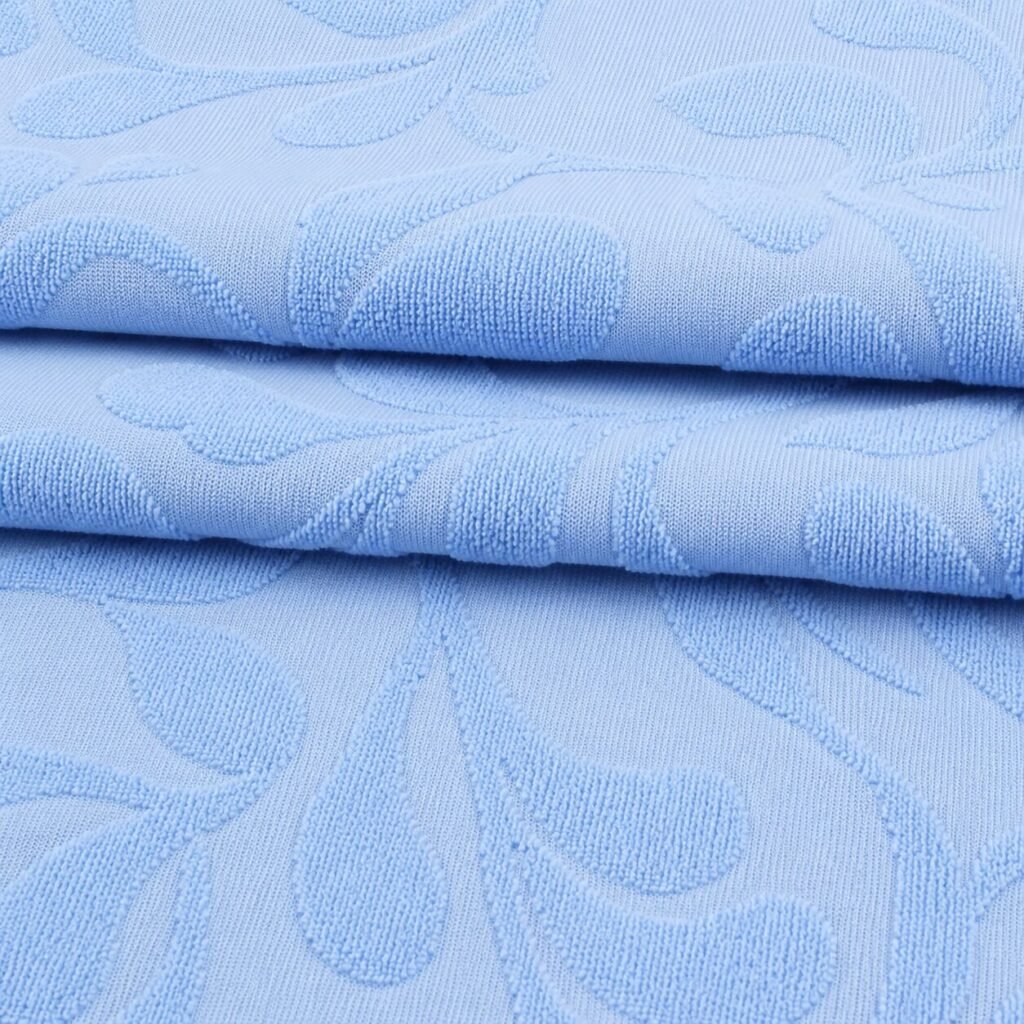
Named after Joseph Marie Jacquard’s 1804 automated loom invention, Jacquard is not a specific fiber, but a highly sophisticated method of weaving. In swimwear applications, this technique is adapted for high-speed, high-elasticity circular or warp knitting machines, utilizing specialized synthetic yarn blends—most commonly nylon-spandex or polyester-spandex.
By manipulating individual needles during the knitting process, alternate stitch types (such as knit, tuck, and float stitches) to create raised, three-dimensional motifs. The result is a dual-layered, tactile surface where geometric patterns, ribbing, florals, or abstract textures are physically part of the fabric’s engineering.
Key Features of Jacquard Swimwear Fabric
Choosing a jacquard weave introduces several performance and visual upgrades that set it apart from traditional matte or shiny tricot fabrics.
Shape Retention
Standard swim fabrics rely entirely on elastane tension to shape the body. Jacquard, due to its complex interlocking weave, naturally possesses a higher weight—typically ranging from 210 to 260 GSM (Grams per Square Meter).
This added density provides natural compression, acting as a gentle, sculpting body architecture that retains its shape even when wet, preventing the sagging common in lower-grade materials.
2. Pattern Stability
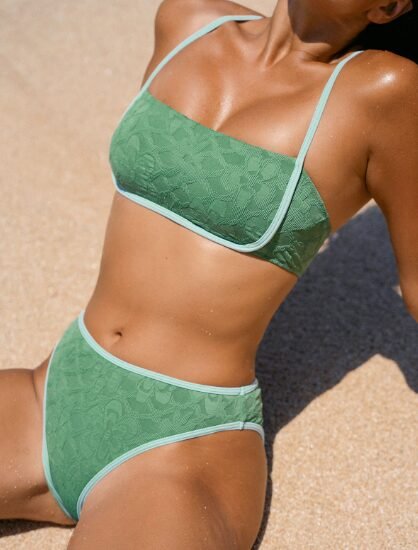
When a traditional printed bikini or one-piece stretches across curves, the printed surface can “white out”—a phenomenon where the base fabric shows through, distorting the design and making the colors look washed out.
Because a Jacquard pattern is structural, the design expands uniformly with the stretch, maintaining color richness and depth across all body types.
3. Durability and Colorfastness
Surface prints eventually succumb to the abrasive environments of UV radiation, pool chlorine, and ocean saltwater, leading to peeling, cracking, or fading. Jacquard yarns are typically solution-dyed or yarn-dyed before being knitted. Because the color and pattern are structurally embedded, they boast superior colorfastness and resist surface wear through years of heavy use.
4. More Design Value Without Extra Trims
Jacquard can make a simple swimsuit look more developed without adding hardware, contrast binding, embroidery, or complex cut lines.
This is useful when the design direction is clean but not plain. The fabric itself becomes the main design detail, which helps keep the garment visually strong while reducing unnecessary decoration.
Challenges of Jacquard Swimwear Fabric
While Jacquard fabric offers undeniable luxury and structure, its complex engineering introduces specific limitations that both designers and discerning consumers must consider.
1. Increased Snagging and Pilling Risk
The very element that gives Jacquard its beautiful dimension—the raised, floating stitches—also makes it vulnerable to structural damage. Unlike flat-woven tricot, the textured loops of Jacquard are prone to catching on rough surfaces, such as poolside concrete, wooden decks, or coarse velcro from beach bags. Once a thread is pulled, repairing the disrupted pattern can be exceptionally difficult.
2. Higher Production Costs and Price Points
From a manufacturing perspective, Jacquard is not a budget-friendly textile. Setting up a Jacquard knit machine requires intricate programming and specialized precision, resulting in lower yield rates and longer production timelines compared to standard solid fabrics.
Additionally, the premium yarn blends required to achieve the depth of texture mean a significantly higher cost per yard, which ultimately reflects in the premium retail price of the final garment.
3. Extended Drying Times
Because Jacquard fabrics feature a multi-layered weave and a higher weight (often exceeding 240 GSM), they naturally trap more water within their structural pockets. Consequently, a Jacquard swimsuit takes noticeably longer to air-dry than a lightweight, flat-surfaced nylon-spandex bikini. For active swimmers, this slower evaporation rate can sometimes be a practical inconvenience.
4. Avoid Over-design
Due to its inherent density and thickness, complex techniques should be avoided when used in highly intricate, delicate swimwear designs. Techniques such as fine ruching, complex micro-straps, or multi-layered ruffles can quickly become bulky and heavy, losing their intended delicate aesthetic. It performs best when tailored into clean, structured silhouettes rather than fluid, fluttery designs.
When to Use Jacquard Swimwear Fabric
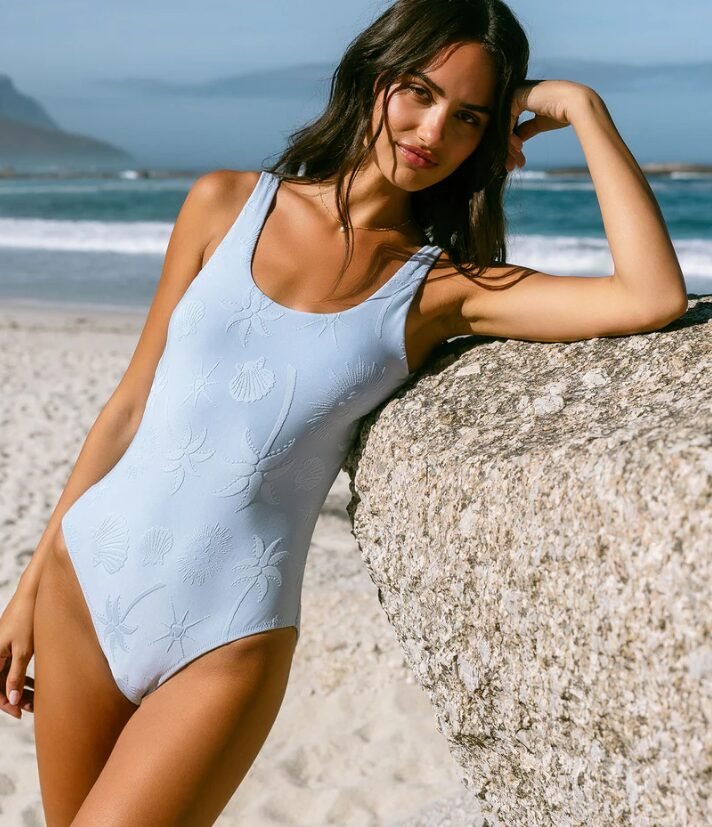
While Jacquard is an elite choice, its unique properties mean it is better suited for specific creative visions and design contexts than others.
Elevated Minimalism & Quiet Luxury
For designs aiming for sophisticated understatement, Jacquard effortlessly replaces loud, distracting prints with a subtle, rich texture that creates an inherently high-end aesthetic. This makes it the premier choice for sculpted one-pieces, high-waisted neutral bikinis, and upscale resort crossover wear.
Modern Retro Revival
When a collection calls for vintage charm, Jacquard perfectly replicates the heavy, structured look of mid-century beach glamour without sacrificing modern stretch and recovery. It provides the ideal weight and tactile feedback for underwire tops, balconette cuts, and fine-waffle or houndstooth textures.
Seamless Resort-to-Street Transitions
Because its rich, apparel-like texture mimics luxury ready-to-wear clothing rather than shiny, synthetic athletic gear, Jacquard blurs the line between swim and fashion. It is exceptionally well-suited for bodysuit-style swimwear meant to be paired directly with high-waisted linen pants or flowing silk skirts.
When to Reconsider:
- High-Performance Athletics: For competitive racing or intensive surfing, the higher GSM and textured surface of Jacquard can create slight hydro-dynamic drag. Smooth, lightweight compression tricots remain the industry standard for raw speed and athletic utility.
- Complex, Multi-Colored Graphics: Jacquard shines in monochromatic textures, tonal variations, or limited-palette geometric designs. If a collection relies on hyper-detailed, multi-colored tropical illustrations or photorealistic art, digital sublimation printing on flat fabric is required.
The 2026 Material Shift: As the global market pivots toward circular fashion, look for Jacquard engineered with bio-based or recycled polyamides (rPET) blended with next-generation biodegradable elastane. These combinations provide the identical, premium weight of traditional Jacquard while meeting modern environmental demands.
Jacquard vs. Other Swimwear Fabrics
| Fabric Type | Main Feature | Best Use |
|---|---|---|
| Jacquard swim fabric | Built-in texture or pattern | Premium solids, subtle motifs, resort swimwear |
| Ribbed swim fabric | Linear raised texture | Minimal bikinis, sporty styles, clean basics |
| Crinkle swim fabric | Puckered high-stretch surface | Flexible sizing, simple silhouettes, relaxed swimwear |
| Smooth swim fabric | Flat surface | Digital prints, classic swimwear, performance styles |
| Terry swim fabric | Soft towel-like texture | Retro swimwear, beachwear-inspired pieces |
Jacquard is more pattern-flexible than ribbed fabric and more structured than crinkle fabric.
FAQ
Is jacquard fabric good for swimwear?
Yes, jacquard fabric can be good for swimwear when it is made with suitable stretch fibers and tested for swimwear performance.
Is jacquard better than ribbed swim fabric?
Jacquard is not always better than ribbed fabric. Ribbed fabric gives a clean linear texture, while jacquard can create more varied patterns.
Does jacquard swimwear fabric cost more?
Jacquard swimwear fabric often costs more than basic smooth swim fabric because the structure is more complex.
Conclusion
Jacquard swimwear fabric represents the perfect marriage of heritage craftsmanship and high-performance textile engineering. By providing innate structure, long-term durability, and Textured surface, it transforms the beach experience into a high-fashion statement.
Whether curating a luxury resort line or seeking a piece that offers superior fit and longevity, investing in woven texture is a definitive step up in quality.