
For emerging swimwear brands and established labels alike, the bridge between a stunning design concept and a market-ready product is often built on printing technology. Among the various methods available in modern swimwear manufacturing, sublimation printing has emerged as the industry gold standard for creating vibrant, durable, and high-performance pieces.
However, moving from a digital file to a perfectly saturated fabric requires more than just a press. It requires an understanding of how chemistry, heat, and textile science intersect.
In this guide, we break down the technical nuances of sublimation that every brand should consider when planning their next collection.
How Sublimation Works
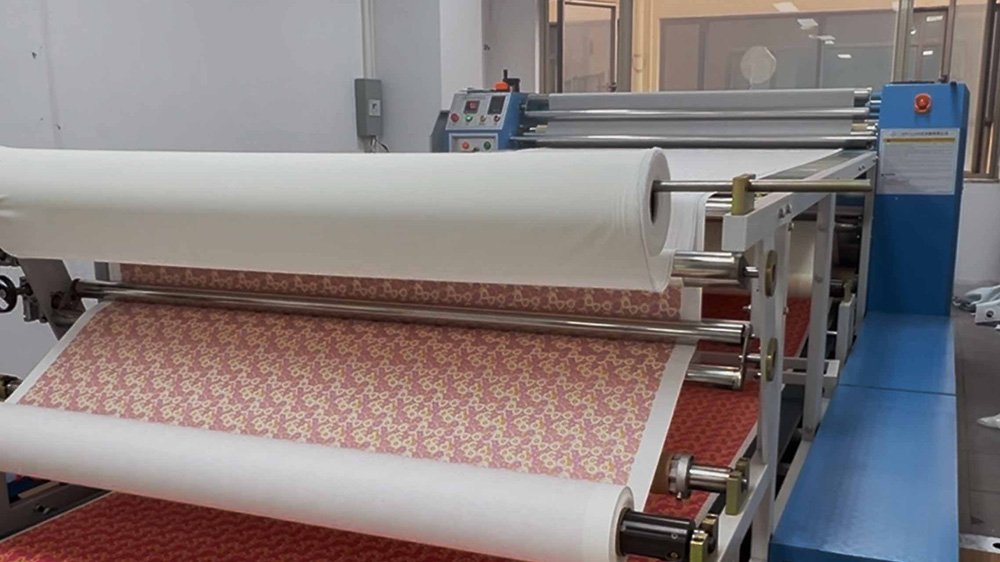
Unlike traditional screen printing, where ink sits on top of the fabric, sublimation is a molecular process. Using heat (typically between 380°F to 400°F) and pressure, the ink is converted from a solid into a gas, bypassing the liquid state.
In this gaseous state, the ink penetrates the pores of the synthetic fibers. Once cooled, the ink reverts to a solid, becoming an integral part of the fabric’s DNA. This results in a print that is virtually impossible to peel, crack, or wash away—a non-negotiable requirement for garments exposed to the harsh conditions of sun, salt, and chlorine.
Why Sublimation is the Preferred Choice for Swimwear Brands
Swimwear fabrics are typically elastic and form-fitting, which makes traditional printing methods less effective. Sublimation printing adapts well to these conditions because it does not interfere with fabric performance.
1.Unlimited Design Complexity
For brands focusing on intricate florals, geometric patterns, or photographic prints, sublimation offers unparalleled freedom. Since it is a digital process, there are no “per-color” screen costs.
You can utilize the entire CMYK spectrum, including complex gradients and micro-details that would be lost in other printing methods.
2. Zero “Hand-Feel”
In the manufacturing space, “hand-feel” is a critical quality indicator. Because the dye is embedded inside the fiber, the printed areas of the swimwear remain as soft and elastic as the unprinted base fabric.
This ensures that the garment’s stretch and recovery properties—essential for a proper fit—are never compromised.
3. Exceptional Durability
Swimwear is subject to high-stress environments. Traditional prints can crack when stretched or fade after a few hours in a chlorinated pool. Sublimated dyes are chemically bonded to the polyester fibers, offering superior resistance to:
- UV Exposure: Reduced fading under intense sunlight.
- Chlorine & Saltwater: Maintenance of color vibrancy over time.
- Mechanical Stress: No “grinning” (where the white base fabric shows through when stretched) if executed correctly with high-density ink.
Fabric and Color Accuracy
The Necessity of Polyester
Sublimation only works on synthetic fibers, specifically polyester or polymer-coated substrates. In the swimwear world, this usually means Polyester/Spandex (Elastane) blends. While Nylon is a popular swimwear fabric, it does not “open” its pores to disperse dye as effectively as polyester, leading to lower color fastness.
For brands insisting on Nylon, DTG printing is a better choose , But it will be more expensive than dye-sublimation printing.
Color Management and Pantone Matching
One of the biggest challenges in bulk production is “metamerism”—where colors look different under different lighting. A professional manufacturer will use advanced RIP (Raster Image Processor) software to ensure that the digital file translates accurately to the fabric.
How to Prepare Designs for Sublimation Printing
File Format and Resolution
Recommended formats include:
- AI (vector files)
- PSD (layered files)
High resolution (300 DPI or above) is important to ensure print clarity.
Color Management
Design files are typically created in RGB but printed results may vary. Brands should:
- Expect slight color differences
- Request lab dips or sample verification
Layout for Swimwear Panels
Unlike flat garments, swimwear consists of multiple panels. Designs should be prepared accordingly:
- Placement prints require precise positioning
- All-over prints need panel adjustment
FAQ: Common Concerns in Swimwear Sublimation
Does sublimation affect the UPF rating of the swimwear?
No. Actually, the addition of sublimated dyes can often increase the Ultraviolet Protection Factor (UPF) of the fabric, as the pigments act as an additional barrier against UV rays.
Can we sublimate on dark-colored fabrics?
Sublimation is a transparent process. It works best on white or very light-colored base fabrics.
What is the Minimum Order Quantity (MOQ) for sublimated designs?
One of the greatest advantages of digital sublimation is its scalability. Unlike screen printing, which requires high MOQs to offset setup costs, sublimation allows for flexible runs, making it ideal for capsule collections and limited-edition drops.
Does sublimation printing fade in chlorine or saltwater?
High-quality sublimation prints are generally resistant to fading, especially when combined with performance-grade fabrics.
Conclusion
Sublimation printing offers swimwear brands a powerful combination of design flexibility and performance reliability. It allows for complex, high-impact visuals while maintaining the stretch, comfort, and durability required in swimwear.
Planning a custom printed swimwear collection? Contact us to discuss how our team can support your project with professional sublimation printing and swimwear manufacturing solutions.