
For fashion brands, the term “quick-drying” is more than just a marketing label—it is a functional requirement that defines the user experience. In an increasingly competitive swimwear market, understanding the technical details of quick-drying swim trunk fabrics is crucial for identifying products that strike a balance between performance, comfort, and durability.
This guide breaks down the material science, construction methods, and manufacturing considerations behind high-quality quick-dry swim trunk.
The Mechanics of Quick-Dry Technology
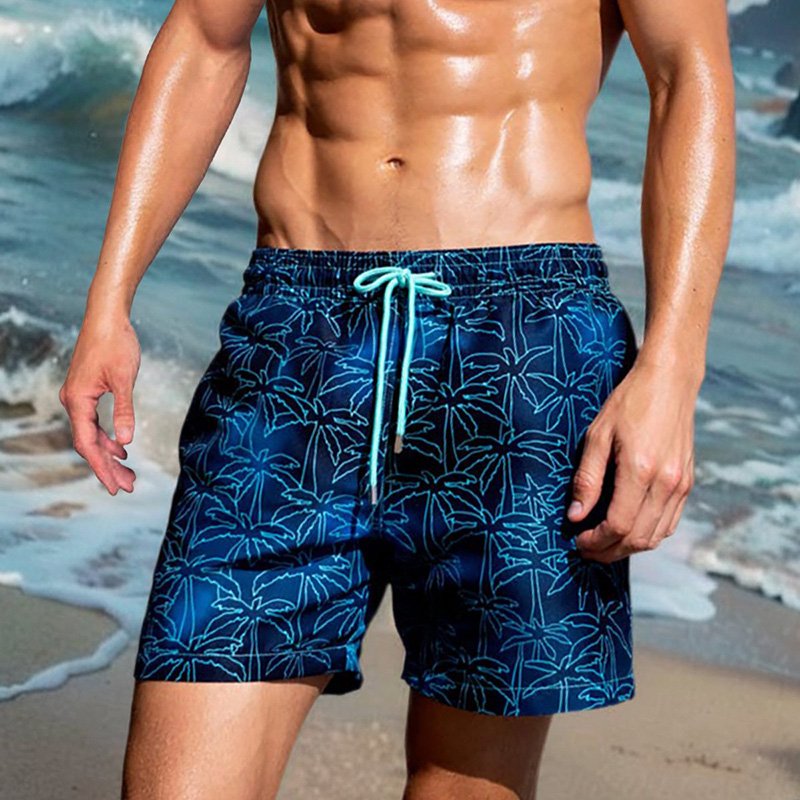
A common misconception is that “quick dry” implies a fabric that repels water entirely. In reality, it refers to a fabric’s ability to facilitate capillary action—moving moisture away from the skin to the surface of the garment, where it can evaporate rapidly.
For a swim trunk to be classified as high-performance quick-dry, it must address two factors:
- Low Absorbency: The fibers themselves must be hydrophobic (water-hating).
- Surface Area: The knit or weave must allow air to circulate and moisture to spread out rather than pooling in the fibers.
Core Fabrics: Polyester VS Nylon
Most professional-grade quick-dry swim trunks are engineered from synthetic polymers. As a manufacturer, we primarily work with two categories:
1. Polyester (The Industry Standard)
Polyester is the backbone of the swimwear industry for several reasons. It is naturally hydrophobic, meaning it absorbs very little water (typically less than 1% of its weight).
- Durability: Highly resistant to UV rays and chlorine, which prevents the “sagging” effect over time.
- Quick-Dry Performance: Because the fibers don’t soak up water, they dry significantly faster than natural or nylon-heavy blends.
- Printed Edge: Polyester takes sublimation printing exceptionally well, allowing for vibrant, fade-resistant custom patterns
2. Nylon (The Premium Feel)
Nylon, or Polyamide, is prized for its soft “hand-feel” and superior stretch.
- Aesthetics: It has a slight sheen and a more supple drape compared to polyester.
- The Trade-off: Nylon is slightly more hydrophilic (absorbent) than polyester. To achieve a “quick dry” rating, nylon fabrics must be treated with a Durable Water Repellent (DWR) finish during the final stages of manufacturing.
3. The Role of Spandex (Elastane)
While “100% Polyester” trunks are common for boardshorts, most modern swim trunks incorporate 5%–15% Spandex. This adds the 4-way stretch necessary for active use, though too much Spandex can slightly slow down drying times due to its dense molecular structure.
Advanced Finishing: DWR and Mechanical Wicking
Beyond the raw fiber, the manufacturing process dictates how the trunk performs in the real world.
Durable Water Repellent (DWR) Coatings
High-end quick-dry trunks often undergo a DWR treatment. This chemical finish causes water to bead up and roll off the surface (the “lotus effect”). For brands, it is vital to ensure that these coatings are PFC-free to meet modern environmental compliance standards in the EU and North America.
Mechanical Construction
The way the fabric is woven—often in a ripstop or twill weave—can increase the surface area. By creating a microscopic texture, we can “force” the water to spread thinner, which accelerates evaporation without relying solely on chemical additives.
Manufacturing Considerations for Brands
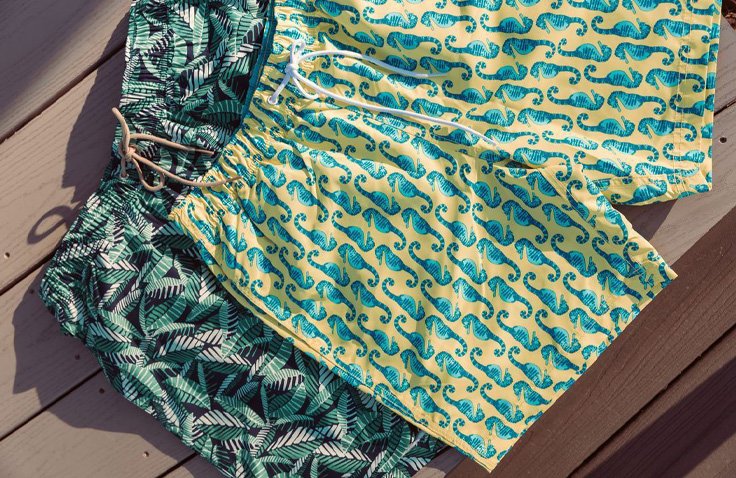
When sourcing quick-dry swim trunks, look beyond the “Quick Dry” tag. At the factory level, we evaluate several technical parameters:
- GSM (Grams per Square Meter): For swim trunks, a weight between 100g to 140g is ideal. Anything heavier tends to retain water; anything lighter may lack the necessary opacity and durability.
- Color Fastness: Fast-drying fabrics are often exposed to intense sun. We test for Grade 4 or higher color fastness to ensure the prints don’t migrate or fade.。
- Sustainability: With the rise of ESG (Environmental, Social, and Governance) requirements, Recycled Polyester (rPET)—derived from ocean-bound plastics—is now the preferred choice for many global brands, offering identical quick-dry properties to virgin polyester.
FAQ: What Professional Buyers Often Ask
Is 100% Polyester better than a Nylon/Spandex blend?
It depends on your target market. For performance boardshorts and high-intensity water sports, 100% Polyester (or a high-poly blend) is superior for speed-drying. For leisure “lifestyle” swimwear where comfort and hand-feel are prioritized, a Nylon/Spandex blend
How long should a “Quick Dry” trunk actually take to dry?
Under standard conditions (ambient temperature, moderate humidity), a high-quality quick-dry trunk should feel dry to the touch within 15 to 30 minutes after exiting the water.
Does the mesh lining affect the drying time?
Yes. We recommend using large-hole hydrophobic mesh for linings. Standard tight-knit mesh can trap water against the body, negating the quick-dry properties of the outer shell.
Partner With a Technical Swimwear Manufacturer
Selecting the right fabric is only the first step. Execution—from seam construction to the application of water-repellent finishes—determines whether your product meets the expectations of the modern consumer.
As a specialist swimwear manufacturer, we provide end-to-end OEM and ODM services, helping brands source the latest in moisture-management textiles and sustainable materials.