A modest swimsuit provides more body coverage than conventional swimwear while still being designed for swimming, movement, and time in the water.
Depending on the style, modest swimwear may include longer sleeves, higher necklines, extended hems, skirts, shorts, or full-length bottoms. But simply adding more fabric does not automatically create a good modest swimsuit. Coverage, fit, fabric weight, stretch, opacity, and movement all need to work together.
What Is a Modest Swimsuit?
A modest swimsuit is swimwear designed with increased coverage compared with traditional bikinis or standard one-piece swimsuits.
There is no single required silhouette. Different customers may define modest coverage differently based on personal preference, lifestyle, cultural considerations, sun protection, or comfort.
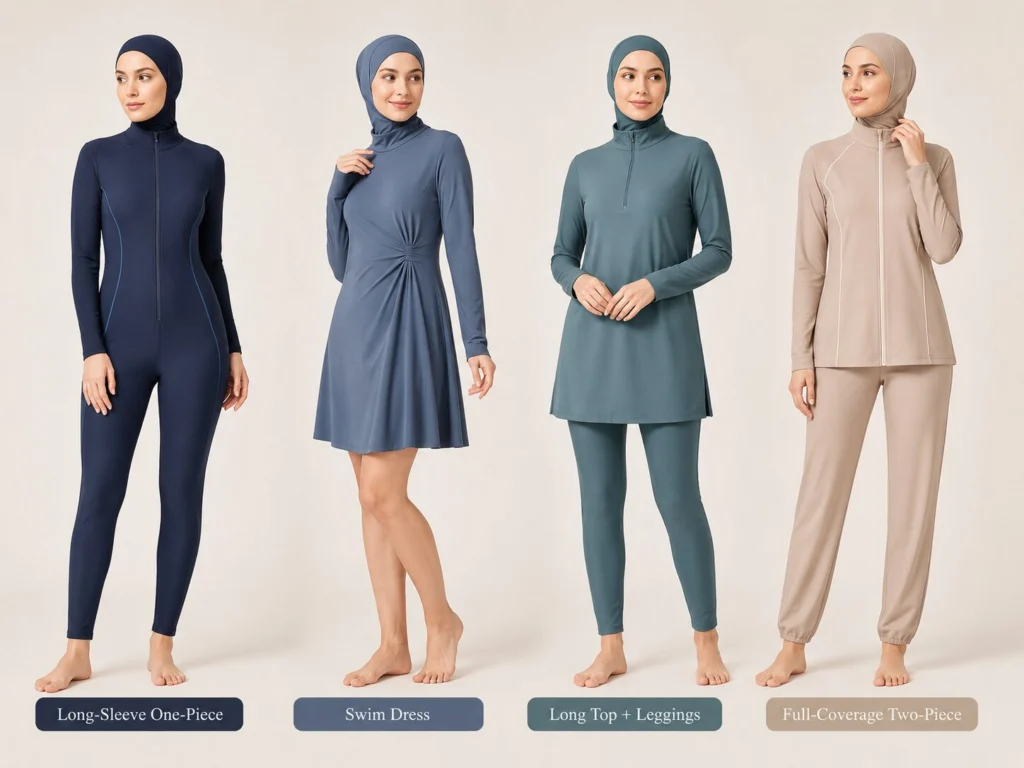
Common modest swimsuit designs include:
- long-sleeve one-piece swimsuits
- high-neck swimsuits
- swim dresses
- skirted swimsuits
- swim tops with shorts or leggings
- tunic-style swim sets
- full-coverage two-piece styles
This flexibility is important. Modest swimwear is better understood as a category based on coverage and function, rather than one specific swimsuit shape.
What Makes Swimwear “Modest”?
Coverage is the most obvious difference, but several design areas determine how modest a swimsuit actually feels when worn.
Neckline
Higher necklines provide more chest coverage and can also help keep the garment secure during swimming.
However, neckline shape still needs to allow comfortable movement. A neckline that is too tight may feel restrictive, while one that is too loose can shift when wet.
Sleeve Length
Modest swimsuits may use short sleeves, elbow-length sleeves, three-quarter sleeves, or full-length sleeves.
Longer sleeves increase coverage but also create more surface area in the water, so the fabric must remain light and stable when wet.
Torso Coverage
Some designs use longer tops or tunic-style silhouettes to provide additional coverage around the waist and hips.
The challenge is keeping the garment in position during swimming rather than allowing the hem to float, twist, or ride upward.
Bottom Coverage
Options can range from shorts to capri-length or full-length swim leggings.
The correct choice depends on the target customer and intended activity, but the garment still needs sufficient stretch for kicking, bending, and swimming movements.
A Modest Swimsuit Needs More Than Extra Fabric
One common misconception is that a regular swimsuit can simply be made longer to create a modest version.
In practice, greater coverage changes how the garment behaves.
A long-sleeve swimsuit has more fabric around the shoulders and arms. A tunic-style swimsuit has more material around the torso and hips. Full-length bottoms introduce additional fabric across the knees and legs.
These changes affect:
- water resistance
- garment weight
- stretch requirements
- pattern balance
- drying time
- fit during movement
For this reason, modest swimwear should be developed as its own product rather than treated as an extended version of a standard swimsuit.
Choosing Fabric for a Modest Swimsuit
Fabric selection becomes particularly important as coverage increases.
A fabric that works well for a small bikini may feel noticeably heavier when used across sleeves, a longer torso, and full-length bottoms.
Lightweight but Stable
The fabric should remain comfortable when wet without becoming excessively heavy.
At the same time, it cannot be so lightweight that it becomes transparent or loses its shape.
Stretch and Recovery
A modest swimsuit still needs enough stretch for swimming and body movement.
Recovery is equally important. After stretching around the elbows, knees, shoulders, and hips, the fabric should return toward its original shape instead of becoming loose.
This becomes more noticeable in garments with sleeves and long bottoms because more areas experience repeated movement.
Opacity
Opacity is especially important in high-coverage swimwear.
A fabric may appear opaque when dry but become more transparent when stretched or wet. Light colors often require additional consideration.
Testing should therefore consider the fabric under realistic conditions rather than judging opacity only from an unstretched dry swatch.
Drying Performance
More coverage usually means more wet fabric.
Using unnecessarily heavy fabrics, excessive lining, or too many layers can significantly increase drying time.
The goal is to achieve sufficient coverage without making the swimsuit feel waterlogged.
Lining a Modest Swimsuit
Not every area necessarily needs the same amount of lining.
For example, additional lining may be useful around the bust or front body for opacity and support, while fully double-lining every sleeve and leg could add unnecessary weight.
The lining strategy should depend on:
- garment color
- outer fabric opacity
- support requirements
- intended coverage
- silhouette
- wet performance
A well-designed modest swimsuit balances coverage and support without adding more layers than the product actually needs.
Fit and Movement Matter as Much as Coverage
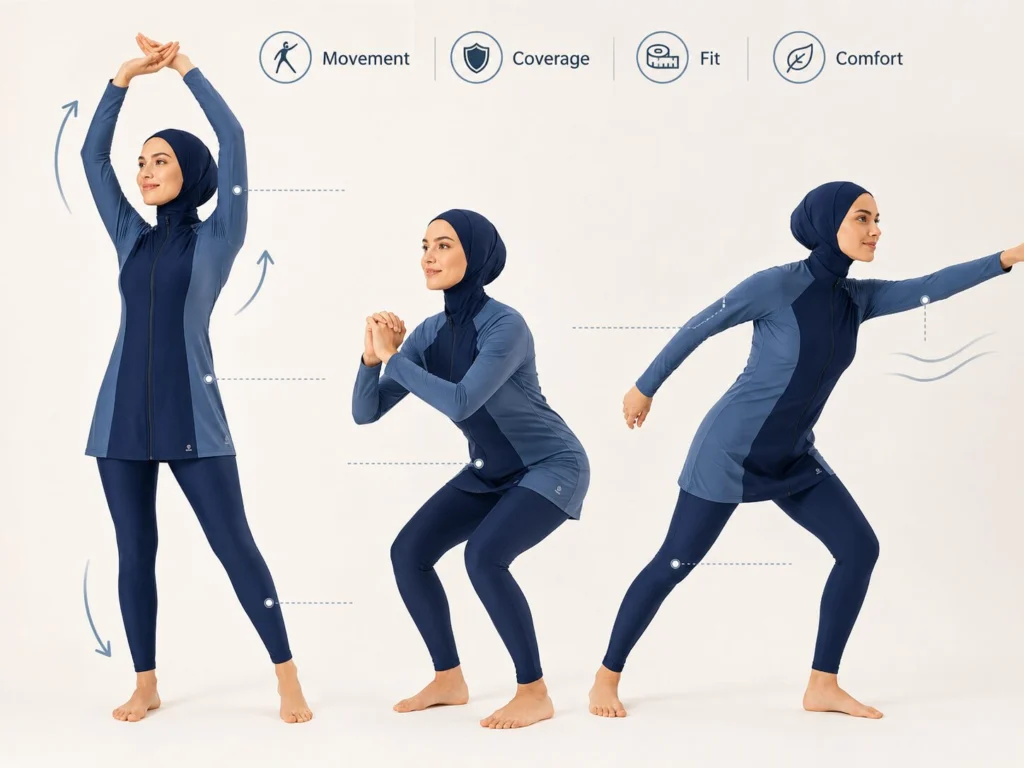
A modest swimsuit should provide coverage not only when the wearer is standing still, but also while moving.
This is where pattern development becomes important.
The garment may need to remain stable during:
- swimming
- stretching
- raising the arms
- bending
- sitting
- walking
- entering and leaving the water
For example, a long top may provide sufficient coverage when standing but ride upward when the arms are raised. Sleeves may look correct in a fitting but restrict shoulder movement during swimming.
Full-length bottoms can also develop wrinkles, pulling, or excess tension around the knees if the pattern does not accommodate movement correctly.
Good modest swimwear therefore needs to be tested dynamically, not only evaluated on a mannequin or in a static fitting.
Common Design Challenges in Modest Swimwear
Adding coverage creates several development challenges that are less noticeable in smaller swimwear styles.
Keeping Longer Tops in Position
Extended hems and tunic silhouettes can move differently in water.
Pattern shape, garment fit, and construction all influence whether the top stays close to the body or floats excessively.
Balancing Coverage and Drag
More fabric naturally creates more resistance in the water.
A modest swimsuit intended for active swimming may therefore require a closer silhouette than one designed mainly for beach or resort use.
Managing Sleeves
Sleeves must allow shoulder and arm movement while remaining secure.
Poor sleeve balance can create pulling around the armhole, underarm, shoulder, or neckline.
Preventing Excess Fabric
Modest does not have to mean oversized.
Too much fabric can create folds, drag, and instability in the water. The pattern should provide coverage through intentional shape rather than simply adding unnecessary volume.
Modest Swimsuit Styles for Different Customers
There is no single modest swimsuit that works for every market.
A fashion-focused customer may prefer a swim dress or skirted design.
An active swimmer may prefer a streamlined long-sleeve top with fitted swim leggings.
Some customers may mainly want additional sun coverage, while others prioritize coverage around the chest, hips, or legs.
For swimwear brands, this means the target customer should be defined before development begins.
Useful questions include:
- How much coverage does the customer expect?
- Is the swimsuit intended for swimming, resort wear, or both?
- Should the silhouette be fitted or slightly relaxed?
- Which areas require additional lining?
- Does the customer prioritize sun coverage, fashion, support, or performance?
These decisions should influence the pattern and material choices from the beginning.
What Brands Should Check During Sampling
Because modest swimsuits use more fabric and cover more areas of the body, sampling should examine more than appearance.
Important checks include:
Movement: Can the wearer comfortably raise the arms, bend the knees, and swim?
Coverage: Does the garment maintain the intended coverage during movement?
Wet weight: Does the swimsuit become noticeably heavy once saturated?
Opacity: Do light-colored or stretched areas remain sufficiently covered?
Recovery: Do sleeves, knees, and other high-movement areas return to shape?
Garment position: Do longer hems, skirts, or tops stay where intended?
Comfort: Are seams, elastic, and fitted areas comfortable during movement?
Evaluating these factors during sampling can prevent problems that may not be obvious from the original design drawing.
Conclusion
A good modest swimsuit should offer more coverage without sacrificing movement, comfort, or swim performance.
The best results come from treating modest swimwear as a distinct product category, with its own requirements for pattern balance, fabric weight, opacity, stretch, and fit—not simply adding more fabric to a conventional swimsuit.