
For a long time, swimwear fell into two separate categories: functional gear for athletes and stylish suits for sunbathing. If you wanted to surf, paddle, or swim laps, you wore a heavy-duty rashguard. If you wanted to lounge by the pool, you wore a fragile bikini.
Today, that line has completely blurred. Modern swimwear design is taking massive inspiration from surfwear, blending high-performance features with beach-ready style.
Here is how surfwear is changing the way modern swimsuits look, feel, and function.
1. Function Meets Fashion
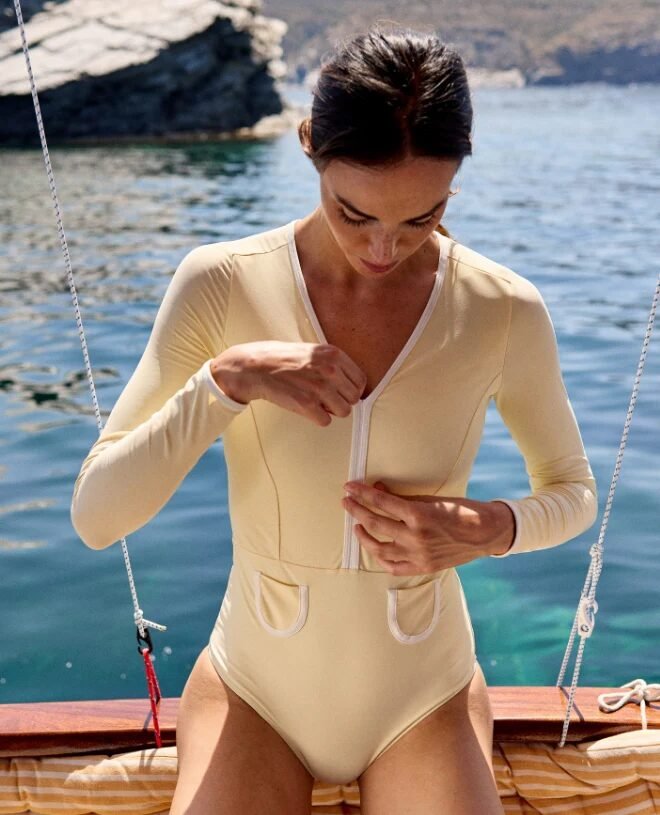
The most visible shift in modern swimwear is how protective surf gear has been re-imagined into high-fashion silhouettes. Long-sleeve onesies and rashguards are no longer just practical sun shields; they are hero pieces in resort collections.
This transformation relies on smart design details borrowed directly from professional surf wetsuits:
- Tactical Zippers: Heavy-duty, corrosion-resistant zippers (like YKK marine-grade zips) with long pull-tabs allow for effortless self-donning, turning a functional entry system into a bold, edgy style element.
- Ergonomic Panel Coverage: High-neck collars, raglan sleeves, and integrated thumb loops prevent garments from riding up during active movement, offering a secure fit that stays put in heavy surf.
- Psychological Comfort: Beyond physical coverage, these elements give consumers “secure style”—the freedom to dive into waves, jump off boats, or play beach volleyball without fear of wardrobe malfunctions.
2. High-Performance Fabrics
Surfing puts extreme stress on apparel through constant exposure to UV rays, salt water, sand abrasion, and high tension. Mainstream swimwear is now adopting these same heavy-duty material standards to improve longevity and wearability.
Rather than relying on basic, thin tricot, designers are integrating advanced fabric technologies:
UPF 50+ & Compression Knits:
High-gauge Nylon/Spandex blends now offer permanent Ultraviolet Protection Factor (UPF 50+) blocking over 98% of harmful rays without relying on chemical washes that wash out.
Micro-Neoprene & Eco-Foam:
Traditional thick neoprene (2mm–3mm) has been streamlined into ultra-thin (0.5mm–1mm) micro-neoprene or limestone-based stretch fabrics. These provide natural body-sculpting structure, thermal insulation, and a smoothing effect without feeling bulky.
Regenerated Ocean Plastics:
Because surf culture is inherently tied to ocean conservation, surfwear led the charge in adopting circular fabrics like ECONYL® (recycled fishing nets) and REPREVE® (recycled plastic bottles). Today, sustainable performance fabric is a baseline expectation for modern consumers.
3. Smarter Cut & Style
Professional surfwear is engineered around human ergonomics—specifically how the body bends, stretches, and moves in the water. Mainstream swimwear designers are using these structural techniques to create smarter, better-fitting garments.
Performance High-Cut Legs

Inspired by 1990s surf suits, high-leg openings reduce fabric friction around the upper thighs. This cut visually elongates the legs while allowing a completely unrestricted range of motion for kicking and paddling.
Anatomical Color-Blocking

Wetsuits traditionally use contrasting side panels to make athletes visible in the water and reinforce structural seams. In modern swimwear, this technique is used for visual contouring—placing dark or vibrant side panels to strategically shape the waistline.
Bonded Seams & Anti-Chafing Construction
Traditional flatlock stitching can rub against sensitive skin during repeated movement. Modern designs utilize seamless heat-bonding (ultrasonic welding) or smooth flat-seam construction to eliminate friction, providing a clean “second-skin” fit that doesn’t dig in.
4. Beach-to-Street Trend
As active lifestyle activities like stand-up paddleboarding (SUP), beach volleyball, and kayaking become mainstream, consumer demand has shifted toward multi-functional clothing. Modern shoppers prefer versatile pieces that transition seamlessly across environments.
Surf-inspired swimwear solves this puzzle through multi-scenario design:
- The Bodysuit Crossover: Structured long-sleeve swimsuits and zip-front one-pieces double perfectly as everyday bodysuits. Consumers can style them directly with high-waisted denim shorts, linen trousers, or skirts for a post-beach lunch.
- Reduced Packing & Higher Value: For travelers, a surf-inspired suit replaces the need for separate activewear and swimwear, delivering higher functional value per garment.
- Cross-Category Merchandising: Brands are capitalizing on this by marketing surf-inspired pieces not just as swimsuits, but as year-round active-lifestyle staples.
Conclusion
Surfwear has proven that swimwear doesn’t need to be fragile to be stylish. By bringing sun protection, durable fabrics, and ergonomic cuts into mainstream fashion, surf-inspired design has made modern swimwear more comfortable, functional, and long-lasting.
For swimwear brands today, incorporating a touch of surf-inspired engineering is no longer just a trend—it is a winning strategy.