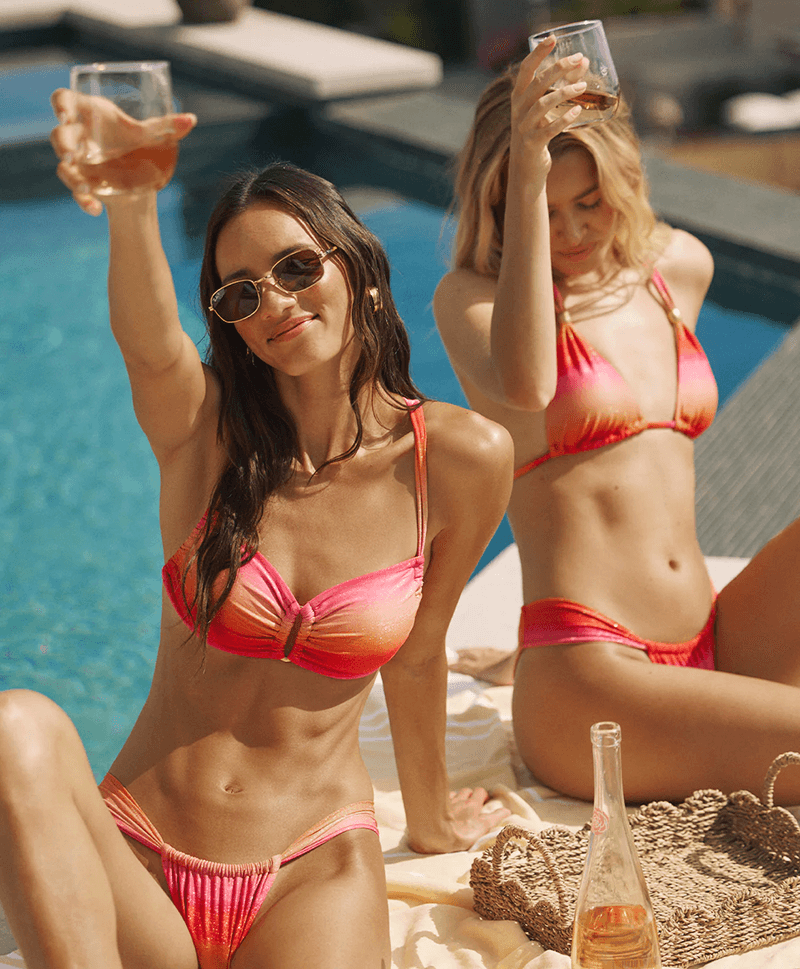
Neon swimwear is made to stand out. Fluorescent pink, electric green, bright yellow, and vivid orange can give even a simple swimsuit a bold, energetic look.
However, these intense shades may lose their brightness more noticeably than black, navy, or muted colors. A neon swimsuit may still look pink or green after repeated use, but it no longer has the same vivid, glowing appearance it had when new.
This does not mean every neon fabric fades quickly. Color performance depends on the fluorescent colorant, fabric composition, dyeing process, exposure to sunlight and chlorine, and how the garment is cared for.
This guide helps swimwear brands understand why fluorescent-colored swimwear is more prone to fading and how to minimize fading through fabric selection, dyeing processes, and care methods.
Do Neon Swimwear Colors Really Fade Faster?
Neon swimwear can appear to fade faster because its visual impact depends heavily on fluorescence.
When the fluorescent effect weakens, the fabric may lose brightness before the base color disappears. A neon pink swimsuit, for example, may remain pink but look flatter and less luminous.
This change is often more noticeable than fading in a conventional shade.
A well-developed neon fabric can perform reliably, but it usually needs more careful material selection and testing than a standard color.
What Makes Neon Colors Different?
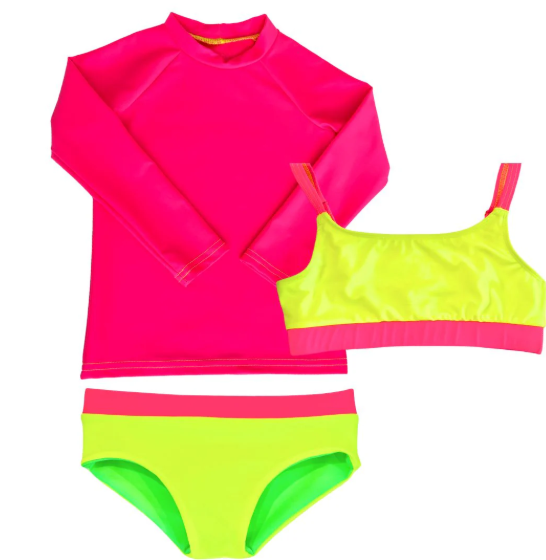
Neon colors are not simply brighter versions of ordinary shades.
Their intensity comes from fluorescent colorants that absorb certain wavelengths of light and release part of that energy as visible light. This additional light creates the bright, glowing appearance associated with neon pink, orange, yellow, and green.
When fluorescence begins to weaken, the fabric does not always become much lighter. Instead, it loses the brightness that made the color look neon in the first place.
This is why customers may describe a swimsuit as faded even though the original base shade is still visible.
Why Does Neon Swimwear Fade?
Neon color loss is rarely caused by one issue alone. It usually develops through a combination of environmental exposure, fabric performance, and garment care.
UV Exposure
Sunlight is one of the main causes of swimwear fading.
Ultraviolet radiation gradually affects colorants, and this can be especially noticeable in fluorescent shades. The longer a swimsuit is exposed to strong sunlight, the greater the chance that its brightness will decline.
The risk increases when swimwear is:
- Worn for long periods outdoors
- Used frequently at beaches or outdoor pools
- Left to dry in direct sunlight
- Stored near a bright window
No swimwear color is completely resistant to long-term UV exposure. However, suitable dyes and better lightfastness can slow the change.
Chlorinated Pool Water
Chlorine keeps pool water clean, but repeated exposure can affect both color and fabric performance.
Over time, it may contribute to:
- Reduced color intensity
- Uneven fading
- Loss of elasticity
- Surface roughness
- Fiber weakness
The result depends on chlorine concentration, water temperature, exposure time, and fabric quality.
A training swimsuit worn several times a week needs stronger chlorine resistance than a fashion bikini designed mainly for occasional resort use.
Fabric and Dye Compatibility
Polyester and nylon are both widely used in swimwear, but they require different dye systems.
Polyester is generally dyed with disperse dyes, while nylon requires dyes developed for polyamide fibers. A neon formula created for one material cannot simply be transferred to another without adjustment.
The final color can also be affected by:
- Spandex percentage
- Fabric weight
- Knitting structure
- Surface texture
- Finishing treatment
Even two fabrics with the same fiber composition may produce different neon shades.
For this reason, the fabric should be confirmed before the final color is developed and approved.
Poor Dye Fixation
A neon fabric may look bright immediately after dyeing but still perform poorly during use.
Poorly fixed color may wash out, transfer onto other materials, or fade more quickly after exposure to pool water.
A visual color match is therefore not enough. The fabric should also be evaluated for its intended use.
Heat, Detergent, and Product Residue
Hot water, tumble drying, bleach, and strong detergents can damage fluorescent colorants and elastane fibers.
Sunscreen, tanning products, body oils, and sweat may also build up on the surface. This residue can make the fabric look dull or uneven, even when the dye itself has not significantly faded.
Immediate rinsing and gentle washing help reduce both chemical damage and product buildup.
Does Polyester Neon Swimwear Last Longer Than Nylon?
Polyester is often selected for performance swimwear because suitable polyester fabrics can offer good resistance to regular pool use.
However, polyester is not automatically better than nylon.
A high-quality nylon fabric with the correct dyeing process may perform better than a poorly developed polyester fabric. The complete fabric and dye system matter more than the fiber name alone.
| Factor | Polyester | Nylon |
|---|---|---|
| Hand feel | Often firmer and more structured | Usually softer and smoother |
| Typical dye system | Disperse dyes | Dyes developed for polyamide fibers |
| Pool use | Often suitable for frequent swimming | Performance depends strongly on fabric quality |
| Neon appearance | Good brightness with suitable dyes | Often smooth, vivid, and suitable for fashion styles |
| Common application | Training and performance swimwear | Fashion and resort swimwear |
For regular pool training, polyester may be the better starting point. For fashion-focused swimwear, nylon may provide a softer hand feel and more refined appearance.
The final choice should reflect the product’s intended use, not only the desired color.
How Manufacturers Can Reduce Neon Color Fading
Color durability should be considered during product development, not after production has already started.
Develop the Color on the Final Fabric
A neon shade should be matched on the same fabric that will be used for bulk production.
The same color can look different on:
- Matte fabric
- Shiny fabric
- Ribbed fabric
- Crinkle fabric
- Textured jacquard
- Double-layer material
Surface texture changes how light is reflected, while stretching may make the shade appear lighter.
Approving a color on paper, a screen, or an unrelated fabric can create inaccurate expectations.
Review Lab Dips Under Different Conditions
Neon colors should be checked in more than one lighting environment.
A practical approval process may include reviewing the lab dip:
- In natural daylight
- Under indoor lighting
- In direct sunlight
- When wet and dry
- When relaxed and stretched
Cameras and screens often reproduce fluorescent colors inaccurately. Final approval should therefore be based on the physical fabric.
The shade should also be compared with the lining, thread, binding, elastic, and hardware.
Compare Bulk Fabric With the Approved Standard
Once the lab dip is approved, the bulk fabric should be checked before cutting.
Color differences may result from:
- Dye lot variation
- Fabric batch variation
- Finishing changes
- Formula adjustments
- Supplier inconsistency
Small differences are often easier to see in fluorescent colors.
Comparing the bulk fabric with the approved sample helps prevent an incorrect shade from entering full production.
Set Realistic Color Expectations
Some neon shades are more difficult to reproduce than others.
A color that looks extremely bright on a digital screen may not appear identical on a physical stretch fabric. Increasing the dye concentration is not always the best solution, as it may affect shade balance or color performance.
In some cases, the manufacturer may recommend:
- Slightly adjusting the target color
- Selecting a different fabric
- Using neon printing instead of solid dyeing
- Approving a practical color tolerance
A slightly less fluorescent shade with more stable performance may be a better commercial choice than an extremely bright color that fades quickly.
Solid Neon Fabric vs. Neon Printed Swimwear
Neon colors can be created through solid dyeing or textile printing. These methods may produce different appearances and performance.
Solid-Dyed Neon Fabric
In solid dyeing, the entire fabric is colored before cutting.
It is commonly used for:
- Single-color bikinis
- One-piece swimsuits
- Coordinated sets
- Self-fabric trims
The result depends on how well the dye bonds with the fiber and whether excess color is properly removed.
Neon Printed Fabric
Printing applies neon color to selected areas of the fabric.
It is suitable for:
- Graphic designs
- Tropical patterns
- Color blocking
- Abstract prints
- Placement prints
The result depends on the printing method, ink system, fabric pretreatment, and curing process.
Sublimation printing is normally used on polyester because the ink is designed to bond with polyester fibers. Nylon generally requires a different printing system.
Printed and solid neon fabrics should be evaluated separately rather than assumed to perform in the same way.
How to Keep Neon Swimwear Bright
Proper care cannot correct poor dyeing, but it can extend the life of a well-made swimsuit.
Rinse After Swimming
Rinse the garment in cool, clean water as soon as possible. This helps remove chlorine, salt, sunscreen, and body oils.
Wash Gently
Use a mild detergent and avoid bleach or strong stain removers. Hand washing is usually the safest option.
Avoid Long Soaking
Do not leave the swimsuit in pool water, detergent, or a wet bag for several hours.
Do Not Wring or Scrub
Press out excess water gently. Twisting and rough rubbing can damage the fabric and stretch fibers.
Dry in the Shade
Direct sunlight and tumble drying can accelerate fading and reduce elasticity.
Rotate Between Swimsuits
Frequent swimmers should rotate between several swimsuits. This allows each garment to rinse, dry, and recover before the next use.
Can Faded Neon Swimwear Be Restored?
In most cases, the original fluorescent brightness cannot be fully restored.
If the fabric looks dull because of sunscreen or product buildup, gentle cleaning may improve its appearance. However, once sunlight or chlorine has damaged the fluorescent colorants, normal washing cannot reverse the change.
Home dyeing is also risky. Synthetic swimwear fabrics often require specialized dyes or high temperatures, which may damage elastane and change the garment’s fit.
Preventing fading is therefore more effective than trying to restore the color later.
Frequently Asked Questions
Why does my neon swimsuit look dull after swimming?
Chlorine, sunlight, sunscreen, and body oils may reduce its brightness or leave residue on the surface. Rinsing the swimsuit immediately after use can help limit further damage.
Does chlorine fade neon swimwear?
Repeated chlorine exposure can gradually reduce color intensity and affect stretch fibers. The level of damage depends on the fabric, dyeing process, pool conditions, and frequency of use.
Does salt water fade neon swimwear?
Salt water is usually less aggressive than heavily chlorinated pool water, but sunlight and salt residue can still affect the fabric. The swimsuit should be rinsed after ocean use.
Is polyester better for neon pool swimwear?
Polyester is often suitable for frequent pool use, especially when chlorine resistance is important. However, performance still depends on fabric construction, elastane content, dye quality, and finishing.
Why does neon swimwear look different in photos?
Fluorescent colors are difficult for cameras and screens to reproduce accurately. Lighting, camera settings, and screen calibration may make the shade appear different from the physical fabric.
Should neon swimwear be tested before production?
Yes. The color should be evaluated on the final fabric and tested according to its intended use, especially for outdoor or pool-focused collections.
Final Thoughts
Neon swimwear fading is not caused by color alone.
Its long-term appearance depends on the fluorescent colorant, fabric composition, dyeing process, sunlight exposure, pool chemicals, and garment care.
For brands, the most reliable approach is to select the fabric first, develop the shade on the correct material, review lab dips under different conditions, and test the fabric before bulk production.
If you are developing a custom neon swimwear collection, our team can support fabric selection, custom color matching, sample development, and bulk production. Contact us with your designs, target colors, and performance requirements to begin your project.