
When summer arrives or a family vacation is on the horizon, choosing the perfect kids’ swimwear becomes a top priority for parents. As a parent, you want your little ones to look adorable, but more importantly, you need them to stay safe, protected, and comfortable all day long.
For swimwear brands, this means designing children’s swimwear that better understands parental needs and placing higher production demands on swimwear factories.
This guide will help you choose the best children’s swimwear based on style, safety, and comfort.
Safety First
When it comes to children, safety is always the number one priority. Excellent sun protection swimwear is no longer a luxury—it is a baseline requirement.
High-UPF Fabrics
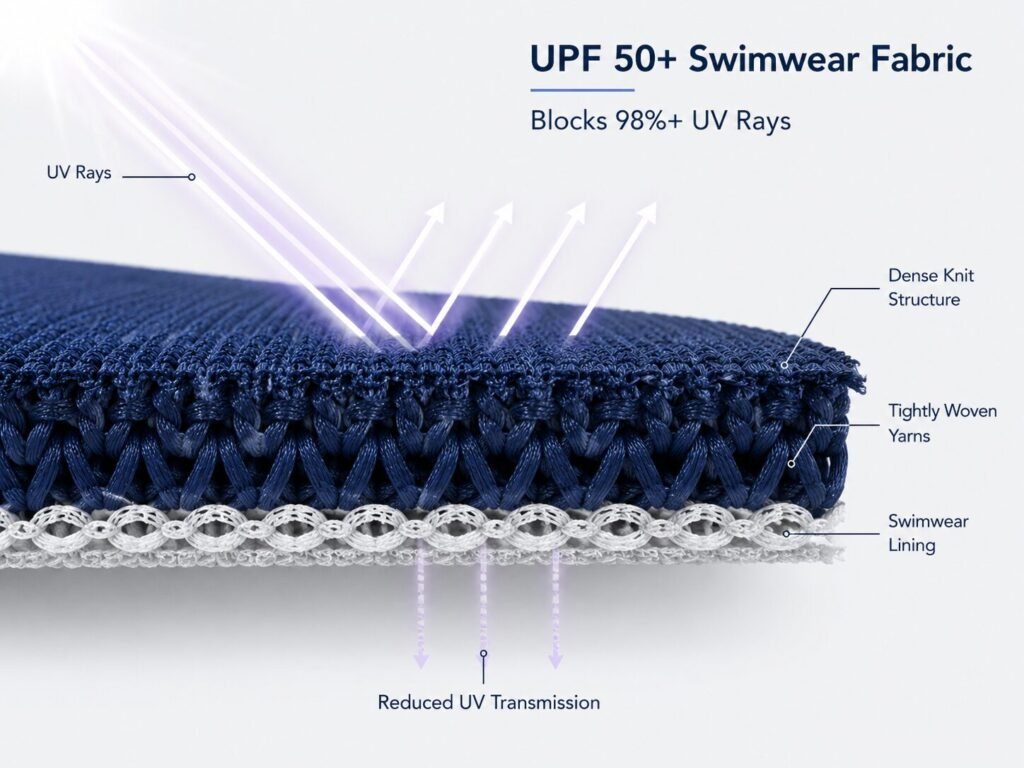
A child’s skin is much thinner and more sensitive than an adult’s. When evaluating toddler swimwear or older kids’ gear, always look for a UPF 50+ (Ultraviolet Protection Factor) rating.
- The Science: UPF 50+ fabric blocks out 98% of harmful UVA and UVB rays.
- Notice: For product development, achieving a permanent UPF 50+ rating without relying heavily on chemical finishes (which can wash out over time and irritate sensitive skin) requires a high-density knit structure. Premium factories utilize tight mechanical weaves using nylon or polyester blended with high-grade spandex to ensure long-lasting sun protection.
Visibility is Lifesaving
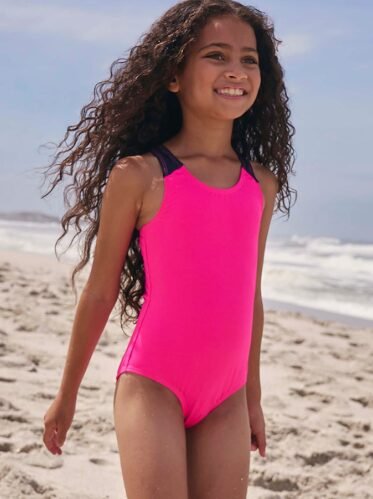
Neon is more than just a fun retro trend; it is a critical safety feature. Studies have shown that neon colors—especially neon orange, pink, and lime green—provide the highest visibility underwater and in crowded public pools.
- What to Avoid: Blue, grey, and pale green swimsuits can make a child blend into the water, making them virtually invisible to lifeguards and parents in an emergency.
The Rise of Kids Rash Guards
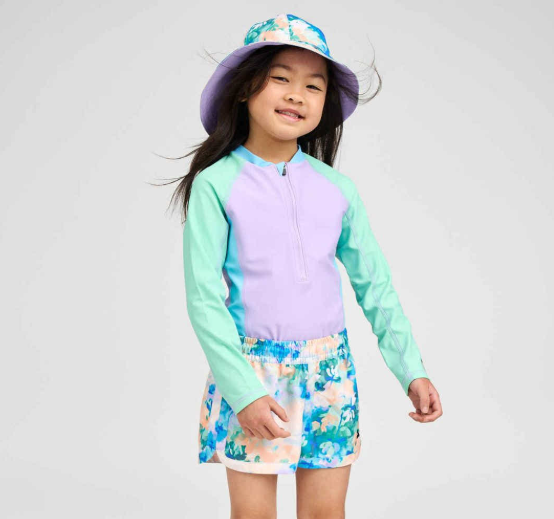
More and more families are moving away from traditional bikinis and moving toward kids rash guards and long-sleeve one-pieces. These designs offer maximum skin coverage, which reduces both sunscreen application struggles and UV exposure.
Comfort & Functionality
A swimsuit can look beautiful, but if it scratches, sags, or pinches, a child won’t wear it. High-quality children’s swimwear must be built for movement.
Premium Material Blends
The gold standard for durable kids’ swimsuits is a blend of Nylon (Polyamide) and Spandex (Elastane), or Polyester and Spandex.
| Fabric Blend | Pros | Best Used For |
| Nylon + Spandex | Ultra-soft, highly elastic, luxurious hand-feel, excellent recovery. | Girls’ swimsuits, fashion line-ups, toddler sets. |
| Polyester + Spandex | Superior chlorine resistance, fade-resistant, quick-drying, highly durable. | Competitive youth swimwear, active boys’ swim trunks. |
| Recycled Nylon/Polyester | It retains the characteristics of nylon or polyester fabrics, but is more environmentally friendly. | Focus on sustainable development brands |
Intelligent Construction & Hardware
From a manufacturing perspective, comfort lies entirely in the details:
- Flatlock Stitching: Traditional seams can chafing against wet skin. High-end manufacturers utilize flatlock stitching, where the seams lie completely flat against the body.
- Chlorine and Saltwater Resistance: Kids put their swimwear through the wringer. Fabrics must be treated or knitted to resist fiber degradation caused by pool chlorine and ocean salt.
- Smart Hardware: For toddlers, look for swimsuits with bottom snaps for easy diaper changes. For older kids, ensure zippers have protective fabric guards so they don’t pinch the skin.
Style & Trends
While parents look for safety and buyers look for quality, kids care about one thing: how they look. Balancing playful aesthetics with sophisticated design is key to a successful product line.
Here is a detailed look at the defining trends and design innovations across key demographics:
Girls’ Swimsuits
Modern girls’ swimsuits are moving toward a balance of playful design and practical comfort. Parents still look for cute colors and prints, but the swimsuit also needs to stay secure during swimming, running, and beach play.
- Playful Prints and Colors: Floral prints, pastel gingham, fruit patterns, and retro-inspired color blocking are popular choices for summer collections. These designs feel bright and child-friendly without looking too mature.
- Secure One-Piece Styles: One-piece swimsuits remain a practical option for girls because they offer better coverage and stay in place during active movement. Wide straps, soft leg openings, and flexible fabric can improve overall comfort.
- Comfortable Two-Piece Sets: Two-piece styles are shifting toward tankini sets and sporty swim tops rather than minimal tie styles. Wider straps, cross-back details, and secure waistbands help the swimsuit feel more stable.
For girls’ swimwear, cute design should not come at the cost of comfort. Soft seams, secure coverage, and age-appropriate silhouettes are key details that help parents feel confident about the purchase.
Boys’ Swim Trunks
The days of stiff, heavy, oversized boardshorts are officially over. The modern boys’ swim trunks market has undergone a massive technical upgrade driven by comfort and anti-chafing technology.
- The Length Shift: Silhouettes have evolved toward a more European, tailored aesthetic. Mid-thigh cuts are replacing long, below-the-knee shorts, allowing for greater freedom of movement and a sharper look.
- 4-Way Stretch Performance: High-end lines now feature ultra-lightweight, 4-way stretch polyester fabric. This material moves with the child, dries in a matter of minutes, and doesn’t cling uncomfortably to the skin when exiting the pool.
- Softer Inner Linings: A soft built-in liner or stretch inner short can help reduce rubbing when the trunks are wet. This small detail can make a big difference in comfort, especially for long days by the water.
For boys’ swim trunks, comfort is often the strongest selling point. Better linings, lighter fabrics, and secure waistbands can help improve product quality and reduce complaints about chafing or poor fit.
Finding the Right Swimwear Factory
If you are developing a children’s swimwear line, you will need a professional swimwear manufacturing partner. A reputable swimwear factory should not only offer low prices; they must also ensure compliance and product consistency.
When auditing a potential manufacturing partner, look for these critical credentials:
- Certifications: Ensure the factory complies with international standards such as OEKO-TEX® Standard 100 (guaranteeing the fabric is free from harmful levels of toxic substances) and GRS (Global Recycled Standard) if you are using recycled polyesters like Repreve®.
- Rigorous Testing Protocol: The factory must perform standardized testing for colorfastness to light, chlorine, and sea water, as well as stretch recovery testing so the swimsuits do not lose their shape after a few wears.
- Low MOQ Flexibility: The childrenswear market thrives on diverse print options. Factories that offer flexible Minimum Order Quantities (MOQs) for custom prints allow brands to test the market without heavy inventory risk.
Conclusion
Choosing the best kids’ swimwear comes down to balancing three pillars: Safety, Comfort, and Style.
For parents, soft fabrics, and high-visibility colors sun-protective designs can make beach and pool days easier. For swimwear brands, these same details help improve product quality, reduce returns, and build long-term customer trust.