
Ruffle bikinis remain popular because they instantly make swimwear feel more feminine, playful, and resort-ready. A simple bikini silhouette can look more styled and romantic with the right ruffle placement, which is why this detail continues to appear in vacation collections, and social-media-friendly swim lines.
But ruffle bikinis produce are not always easy. In swimwear, ruffles need to look soft without becoming bulky, and decorative without affecting fit. Because swim fabrics stretch, a ruffle that looks good on paper may sit differently once sewn, worn, or wet. That is why this category needs more attention during development than many basic bikini styles.
1. Set the Right Ruffle Ratio
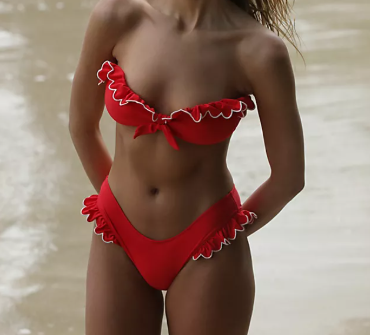
The fullness of the ruffle is one of the most important details. Too little gathering can make it look flat, while too much can make the style feel heavy or overly dramatic. The ratio should be adjusted based on placement, fabric weight, and the overall look the brand wants to achieve.
For many swimwear applications, a gather ratio around 1.5:1 to 2:1 is a practical starting point, but it should never be treated as a fixed rule. A neckline ruffle, shoulder ruffle, and waist ruffle will all behave differently. Multi-layer or tiered ruffles also need a different approach than a small accent trim.
The goal is to create visible softness and movement without overwhelming the bikini’s base silhouette.
2. Choose Fabric Carefully
Fabric affects how the ruffle moves and holds its shape. Softer swim fabrics create a lighter and more fluid result, while firmer fabrics give more structure.
For many feminine resort styles, nylon-spandex blends are often preferred because they give a softer hand feel and a smoother drape. In practical development terms, a fabric weight around 170 to 190 GSM often works well for standard ruffle applications, while layered or larger ruffles may benefit from slightly lighter material than the main body fabric. This helps reduce bulk and keeps the garment from feeling bottom-heavy.
3. Keep the Edge Finish Clean
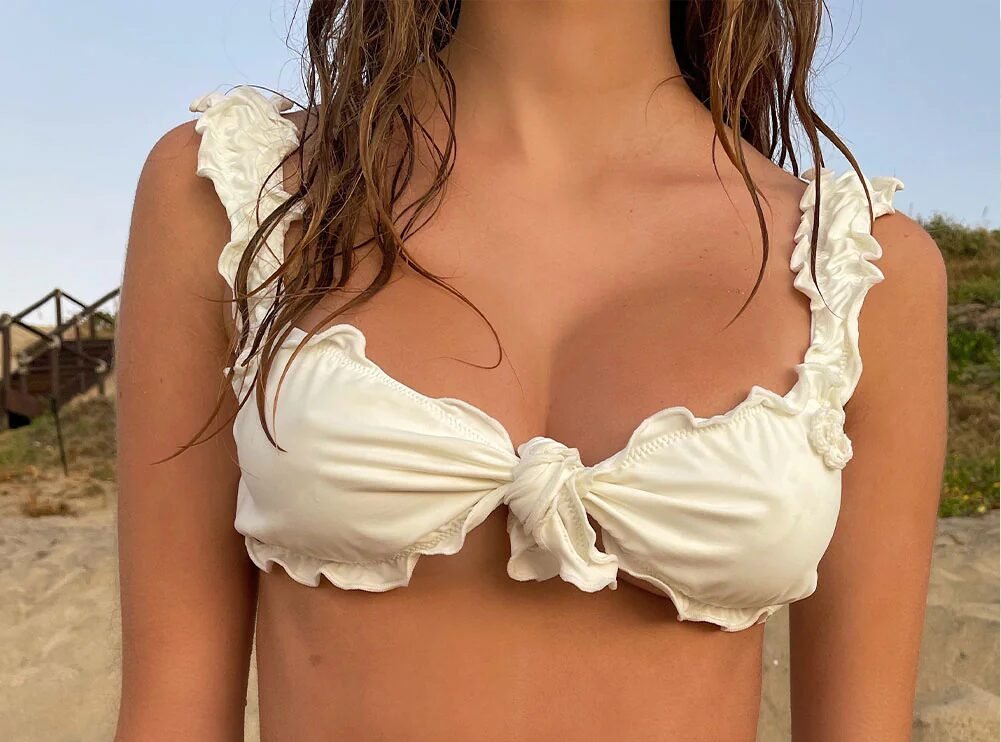
A ruffle only looks refined when the edge finish is handled properly. Thick or poorly controlled finishing can make the trim feel stiff, while unstable finishing can cause curling or distortion.
A merrow stitch can produce a classic, delicate ripple effect. A rolled hem offers a cleaner, more elevated finish often associated with more polished resortwear.
The best option depends on the style direction, target price point, and fabric construction. What matters most is keeping the finish neat, soft, and consistent throughout production.
4. Protect Fit and Support
Ruffles should enhance the design, not interfere with wearability. On bikini tops, neckline and strap ruffles must work with cups, elastic, and support structure.
The same applies to bottoms. Waist or side ruffles should not reduce comfort, create pressure points, or throw off the fit balance of the garment.
5. Control Symmetry in Production
Because ruffles are highly visible, even small inconsistencies are easy to notice. Uneven gathering, mismatched widths, or unbalanced left and right sides can quickly lower the perceived quality of the garment. This is especially important for printed styles, textured fabrics, or designs with mirrored ruffle placement.
To maintain consistency in bulk production, it helps to use calibrated templates, stable cutting control, and clear standards for attachment and gathering. Ruffle width, seam allowance behavior, and left-right balance should all be reviewed during pre-production.
6. Adjust Proportions Across Sizes
One of the most overlooked issues in ruffle bikini development is grading. Ruffles do not always scale well in a simple linear way. A trim that looks soft and balanced on a size small may appear too narrow on a larger size, while the same construction may look oversized on a smaller size if not carefully adjusted.
That is why size grading for ruffle styles often requires more than standard pattern scaling. In many cases, ruffle width, density, or placement should be reviewed by size range so the visual effect stays balanced across the collection.
Sampling and Testing Before Bulk Production
Sampling is essential for ruffle bikini styles. Brands should check not only the look of the ruffle, but also how it performs in wear, stretch, and washing.
A good sample review should confirm the ruffle ratio, fabric behavior, edge finish, attachment method, and overall comfort. This helps avoid problems before bulk production begins.
Partner with a Technical Swimwear Expert
Ruffle bikinis may look soft and effortless, but producing them well requires precision. The best results come from balancing design intent with technical control, from fabric selection and edge finishing to fit, symmetry, and size development.
At Joy Sportwear, we help brands develop custom swimwear. If you are planning a feminine resort collection with ruffle bikini styles, our team can support you from sampling to final production.