Many brands believe eco-friendly swimwear manufacturing in China is low on substance and high on marketing. However, sustainable practices are not mere greenwashing; they're backed by certifications like OEKO-TEX and GRS, ensuring materials and methods meet stringent environmental standards. Suppliers like Joysportwear are integrating recycled fabrics to genuinely reduce the environmental impact. Understanding the true capabilities in China can make a significant impact on sourcing decisions, shifting focus from skepticism to scrutinizing which suppliers are truly certified for sustainability. Knowing what to verify and which standards matter is key to making informed and responsible choices.
The Myth: Eco-Friendly Claims Are Just Marketing
Many buyers perceive eco-friendly claims in Chinese manufacturing as superficial, assuming they are nothing more than marketing tactics. This belief largely stems from a perception that China lacks robust sustainability standards. The truth is, there have been isolated incidents of non-compliance in manufacturing, but these are not representative of the industry's commitment to sustainability.
This misperception is widespread due to a few well-publicized cases, which contribute to a generalized distrust of Chinese eco-friendly claims. Over time, these isolated instances have snowballed into a narrative that questions the authenticity of sustainable practices in China's textile industry. As a result, buyers often operate under the assumption that eco-friendly labels are merely greenwashing tactics, overshadowing the genuine sustainable efforts many factories are implementing.
The lack of adequate information about the true extent of China's regulatory and operational improvements exacerbates this skepticism. Misinformation can significantly impact consumer trust, painting a misleading picture of the industry. It's important to realize that while some manufacturers might exploit these claims superficially, numerous companies in China engage in legitimate sustainable practices, such as meeting international standards like OEKO-TEX and GRS.
To bridge this gap, increased transparency and education on real sustainable practices are essential. Buyers should remain informed and vigilant, distinguishing between marketing ploys and authentic eco-friendly operations by seeking out certified suppliers whose practices are independently verified. Such commitment to due diligence can help change perceptions, fostering trust and laying a new foundation for confidence in eco-friendly swimwear manufacturing in China.
Reality: Certified Sustainable Practices
In the realm of eco-friendly swimwear production, standards like OEKO-TEX and GRS are not lofty ambitions; they are operational realities for companies committed to sustainability. These certifications serve as verifiable benchmarks, assuring that fabrics meet essential health and safety requirements. The OEKO-TEX certification, for example, guarantees that textiles are free from harmful substances, thus safeguarding consumer health. Similarly, GRS certification verifies a product's recycled content and responsible manufacturing processes, echoing a stringent commitment to environmentally conscious practices.
Recycled and responsibly sourced fabrics are progressively becoming the backbone of swimwear manufacturing. Advising buyers to prioritize fabrics made from post-consumer plastics and recycled nylons can meet ecological responsibility goals with high performance. These fabrics not only conform to certification standards but also demonstrate durability and elasticity crucial for swimwear.
Advising buyers to ask suppliers about advanced water-saving technologies could support fostering sustainable production practices. Techniques such as closed-loop water systems can significantly reduce water waste, aligning factory operations with sustainability goals. Moreover, employing eco-friendly chemicals in dye processes can reduce water consumption and mitigate environmental impact, paving the way for genuinely sustainable swimwear manufacturing.
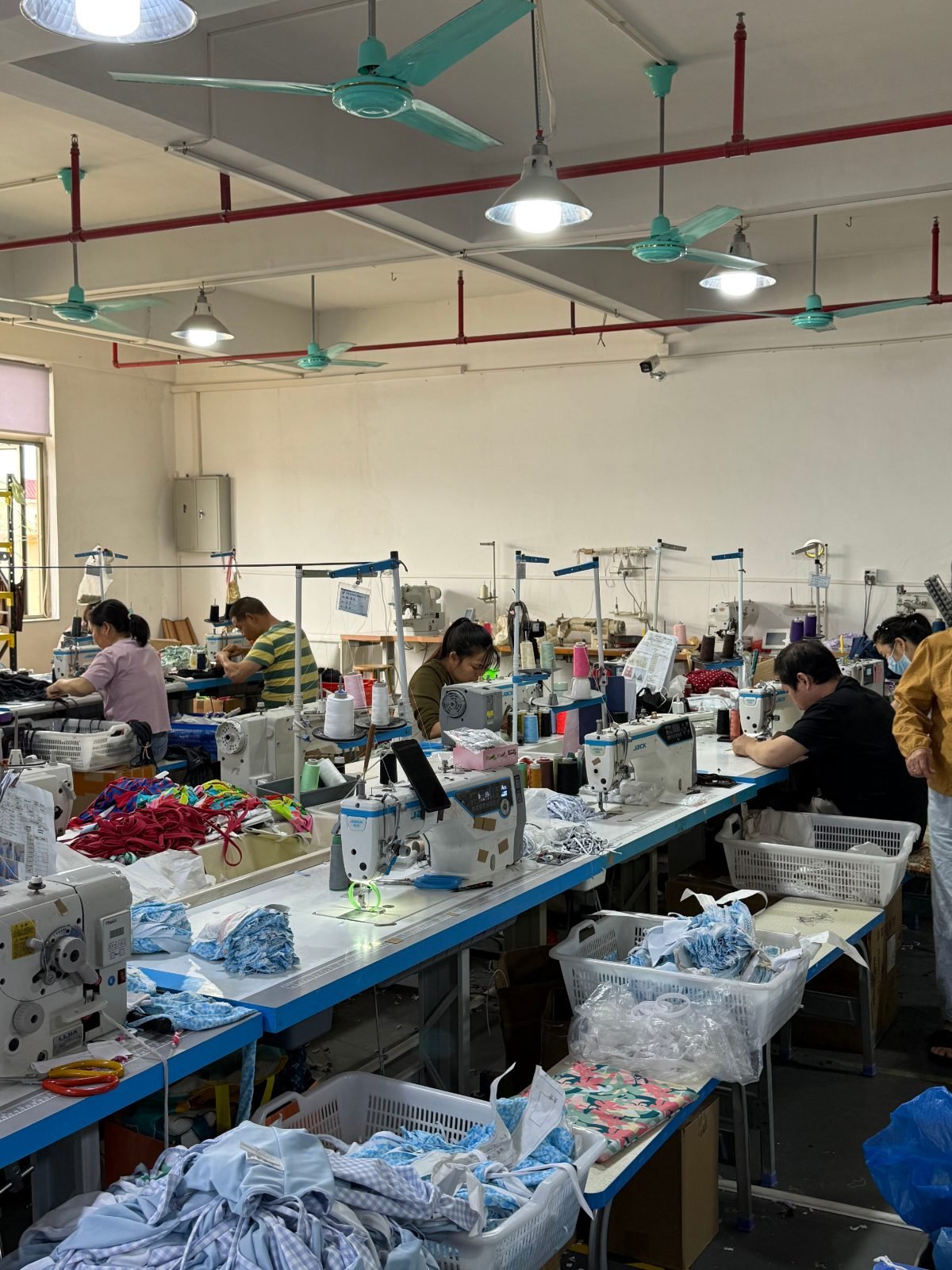
For buyers looking to collaborate with partners, understanding the importance of ethical labor practices is increasingly essential. Scrutiny and demand from both international and domestic markets encourage factories to adopt fair working conditions and transparent operations. Therefore, asking suppliers about compliance with global standards regarding worker rights is advisable.
For brands assessing potential partners in China, the need for scrutiny is paramount.
Myth: Recycled Fabrics Lack Durability
A common misconception is that recycled fabrics, being eco-friendly, sacrifice durability, leading to products that wear out prematurely. This belief stems from a time when early iterations of recycled materials did not meet the rigorous standards needed for garment strength and longevity. However, this view is outdated as recycled fabrics have significantly advanced and now meet stringent performance criteria demanded by the fashion industry.
Many fear that choosing sustainable options like recycled polyester or nylon for swimwear means compromising on quality. Yet, recycled fabrics often pass industry-standard tests for strength and longevity, such as ASTM tests for abrasion resistance and tensile strength. For example, recycled nylon, often derived from discarded fishing nets, retains the robustness of virgin fibers while contributing to environmental conservation. These materials typically match or exceed their non-recycled counterparts in key performance areas, ensuring products can withstand the rigors of regular use without unjustified concerns over rapid degradation.
Moreover, developments in upcycled material technology have bolstered fabric durability, allowing these sustainable options to rival traditional materials. To ensure the quality and reliability of eco-friendly materials, it's advisable for manufacturers to partner with suppliers who prioritize rigorous testing and quality assurance. By partnering with accredited Eco-Friendly Swimwear Fabric Supplier in China, manufacturers ensure the materials are both sustainable and durable, providing evidence that eco-friendly does not mean compromise.
As the industry invests more in R&D, recycled fabrics are continuously evolving, offering enhanced durability and performance. Brands opting for these materials not only benefit from the reduced environmental footprint but also from the assurance of fabric longevity, dispelling the myth that sustainable choices are inherently inferior.
Reality: Performance Standards in Sustainable Materials
In the eco-friendly swimwear industry, it is important for buyers to assess the product durability offered by recycled fabrics. Asking suppliers about their compliance with established standards can help in ensuring quality. Recycled fabrics are rigorously tested to meet ASTM standards, ensuring they perform comparably to conventional materials. ASTM International sets these benchmarks, and in doing so, pushes the manufacturing industry towards greater accountability. Testing includes aspects like tensile strength and elongation, which verify that recycled materials can withstand the stresses of swimwear use.
Investment in research and development (R&D) for sustainable technology is on the rise, resulting in significant advancements in the quality and performance of recycled fabrics. Buyers should inquire whether suppliers are leveraging these advancements to produce durable products, such as bikinis made from recycled polyester, which demonstrate resilience in chlorinated water and exposure to sunlight.
Growing Use Across Industries
Beyond fashion, industries like automotive and construction are also incorporating these sustainable materials, recognizing their robustness and eco-benefits. For instance, recycled fabrics featuring high UV resistance and minimal water absorption are becoming standard in outdoor furniture and car interiors. This widening adoption highlights the expanding credibility and applicability of recycled materials beyond swimwear.
Comparing Conventional vs Recycled Swimwear Fabrics
| Fabric Type | Durability (cycles) | Water Absorption (%) | UV Resistance | Cost per Meter |
|---|---|---|---|---|
| Conventional Nylon | 200,000 | 5% | Moderate | $10 |
| Recycled Polyester | 150,000 | 6% | High | $12 |
| Conventional Polyester | 250,000 | 4% | Moderate | $15 |
| Recycled Nylon | 180,000 | 5% | High | $14 |
The table above illustrates that recycled fabrics are competitive in durability and functionality. While they may come at a slightly higher cost per meter, their eco-friendly benefits and compliance with performance standards make them a viable alternative in swimwear production. This shift towards durable eco-materials is a pivotal step in achieving sustainable manufacturing goals worldwide.
Myth: Only Big Brands Can Access Eco-Friendly Production
A common misconception is that only large, established fashion brands have the financial clout or market influence to access eco-friendly production methods in China. This belief stems from historical associations between large-volume orders and the ability to dictate sustainable requirements to suppliers. However, smaller brands are increasingly able to engage with environmentally responsible manufacturing practices.
For many in the industry, the assumption is that startups lack leverage due to their limited order quantities. Traditionally, large minimum order quantities (MOQs) were necessary to persuade manufacturers to adopt eco-friendly methods, making them appear out of reach for smaller labels. However, an industry shift has seen lower MOQs become more standard, especially among suppliers eager to partner with emerging fashion brands. This shift is partly due to advancements in fabric technologies and the availability of specialty materials that do not require large runs to be cost-effective.
Customized solutions are now more accessible than ever, providing smaller brands with the ability to specify sustainable practices without compromising on quality or incurring prohibitively high costs. Many Chinese manufacturers, such as those vetted by Choosing the Right Swimwear Manufacturer in China, are committed to offering flexible, bespoke production runs that cater to the needs of startups while adhering to eco-friendly standards like OEKO-TEX and GRS.
These developments, driven by global demand for sustainability and transparency, have eliminated many barriers for small brands. Startups can now have a significant role in promoting eco-friendly practices by leveraging the growing trend of sustainability in production, which no longer remains the exclusive domain of big brands.
Verify Sustainability Credentials Instead of Assuming
When sourcing eco-friendly swimwear, it's essential to do more than take a supplier's word for it. Begin by confirming key industry certifications such as OEKO-TEX and GRS. These certifications indicate that the fabric has been tested for harmful substances and meet recycling standards, respectively. Suppliers that hold these certifications demonstrate a commitment to safety and environmental standards, providing assurance in their sustainable claims.
Furthermore, request detailed production transparency from potential suppliers. Transparency involves having access to the entire production process, from raw material sourcing to finished product. Evaluate whether suppliers are forthcoming with information on how they minimize environmental impact through their practices. This can include water conservation technologies, waste reduction strategies, and ethical labor practices — elements vital to genuine sustainable production.
Sustainable swimwear requires careful consideration of fabric properties, particularly detergent and colorfastness. Sustainable fabrics should withstand washing and maintain color integrity over time. Verify this by requesting lab tests or sample garments to conduct your own washing trials. Assess how these fabrics perform under expected conditions to ensure they meet your brand’s standards.
Lastly, encourage site visits to witness eco-friendly practices in action. Factories that uphold sustainable methods are generally open to showing them off. A site visit offers firsthand insight into the facility's operations, including how efficiently they handle resources and the working conditions. This direct observation can solidify confidence in choosing a partner committed to ecological integrity.
Ultimately, verifying sustainability credentials is more robust than assuming them. By actively checking certifications, demanding transparency, and witnessing practices firsthand, brands can make informed choices that align with their commitment to eco-friendliness.
Understanding the Realities of Eco-Friendly Swimwear Manufacturing in China
Brands can miss valuable opportunities by relying too heavily on outdated perceptions regarding eco-friendly practices in China. Genuine sustainability in swimwear production requires verifiable certifications, such as OEKO-TEX and GRS, which indicate certain sustainable practices or standards. By thoroughly checking a supplier's sustainability credentials and understanding materials' testing standards, brands are more likely to find partners committed to sustainable practices. Increasingly, brands, regardless of size, are choosing suppliers that prove their commitment to authentic, eco-friendly production methods.
Frequently Asked Questions on Eco-Friendly Swimwear Production
How can brands verify the sustainability of a supplier?
Brands should request OEKO-TEX and GRS certifications from suppliers. Checking these certifications ensures compliance with international environmental and safety standards. Additionally, conducting site visits and assessing transparency in production can provide further validation.
What are the common misconceptions about sustainable swimwear?
A common misconception is that sustainable swimwear is expensive or only suitable for large brands. In reality, many manufacturers now offer low MOQs and customizable solutions, making eco-friendly products accessible to startups and smaller brands.