
Consistency in swimwear production is crucial for ensuring quality, durability, and performance. ASTM D3775 ensures accurate thread counts, while ISO 105-E03 evaluates colorfastness in chlorinated water—two critical standards for high-performance swimwear. These considerations are vital when collaborating with seasoned suppliers in Dongguan, China, who rely heavily on stringent standards and efficient production lines to maintain quality across bulk orders. Whether you're launching a new line or scaling up production, understanding the necessary steps can aid in partnering effectively with manufacturers. By mastering the production sequence, from raw material selection to final quality checks, brands can assure their products meet the rigorous demands of today’s markets."
1. Defining the Material and Tooling Requirements
Choosing the right materials and tooling is paramount in swimwear production. Utilizing OEKO-TEX certified materials guarantees that the fabrics are eco-friendly and free from harmful chemicals, which aligns with consumer demand for sustainable products. It not only ensures safety but also broadens the market reach by appealing to eco-conscious buyers. Materials with known certification reassure both suppliers and end-users of product quality and integrity.
Additionally, adherence to ASTM standards provides a technical backbone for specifying yarn size and fabric weight. For instance, ASTM D3776 ensures fabric weight consistency, which is critical for maintaining the comfort and durability of the swimwear. Consistent yarn size and fabric weight contribute to the garment's overall performance and are specified to match the design intentions and end-use.
Material and Tooling Requirements Check
| Requirement | Standard | Why It Matters |
|---|---|---|
| OEKO-TEX Certification | OEKO-TEX Standard 100 | Ensures eco-friendliness and safety |
| Yarn Size | ASTM D1059 | Tight controls for consistent fabric texture |
| Fabric Weight | ASTM D3776 | Determines garment weight and coverage |
| Fabric quality | GRS | Promotes recycling practices and material traceability |
| Garment Measurements | Per drawing | Ensures specified fit standards are maintained |
Tooling needs differ greatly based on the swimwear style produced—be it bikinis, one-piece swimsuits, or tankinis. Each design requires specific molding or cutting tools to achieve the desired shapes and details. It's advisable for brands to work closely with suppliers to understand material and tooling needs thoroughly.
A fundamental aspect of the design process is defining garment measurements and tolerances. Precise specifications help prevent production issues and ensure the final product meets the set standards for fit and performance. Fine-tuning these parameters not only meets stricter industry requirements but also provides a consistently high-quality output.
For more insights on eco-friendly fabric choices, you can visit our Eco-Friendly Swimwear Fabric Supplier in China.
2. Cutting the Fabric to Precise Specifications
Cutting the fabric to precise specifications is a critical step in ensuring consistency and quality in swimwear production. This stage begins by considering fabric weight standards that help maintain uniform thickness across all fabric rolls, crucial for a consistent look and feel.
Digital patterns play an essential role, as they are meticulously crafted to fit the defined garment measurements and tolerances set earlier in the production process. These patterns guide the cutting machines, which follow them to cut large fabric lots into individual swimsuit components. By using digital patterns, manufacturers can enhance material efficiency and reduce mismatches.
Consistency across fabric lots is another priority during this phase. Even minor discrepancies in cutting can lead to significant issues in the assembly line. It's important for buyers to inquire about practices like testing for consistency and ensuring precision, as this can affect the overall quality of the swimwear.
To achieve these objectives, fabric cutting processes can incorporate error-checking mechanisms. Revisiting initial cut samples and aligning them with the specified dimensions helps detect any deviations. Additionally, incorporating visual inspections and occasional manual checks can ensure the machinery operates correctly and maintains the set dimensions consistently.
Ultimately, precise cutting translates into smoother subsequent stages, such as sewing and final assembly. It ensures that every piece contributes to high-quality swimwear production, aligning with industry standards and increasing the predictability of the finished product's appearance and performance.
3. Assembly and Sewing
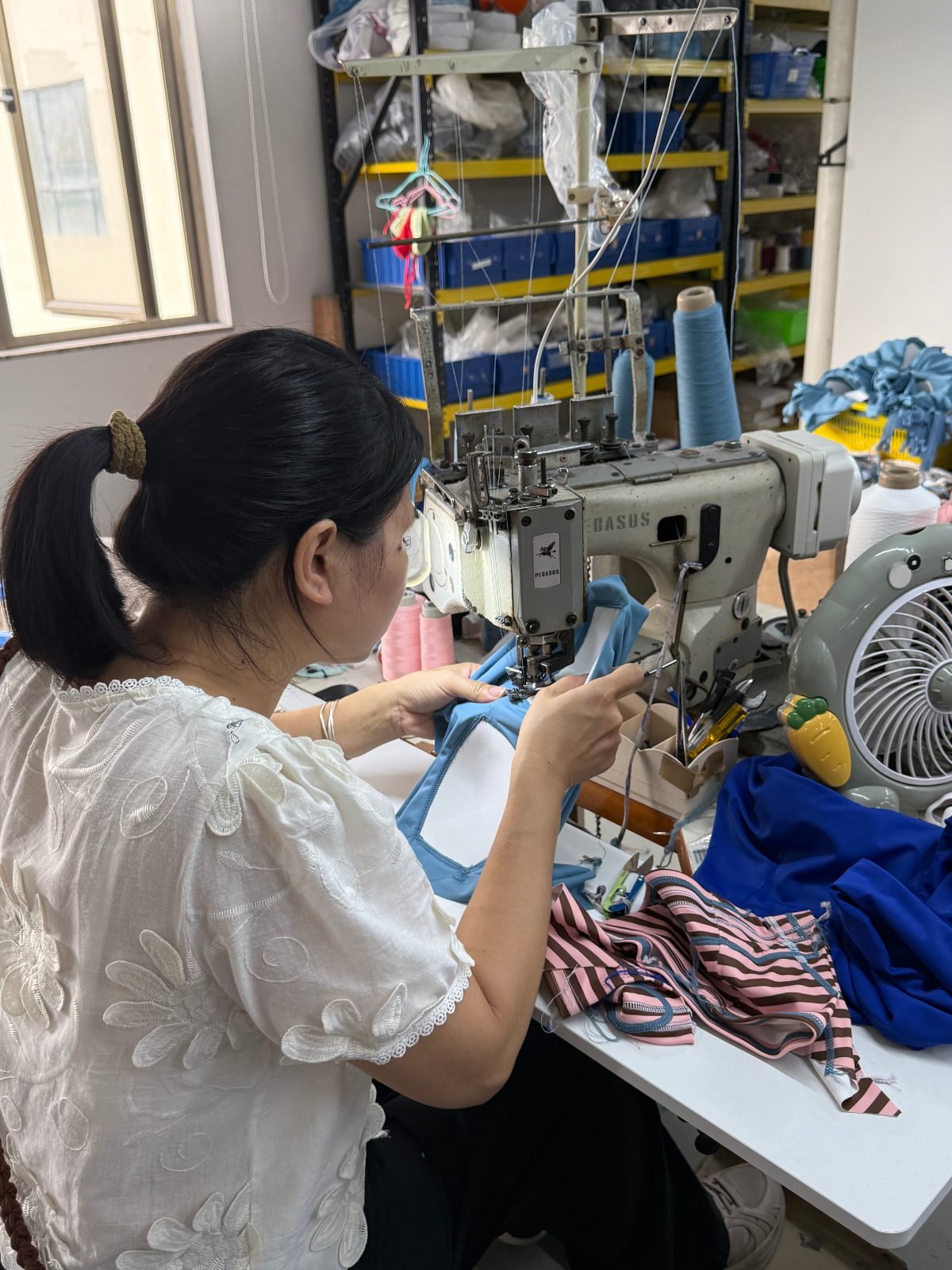
Choosing the right stitch type is crucial in swimwear manufacturing. Stitch types determine both durability and flexibility, essential for garments that undergo frequent stretching. Flatlock and cover stitches are common choices, with flatlock providing added strength while cover stitching allows for flexibility. The choice depends on the garment's intended use—whether it demands resilience against chlorine exposure in pools or elasticity for activities like beach volleyball.
Sewing and Assembly Process Details
| Stitch Type | Durability | Application |
|---|---|---|
| Flatlock | High | Active swimwear, seams |
| Cover Stitch | Moderate to High | Edge finishing, decorative stitching |
| Lock Stitch | Moderate | Basic constructions, zippers |
| Zigzag Stitch | Moderate to High | Stretch seams, elastic attachment |
Balancing assembly line speed with quality is another pivotal factor. Increasing speed may boost output but can compromise quality if not monitored meticulously. Ensuring that assembly tasks are balanced between efficiency and precision can help maintain high-quality outcomes.
Worker skill is instrumental in delicate assembly tasks such as attaching elastics or sewing fine hems. Swimwear demands precision—errors in stitching can lead to discomfort or performance issues. Regular checks are essential to maintain consistency in product quality.
In recent years, the integration of automation in sewing processes has advanced significantly. Automated machines can enhance consistency and speed, especially for repetitive tasks like hemming and seam closure. However, human oversight remains crucial for tasks requiring judgment and adaptability.
Learn more about the complexities and innovative practices in swimwear production through our thorough exploration: Navigating Bulk Swimwear Production: A Case Study with Joy Sportwear. This approach integrates traditional craftsmanship with modern technology, achieving an optimal balance between efficiency and quality.
4. Dyeing and Printing
Dyeing and printing play a crucial role in bulk swimwear production, directly influencing the colorfastness and overall aesthetic of the final product. Ensuring colorfastness per ISO 105 standards is essential — specifically ISO 105-E03 for resistance to chlorinated water and ISO 105-E02 for sea water. These standards help ensure that the swimwear colors remain vibrant after exposure to rigorous aquatic environments, a critical aspect for any swim apparel.

Differences Between Dyeing and Printing Options
Dyeing and printing are two distinct processes with different impacts on swimwear. Dyeing involves immersing fabric in a dye bath, allowing for a uniform color application across the entire garment. This method is suited for solid-colored swimwear. In contrast, printing applies patterns or designs onto the surface of the fabric. Common printing techniques include screen printing and digital printing, which offer various design possibilities and can accommodate multi-color patterns with precision.
Impact of Dye Selection on Final Products
The choice of dye influences the swimwear's vibrancy, durability, and environmental footprint. Selecting azo-free or low-impact dyes can enhance eco-friendliness, aligning with OEKO-TEX commitments, without compromising on the garment's vividness. The dye selection must also be compatible with the fabric type to avoid issues like uneven coloring or fabric degradation.
Techniques for Multi-Color Prints
For multi-color designs, methods such as rotary screen printing or sublimation are employed. These techniques allow for intricate patterns and are scalable for bulk production. Rotary screen printing is efficient for high-volume tasks, while sublimation is preferred for its ability to bond seamlessly with synthetic fibers, ensuring no compromise in the fabric's stretch and resilience.
Scalability of Dyeing Processes
Scalability is key in bulk production, with continuous dyeing processes like beam or jet dyeing ideal for large volumes. These methods ensure consistency and reduce lead times, crucial for meeting market demands efficiently.
In conclusion, a nuanced understanding of dyeing and printing options can significantly impact the final product's quality, aligning with both aesthetic and functional demands of swimwear.
5. Quality Control and Inspection
Swimwear quality control is pivotal to ensuring the final product meets customer expectations. A key element involves inspection per ASTM D3994, which lays out performance specifications for swimwear. This standard guides manufacturers in evaluating the material's thickness, tensile strength, and elongation. These metrics are critical in verifying that products meet the durability and performance requirements necessary for swim activities.
Identifying Common Defects
Typical defects in swimwear might include uneven seams, puckering, inconsistent stitching, or fabric discoloration. Such issues often arise from improper stitching techniques or low-quality materials. Addressing these defects early in the production process can save time and reduce waste in bulk orders, improving overall product quality.
Durability and Shrinkage Tests
Swimwear must maintain its size and shape over repeated use. Utilizing AATCC test methods, like AATCC 135 for shrinkage and AATCC 61 for colorfastness, can ascertain the fabric's durability. These tests involve washing the fabric multiple times to measure any dimensional changes or color fading, helping to ensure that the garments remain consistent in appearance and fit.

Ensuring Color Consistency
Color consistency is non-negotiable, especially for brands offering multiple styles in similar hues. Consistency across batches is verified through visual color assessments and spectrophotometry before garments proceed to final checks. Ensuring compliance with ISO 105 colorfastness standards can prevent variations that affect customer satisfaction and brand reputation.
Quality Control Checklist for Swimwear
| Parameter | Standard | Inspection Method |
|---|---|---|
| Fabric Weight | ASTM D3776 | Weighing per sq. meter |
| Shrinkage Resistance | AATCC 135 | Measuring pre- and post-wash dimensions |
| Tensile Strength | ASTM D3994 | Tensile testing machine |
| Colorfastness | ISO 105 | AATCC 61 Colorfastness to Washing |
| Seam Quality | Per drawing | Visual inspection and seam strength testing |
| Stitch Alignment | Per drawing | Alignment checks during sewing process |
For final inspection, it's advisable to check garment dimensions, seam alignment, and uniformity according to your required specifications. These steps ensure the swimwear meets all required specifications and maintains brand integrity.
6. Packaging and Shipping Preparation
Packaging for swimwear isn’t just about practicality—it's integral to brand presentation. A well-packaged product enhances consumer perception, conveying a sense of luxury and professionalism. Packaging should reflect the brand's identity, whether that's vibrant and fun or sleek and minimalist. Moreover, sustainable packaging options play a pivotal role in aligning with an environmentally conscious brand image. Eco-friendly solutions might include using recycled cardboard boxes or biodegradable poly bags, aligning with the growing trend towards sustainability in fashion.
Beyond aesthetics, preparing packaging for shipping requires careful planning to ensure protection during transit. Swimwear often includes delicate components, such as clasps and elastics, which can be susceptible to damage. It's essential to use robust packaging materials like high-density corrugated boxes, and to secure products with cushioning materials to prevent movement and potential damage. Implementing steps such as double-taping boxes and using waterproof liners can safeguard against moisture infiltration during transit.
Ensuring compliance with packaging regulations is essential for any company. This includes ensuring that packaging methods and materials meet local and international safety and environmental standards. Companies should ensure that labeling complies with both the country of manufacture and the destination country’s requirements, often involving certain disclosures about material contents and sustainability credentials.
Coordination with shipping partners also demands attention for ensuring timely delivery. Establishing clear communication channels with logistics providers is key. This includes confirming shipping schedules, tracking capabilities, and managing any potential customs or documentation issues. Timeliness isn't the only consideration; reliability and condition on arrival are equally crucial. A misstep in packaging or shipping could mean product delays or product returns, affecting customer satisfaction and bottom-line profitability.
By integrating these elements—strategic brand-focused packaging, robust protective measures, rigorous compliance, and meticulous coordination with shipping partners—businesses can enhance the overall customer experience and support their brand reputation.
7. Common Production Challenges and Solutions
Dealing with color variations and material defects is a frequent challenge in swimwear production. Both can arise from inconsistencies in dye lots or flaws in fabric sourcing, even when using OEKO-TEX certified materials. To mitigate these issues, it’s essential to establish stringent inspection protocols at the fabric procurement stage. Implementing comprehensive Incoming Quality Control (IQC) ensures that every roll is tested according to ISO 105 for colorfastness ratings, reducing the risk of discrepancies in the final product. Moreover, collaborating closely with fabric suppliers to set exacting color standards and tolerances can preempt mismatches.
Managing lead time variance is critical to ensuring a smooth production schedule. Unanticipated delays can stem from a myriad of factors including fabric shortages, machine downtimes, or shipping disruptions. Setting realistic expectations with clients is crucial—communicate clearly about potential lead time fluctuations and update them regularly to manage their anticipation. Establishing buffer periods in the production timeline can absorb the impact of material or process delays, thus maintaining consistent delivery promises.
Handling order modifications efficiently requires a proactive strategy. Whether changes are client-initiated or internally driven, clear communication within the production team and with the client minimizes confusion. Document all modifications meticulously and assess their impact on timelines and costs immediately to adjust accordingly.
Maintaining open channels of communication with suppliers is vital to avoid any misunderstandings, particularly in large batch orders. Tools like real-time messaging apps and collaborative platforms can bridge gaps in understanding and prevent costly mistakes. Active engagement with suppliers can illuminate potential issues before they escalate.

Finally, emphasizing real-time production monitoring offers an additional layer of oversight. Tools and software that enable visibility into each stage of production allow for quick responses to emerging issues. This real-time insight aids in maintaining quality and adhering to schedules, while also providing data to refine processes and predict future challenges more accurately.
The Impact of Material Standards on Swimwear Quality
Material standards are crucial in determining the quality and performance of swimwear. Adherence to established standards significantly extends the product's lifespan by ensuring that materials used can withstand chlorine exposure, UV radiation, and frequent washing — common stressors swimwear faces. For instance, using fabrics that pass ISO 105 colorfastness tests can help maintain vibrant hues despite rigorous environmental challenges.
Integrating eco-friendly practices into swimwear manufacturing is another important aspect of material standards. Certifications like OEKO-TEX and GRS guarantee that the textiles are free from harmful substances and produced using sustainable methods. By adhering to these standards, swimwear manufacturers not only contribute to environmental conservation but also cater to the growing market for eco-friendly products. This compliance often results in a slight increase in material costs, which is compensated by the added brand value and customer loyalty.
The higher material standards often carry cost implications — expect premium pricing on raw materials that meet stringent criteria. However, suppliers can help balance costs by negotiating bulk purchase agreements or sourcing directly from certified textile mills. With this approach, buyers gain assurance of quality while maintaining competitive pricing.
Different markets might have varying standards and regulations, which can pose challenges in production. Harmonizing these standards involves ensuring that swimwear produced aligns with the regulatory requirements of the target market regions. When working with suppliers, it's vital to communicate the necessity of compliance to avoid costly recalls or adjustments.
Partnering with suppliers requires verifying that materials comply with desired standards. Regular audits and compliance checks are essential practices for a supplier partnership, ensuring that all fabrics meet the specifications and aligning with the buyer’s market needs. Such diligence not only assures quality but also fortifies trust between the swimwear manufacturer and its partners, facilitating smoother operation and production scalability.
Frequently Asked Questions about Swimwear Production
What turnaround time should I expect for large swimwear orders?
Turnaround time for bulk swimwear orders can vary widely based on several factors including the complexity of the design, fabric availability, and current factory workload. Always confirm timelines during the quoting stage to ensure alignment with your market launch goals.
How can I ensure my designs are properly protected during production?
Protecting your designs requires legal and strategic actions. Before production, signing a non-disclosure agreement (NDA) with your manufacturer is advisable to secure your intellectual property. Additionally, consider registering your designs for intellectual property protection under relevant local laws to safeguard your creations throughout the production process.
What should I include in my tech-pack for swimwear?
A comprehensive tech-pack for swimwear should contain detailed flat-lay garment measurements, fabric specifications, color references, and trim details. Include graded size sets and explicit tolerances to guide production accurately. Having tech-packs tested and finalized before bulk production begins ensures adherence to your brand standards, minimizes the risk of deviations, and facilitates smoother communication with the manufacturer.
How do I manage quality control during swimwear manufacturing?
Managing quality control involves setting clear production checkpoints and conducting rigorous inspections. Collaborate with your supplier to establish quality standards like those in ASTM D3994 for fabric performance. Regular updates and sample checks should be conducted at various stages of production—cutting, sewing, and finishing. Engage third-party inspections if necessary to ensure impartial evaluation and compliance before dispatch.
Are there eco-friendly options available for swimwear production?
Yes, many suppliers, including those in Dongguan, offer eco-friendly swimwear options. Look for fabrics certified by OEKO-TEX or GRS to ensure reduced environmental impact. Furthermore, inquire about processes like digital printing, which use less water and chemicals, and materials such as recycled nylon, which are increasingly available without compromising on quality or design flexibility.
Assessing Your Production Needs
Before embarking on your bulk swimwear production journey, consider an honest assessment of your specific needs and limitations. Are your service needs primarily focused on eco-friendly materials? These choices impact your project significantly. Evaluate your tech-pack completeness—incorrect or incomplete specifications can cascade into costly errors. Finally, identify one area you are still unsure about, particularly regarding fabric certifications, to ensure clarity and confidence in your next steps.
Frequently Asked Questions about Swimwear Production
What are the key quality standards for swimwear?
Key standards include ASTM D3775 for thread count, ISO 105-E03 for colorfastness, and AATCC for shrinkage. These ensure swimwear durability and performance across various conditions.
How can I ensure timely delivery of bulk swimwear orders?
Timely delivery depends on clear communication with your supplier, accurate forecasting of production times, and early resolution of potential issues. Partnering with reliable manufacturers can aid in meeting schedules.
What should I clarify with my swimwear supplier before production?
Clarify the specifications, including materials and quantities. Ensure compliance with any required standards and negotiate lead times and MOQs to streamline order processing.