
Rings, sliders and buckles may look like small design details, but they often affect how a swimsuit fits and functions.
A ring can connect straps or create a focal point. A slider controls strap adjustment. A buckle may act as a closure or a decorative element. Because these parts sit directly on stretch fabric, their size and placement need to work with the garment construction rather than being chosen for appearance alone.
Rings, Sliders and Buckles Serve Different Purposes
| Hardware | Main Function | Common Placement |
|---|---|---|
| Rings | Connection or decoration | Straps, center front, hips |
| Sliders | Strap adjustment | Bikini tops, one-piece straps |
| Buckles | Closure or decoration | Back, waist, side panels |
The first step is deciding what the hardware actually needs to do. A decorative ring has different requirements from a buckle that must hold the swimsuit securely under tension.
Using Rings in Swimwear

Rings are commonly used to connect straps, join fabric sections or add detail to bikini tops and bottoms.
Match the Ring to the Strap
The ring opening should suit the finished strap width. This is important because the strap becomes thicker once fabric and elastic are folded and stitched.
If the ring is too small, the strap may bunch around the connection. If it is too large, the strap can move or twist during wear.
During fitting, the strap should sit flat where it enters the ring and the ring should remain in its intended position.
Use Ring Placement Carefully
Placement changes both the appearance and the tension around the hardware.
A center-front ring creates a strong visual detail, while hip rings can make the sides of a bikini bottom feel lighter or more open. However, the hardware should not pull the surrounding fabric out of shape when the garment stretches.
This is especially important on narrow straps and small bikini panels, where even a small change in hardware size can noticeably affect proportion.
Using Sliders for Adjustable Straps
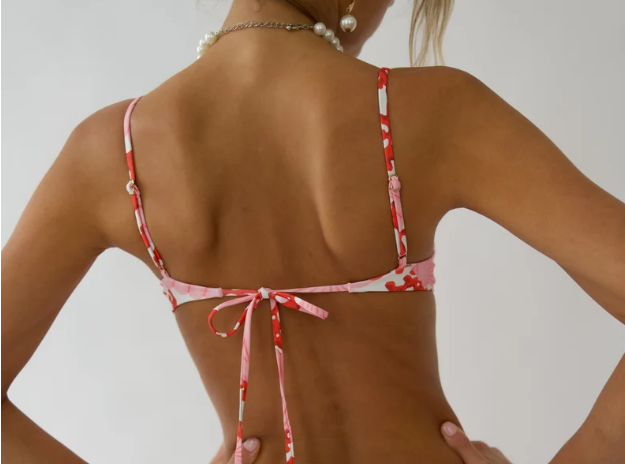
Sliders are mainly used to control strap length.
They are useful in bikini tops and one-piece swimsuits because wearers with the same garment size may still need different shoulder strap lengths.
Choose the Correct Slider Width
The slider should allow the strap to move smoothly without sliding on its own.
If the opening is too tight, adjustment becomes difficult. If it is too loose, the strap may gradually lengthen while the swimsuit is worn.
A simple sample test is to adjust the strap, apply moderate tension and check whether the slider stays in position.
Check for Strap Twisting
A strap can twist inside the slider if the hardware opening is too wide or the finished strap is uneven.
This may look minor on a flat sample but becomes more visible when the swimsuit is worn. The strap should stay flat through the full adjustment range.
Using Buckles in Swimwear
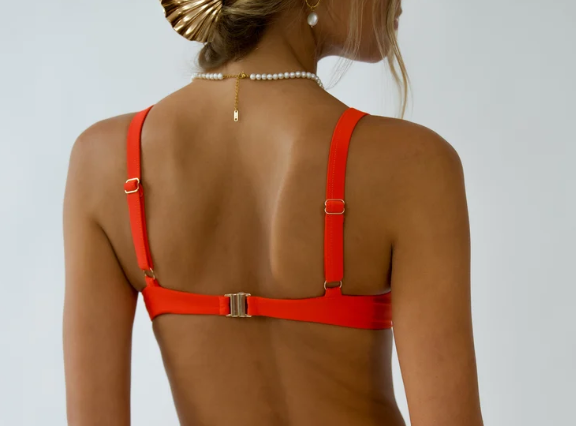
Buckles can be functional or decorative, and the design approach should reflect that difference.
Functional Buckles
A functional buckle must stay secure when the swimsuit is under tension.
Back closures, for example, should be easy enough to operate but should not open accidentally during movement.
The buckle also needs to sit comfortably against the body. A bulky or poorly positioned closure can become noticeable once the garment is wet or stretched.
Decorative Buckles
Decorative buckles are often used at the waist, center front or sides of bikini bottoms.
Even if they do not open, they still create a rigid point in a stretch garment. If the surrounding area needs significant stretch, the buckle may pull the fabric or change how the swimsuit sits on the body.
The sample should therefore be checked while worn, not only when laid flat.
What to Consider When Choosing Swimwear Hardware
Once the function and placement are confirmed, the hardware itself needs to be suitable for swimwear.
Size and Weight
Hardware should feel balanced with the scale of the garment.
A large metal buckle may work visually on a wider waistband but feel too heavy on a delicate bikini top. Excess weight can pull the garment downward or make the hardware tilt during wear.
Surface and Finish
The surface should feel smooth against both the skin and the fabric.
Sharp edges or rough plating can damage stretch fabric over time. The finish also needs to hold up against repeated exposure to water.
For metal hardware, sample review should include the actual finish intended for production rather than relying only on a shape sample.
Keep Hardware Finishes Consistent
Rings, sliders, buckles and logo pieces should usually be reviewed together.
If one component is gold and another is silver, the difference can make the final garment look inconsistent unless the contrast is intentional.
This is easier to control before sampling than after several hardware components have already been approved separately.
Common Hardware Design Mistakes
Some hardware problems only become obvious once the sample is worn.
Oversized Hardware
Hardware that is too large can overpower a small bikini panel or add unnecessary weight.
Poor Strap Compatibility
A strap that does not fit the ring or slider properly may gather, twist or move during wear.
Restricted Stretch
Rigid hardware can reduce stretch in the area around it. This becomes a fit issue if the component is placed across a part of the garment that needs to extend.
Late Hardware Changes
Changing ring or buckle size after the construction is finalized may require changes to the strap, seam or attachment method.
For this reason, the main hardware should be confirmed early in development.
Review Hardware During Sampling
A hardware detail that looks correct in a sketch may behave differently once attached to stretch fabric.
During sample review, check whether:
- The slider stays in position after adjustment.
- The ring keeps the strap flat.
- The buckle remains secure under tension.
- The hardware sits comfortably against the body.
Fit testing is especially important for hardware placed at the bust, waist or hips, where movement and stretch are more noticeable.
Conclusion
Rings, sliders and buckles should support the construction of the swimsuit, not work against it.
Their final size and placement are best confirmed during sampling, when fit, movement and fabric behavior can be reviewed on the actual garment. Small adjustments at this stage can improve both the finished appearance and production consistency.