
Swimwear is one of the most unforgiving categories in apparel development. A swimsuit sits close to the body, stretches with movement, and has to perform in water. Small fit problems are easy to notice, and they often become customer complaints after the product is worn.
For swimwear brands, fit should not only be judged by how a sample looks on a mannequin or in a studio photo. A good sample needs to be reviewed on the body, tested through movement, and checked after water exposure. This is where fabric behavior, pattern balance, and production consistency all come together.
The Golden Rule of Swimwear Fit
The first thing to understand is that swimwear fabric changes when it gets wet. A suit that feels slightly relaxed when dry may become unstable in water. It can sag at the seat, shift at the bust, or wrinkle around the waist.
This is why dry fitting should not aim for a loose, casual feel. A swimsuit should feel secure when dry, but it should not dig into the skin. If the sample only feels stable because the elastic is pulling too hard, the problem will usually become more obvious during wear.
What to Check During Sample Fitting
During the first fit review, the goal is not only to confirm size. The fitting should show whether the pattern and fabric are working together.
- Swimsuit should stay close to the body when the model raises her arms.
- The fabric should recover after being stretched by hand.
- The neckline should not open when the model bends forward.
- Bottom should stay in place after walking or sitting.
If these basic checks fail, the issue should be corrected before moving into size grading or bulk production.
One-Piece Swimsuits
A one-piece swimsuit is often more difficult to fit than it looks. It has to follow the bust, waist, hip, and torso at the same time. If the torso length is not balanced, the whole garment can feel uncomfortable even when the width measurement is correct.
Torso Length
Torso length is one of the most common causes of fit problems in one-piece styles. If the body length is too short, the suit pulls down on the shoulders and creates pressure at the crotch. If it is too long, extra fabric may gather around the lower back or stomach.
Straps and Shoulder Pressure
Straps should help stabilize the swimsuit, but they should not carry the full weight of the garment. When the straps leave deep marks after a short fitting session, the issue is often connected to body length or strap elasticity.
A good strap setup should feel secure without forcing the garment upward.
- The strap should lie flat on the shoulder.
- The shoulder area should not show deep pressure marks.
- The neckline should stay controlled without pulling the bust upward.
- Adjustable straps should not slip after light movement.
Seat Coverage
The back coverage should match the intended design. A standard-coverage swimsuit should not ride up into a high-cut shape during movement. If this happens, the back rise or leg opening curve may need adjustment.
This is especially important for brands selling across different body types. A small issue in the base size can become more visible after grading.
Bikini or Two-Piece
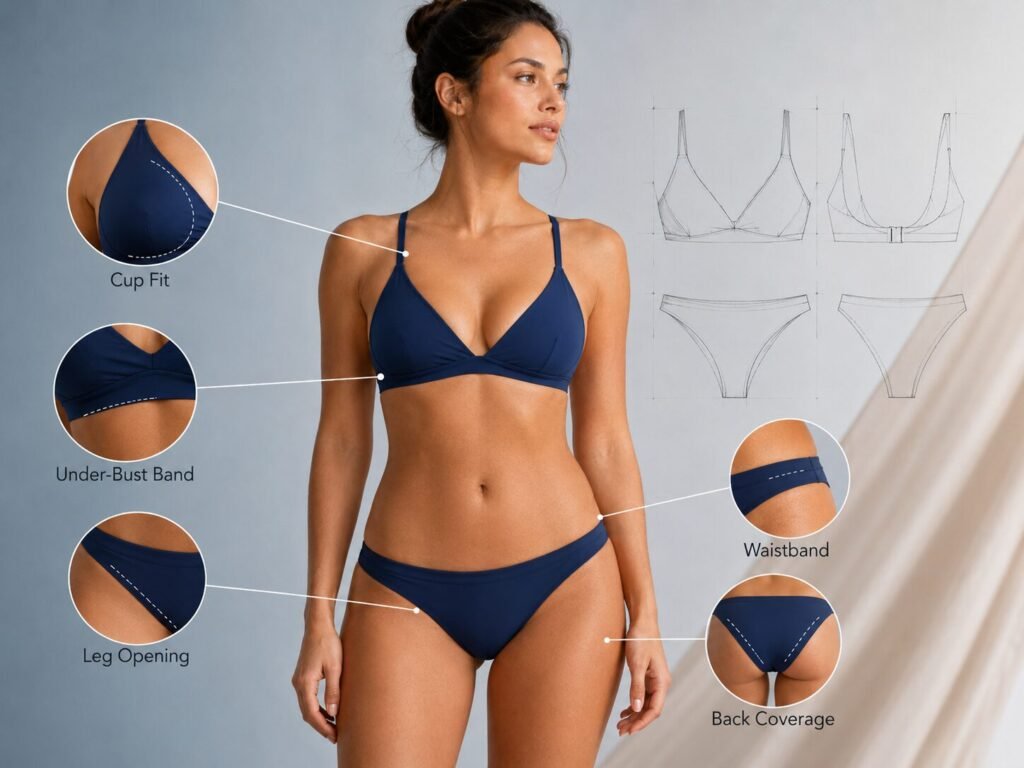
Two-piece swimwear gives customers more flexibility because the top and bottom can be fitted separately. For brands, this also means each piece needs its own fit review.
Bikini Top Fit
A bikini top should not depend only on the shoulder straps for support. The under-bust band plays a major role in keeping the top stable. If the band rides up at the back, the top will feel less secure in real use.
The cup shape should also be reviewed carefully. When the cup is too small, the bust may spill at the side or top. When the cup is too large, the fabric may collapse or gape away from the body.
Key fit checks include:
- The under-bust band should stay level around the body.
- The cup edge should sit close without cutting into the bust.
- The side seam should not push the bust outward.
- The top should stay stable when the model lifts her arms.
Bikini Bottom Fit
Bikini bottoms need to stay secure without creating pressure at the waist or leg opening. The waistband should lie flat when the model stands and sits. If it rolls outward, the waistband shape may not follow the body curve well enough.
Leg openings are another sensitive area. Too much elastic tension can create visible digging and discomfort. Too little tension can make the bottom shift during movement.
For sample review, check these points:
- The front rise should not wrinkle after walking.
- The waistband should stay flat when the model sits down.
- The leg opening should not leave sharp pressure marks.
- The back coverage should match the approved design.
Swim Shorts and Trunks
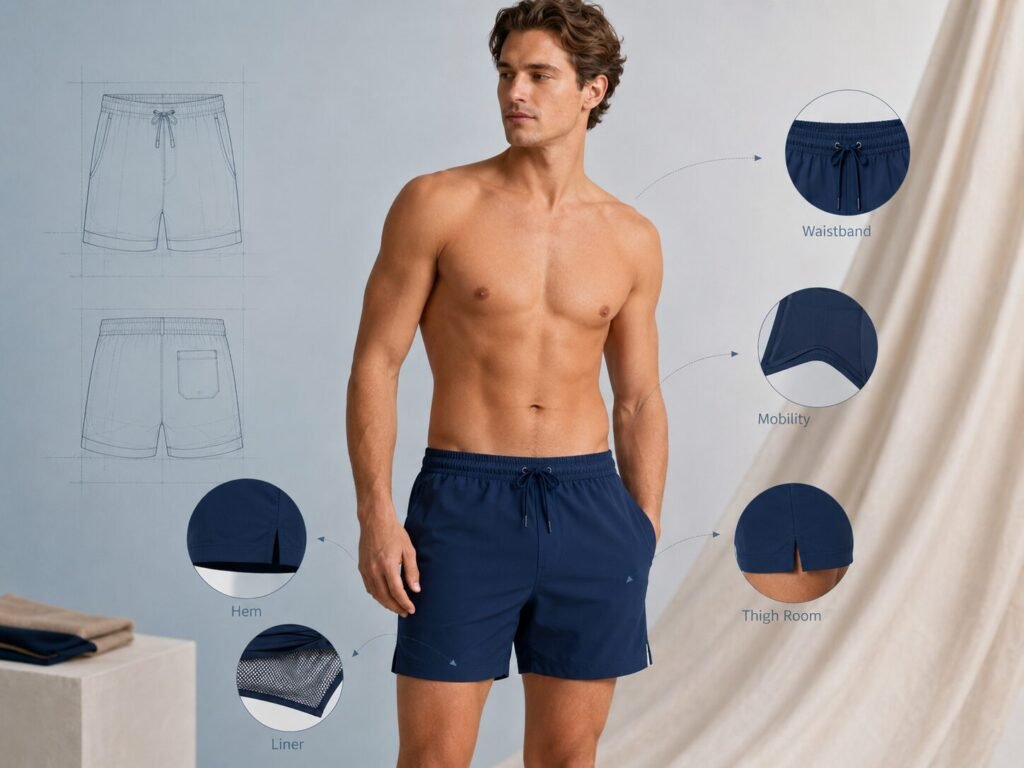
Swim shorts, boardshorts, and trunks have different fit priorities from one-piece or bikini styles. The main focus is waist security, thigh movement, and liner comfort.
Waistband Stability
The waistband should hold the shorts in place without depending completely on the drawstring. If the drawstring has to be tied very tightly, the waist measurement is probably too large.
For elastic waist styles, the waistband should stretch smoothly and return to shape. A waistband that twists after fitting may cause problems in bulk production, especially after washing.
Movement and Sitting Test
Swim shorts need enough room for sitting, walking, and swimming. A sample may look clean when standing, but become tight across the hip or thigh when the model sits down.
Important review points include:
- The front rise should not pull when the model sits.
- The thigh area should allow natural walking.
- The side seam should not twist during movement.
- The hem should not restrict the upper leg.
Built-In Liner
If the style includes a mesh liner or inner brief, it should be checked separately from the outer shell. A rough liner can cause discomfort even when the outer shorts fit well.
The liner should sit close to the body without scratching or cutting into the skin. The edge finish is especially important because this area touches the body directly.
Common Fit Problems in Swimwear Samples
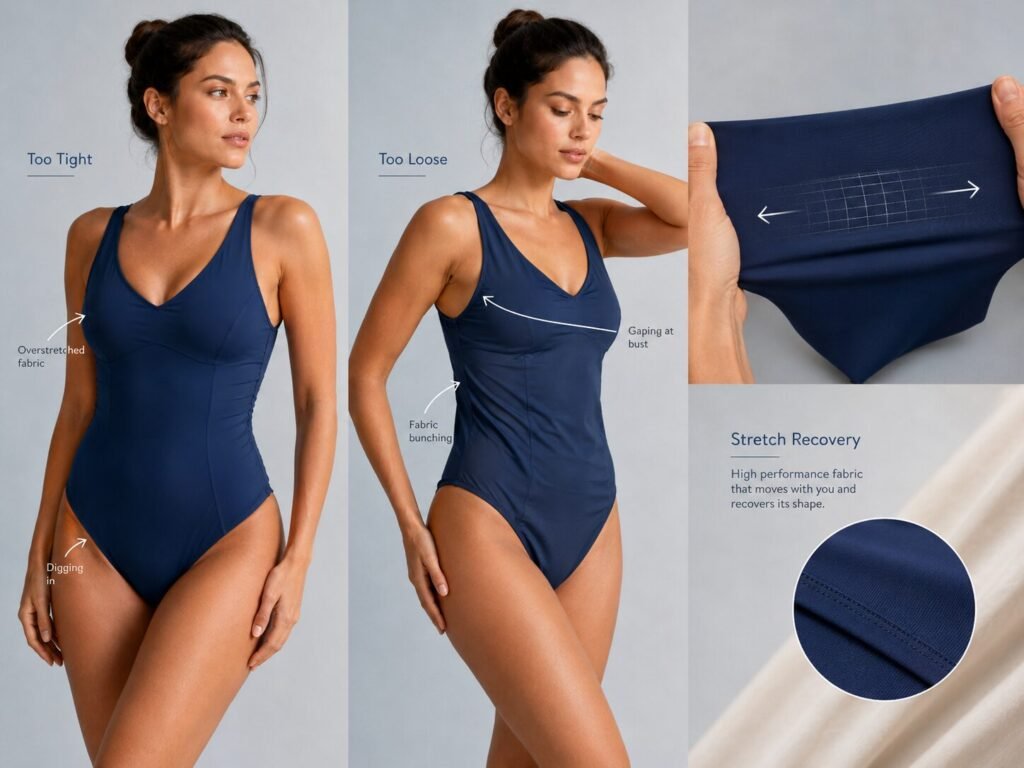
Fit issues are easier to correct when the cause is identified early. Some problems come from the pattern. Others are linked to fabric stretch, elastic tension, or construction method. The key is to avoid treating every issue as a size problem.
When the Sample Is Too Tight
A swimsuit that is too tight often shows stress in the fabric before the wearer says anything. Print distortion is one of the clearest signs. When the fabric is stretched beyond its intended range, the color may look lighter and the print may lose shape.
When the Sample Is Too Loose
A loose swimsuit may look acceptable in a standing photo, but it usually fails during movement or after water exposure. Wrinkles around the lower stomach, seat, or under-bust area often suggest that the garment is not sitting close enough to the body.
Loose fit can also affect confidence. If a neckline opens or a bottom shifts during movement, the customer will not feel secure wearing the product.
Fabric Performance and Fit Consistency
Fabric quality has a direct impact on swimwear fit. A pattern can be well developed, but the final product will still fail if the fabric does not recover after stretch. This is especially important for swimwear because the garment is exposed to water, chlorine, salt, sunscreen, and repeated washing.
Stretch Recovery
Stretch recovery means the fabric can return to its original shape after being stretched. In swimwear, poor recovery often leads to sagging after wear. The issue may not appear during the first dry fitting, which is why fabric testing should be part of development.
Elastic and Construction
Elastic tension should be reviewed carefully during sampling. Strong elastic does not always mean better support. If the elastic is applied with too much tension, the garment may dig into the skin and create an uneven fit line.
Construction also affects how the swimsuit sits on the body. Seam placement, edge finishing, lining, and hardware all influence comfort. These details should be reviewed before bulk production because small construction issues can become repeated defects at scale.
Why Fit Testing Matters Before Bulk Production
Swimwear fit cannot be judged by measurement specs alone. A size chart gives the starting point, but real fit depends on how the garment behaves on the body. This is why sample review should include both static fitting and movement testing.
A practical fit test helps brands confirm:
- Whether the garment stays secure during movement.
- Whether the fabric recovers after stretch.
- Whether elastic tension feels comfortable on the body.
- Whether the approved fit can be repeated in production.
For brands developing new swimwear styles, this process helps reduce return risk and improves customer experience. It also gives the manufacturer clearer guidance before grading, fabric ordering, and bulk sewing begin.
Final Thoughts
A well-fitting swimsuit is the result of careful pattern development, suitable fabric selection, and consistent production control. The best time to solve fit problems is during sampling, before small issues become bulk production defects.
For swimwear brands, a structured fit review process makes the product more reliable. It also helps customers feel secure when they wear the final garment in real life, not only when they see it online.