
If you have ever spent a long day at the beach or a grueling afternoon on a grappling mat, you have likely encountered the rash guard. While some people mistakenly search for it as a “rush guard“—perhaps because of the “rush” of adrenaline in extreme sports—its correct term is the rash guard.
This specialized athletic shirt has evolved from a niche piece of surfing gear into a global performance essential. From Olympic-level swimming to elite Mixed Martial Arts (MMA), the rash guard is the unsung hero of skin protection and muscle performance.
In this comprehensive guide, we will explore the anatomy, history, and various uses of the rash guard to help you decide which one is right for your lifestyle.
1. What is a Rash Guard?

A rash guard (also known as a “rashie” or “rash vest”) is a thin, form-fitting athletic shirt made of quick-drying synthetic materials—usually a blend of polyester or nylon with spandex (elastane).
The History: From Australian Beaches to the World
The rash guard was popularized by surfers in Australia who were tired of “board rash“—the painful skin irritation caused by the friction between their chest and the surfboard’s waxed surface. By wearing a thin, stretchy layer, they found they could paddle for hours without the wax and sand scouring their skin.
By the 1990s, the garment crossed over into combat sports like Brazilian Jiu-Jitsu (BJJ), where “mat burn” was the equivalent of board rash. Today, it is a staple in almost every high-intensity sport that involves water, sun, or physical contact.
2. Why Should You Wear One?
A rash guard isn’t just a shirt; it’s a piece of technical equipment. It provides 4 primary layers of defense:
Ultraviolet (UV) Protection
Unlike regular cotton t-shirts, which can have an Ultraviolet Protection Factor (UPF) as low as 5, most rash guards are rated UPF 50+.
The “science” of UPF can be expressed as the fraction of UV radiation that can penetrate the fabric:

For example, a UPF 50 garment allows only 1/50th (or 2%) of the sun’s UV rays to reach the skin. This makes it an indispensable tool for preventing sunburn and long-term skin damage during extended outdoor activities.
Abrasion Resistance
Whether you are sliding across a surfboard or wrestling on a vinyl mat, friction is your skin’s enemy.
- In the Water: It protects against sand, surf wax, and mild jellyfish stings.
- On the Mats: It prevents “mat burn”—the raw, painful friction burns that occur during grappling—and acts as a barrier against skin infections like ringworm or staph.
Performance and Compression
Modern rash guards offer a compression fit. This supports the muscles by promoting blood circulation and reducing the “vibration” of the muscles during movement, which can help delay fatigue.Furthermore, the sleek fit makes you more hydrodynamic in the water and more aerodynamic in combat.
Modesty and Comfort
Not everyone wants to be in a bikini or bare-chested top while doing active water sports. Rash guards are a common choice for:
- Families at the beach (especially for kids)
- Surf schools and group lessons
- People who want more coverage while swimming or snorkeling
- Anyone who wants a sporty, secure feeling during movement
They also help some people feel more comfortable in photos or public areas without needing a cover-up.
3. Materials and Construction
What makes a rash guard different from a standard gym shirt is the way it is built. A quality rash guard is designed to withstand salt, chlorine, and extreme tension.
Fabric Blends: The Foundation
Most manufacturers use a blend of two main fibers:
| Material | Primary Benefit | Best For |
| Polyester + Spandex | Superior chlorine resistance and color retention. | Swimming pools and competitive MMA (durability). |
| Nylon + Spandex | Softer hand-feel and better abrasion resistance. | Surfing and long days at the beach (comfort). |
| PBT blends (Polyester family) | Excellent chlorine resistance, shape retention, and long-term durability. | Frequent pool use, swim training, and kids’ swimwear (high chlorine exposure). |
| Recycled nylon /polyester | Lower environmental impact with similar stretch and quick-dry performance (often GRS-ready). | Sustainable collections, eco-focused brands, and everyday beach/surf wear. |
Fabric weight (GSM)
Common range: 180–240 GSM
- 180–200 GSM: lighter, cooler, faster drying (can be less opaque when stretched)
- 200–240 GSM: more durable, more coverage, “premium” feel (slightly slower dry)200–240
If your rash guard is meant for women’s fashion + sun protection, the 200+ GSM range usually looks more substantial on-body.
Specialized Stitching
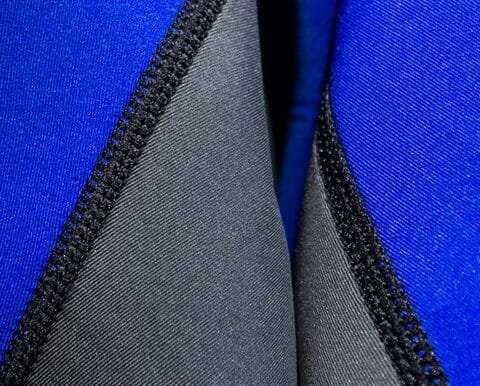
A standard shirt seam can be bulky and cause chafing. High-quality rash guards use Flatlock Stitching. This is a technique where the edges of two pieces of fabric are sewn together without overlapping, creating a seam that lies perfectly flat against the skin.
Note: If you see “overlock” stitching (where the seam forms a ridge on the inside), it is likely a lower-quality garment that will cause irritation during high-intensity movement.
4. Specialized Uses
While the basic design remains similar, different sports require specific features in their rash guards.
I. Surfing and Water Sports
In the ocean, the priority is sun protection and warmth.
- Features: Often includes a “boardshort loop” at the hem to prevent the shirt from riding up when a wave hits.
- Style: Long sleeves are preferred for maximum sun coverage.
II. Combat Sports (MMA, BJJ, Wrestling)
In the gym, the priority is hygiene and durability.
- Features: Many MMA rash guards feature a silicon waistband—a sticky strip along the bottom hem that “grips” the skin to prevent the shirt from sliding over your head during wrestling.
- Hygiene: They are treated with antimicrobial coatings to prevent the growth of bacteria from sweat.
III. Scuba Diving and Snorkeling
Divers often wear a rash guard as a base layer under their wetsuit.
- Purpose: It makes sliding into a neoprene wetsuit much easier and prevents the wetsuit seams from chafing the neck and armpits.
5. Rash Guard vs. Swim Shirt vs.Wetsuit
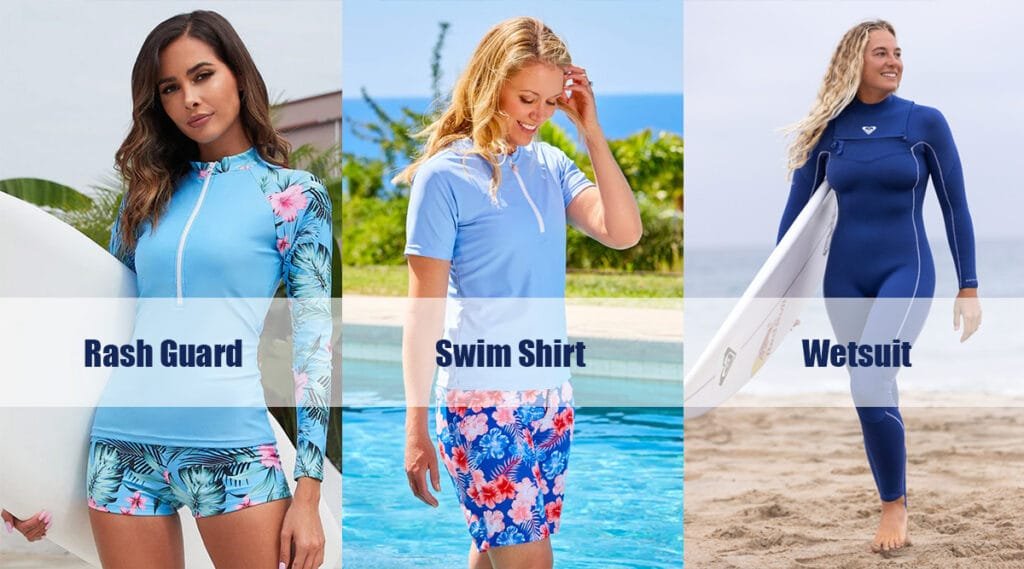
Many people use these terms interchangeably, but there is a distinct difference in fit and function.
| Feature | Rash Guard | Swim Shirt | Wetsuit |
|---|---|---|---|
| Fit | Tight | Loose / Relaxed | Very snug |
| Warmth | Medium | Low | High |
| Drag | Low | High | Low |
| Fabric | Nylon/Polyester Spandex or PBT | Often polyester blends | Neoprene |
| Key benefit | Chafe + sun protection, quick-dry, stays put in water | Easy, comfy coverage, casual look | Real insulation + buoyancy + wind protection |
| Best for | Surfing, snorkeling, paddle sports, layering under wetsuits | Casual beach/pool use, light water activity | Cold water sports: surfing, diving, open-water swimming |
6. Sizing and Fit Guide
The most common mistake people make when buying a rash guard is choosing a size that is too large.
The “Second Skin” Rule: A rash guard should fit snugly against the skin without restricting your breathing. If there are visible “wrinkles” or “folds” in the fabric when you are standing still, it is likely too big.
The Movement Test
When trying on a rash guard, perform these three movements:
- The Reach: Raise your arms straight above your head. The hem should stay near your hips, not rise above your belly button.
- The Twist: Rotate your torso side to side. The fabric should move with you, not pull tight across the chest.
- The Squeeze: Check the armpits. If the fabric is “digging in,” it will cause chafing once you start sweating.
7. Care and Maintenance
Because rash guards are made of delicate synthetic fibers, heat and chemicals are their enemies. To extend the life of your rash guard:
- Rinse Immediately: After a session in the pool or ocean, rinse it in cold, fresh water to remove chlorine or salt.
- Avoid the Dryer: High heat destroys the spandex fibers, causing the shirt to lose its “snap.” Always air dry your rash guard in the shade.
- Beware of Velcro: The rough side of Velcro (often found on boardshorts) can “pill” the fabric of your rash guard. Be careful when washing them together.
Conclusion
Whether you are looking to avoid a painful sunburn, protect your skin from mat bacteria, or simply want a streamlined layer for your morning swim, the rash guard is an essential investment. It is one of the few pieces of athletic gear that truly crosses over from “lifestyle” to “high performance.”