
In professional clothing production, turning a designer’s sketch into a retail-ready product takes technical precision. At the center of that process is the garment pattern — the technical template that defines how each part of the garment will be shaped, cut, and assembled.
In manufacturing, a garment pattern provides the structure needed to move a design from concept to sampling and production. It may exist as a paper pattern, a digital pattern, or both, depending on the factory workflow.
This article will explain what a garment pattern is and why it is important in clothing manufacturing.
What Is a Garment Pattern?
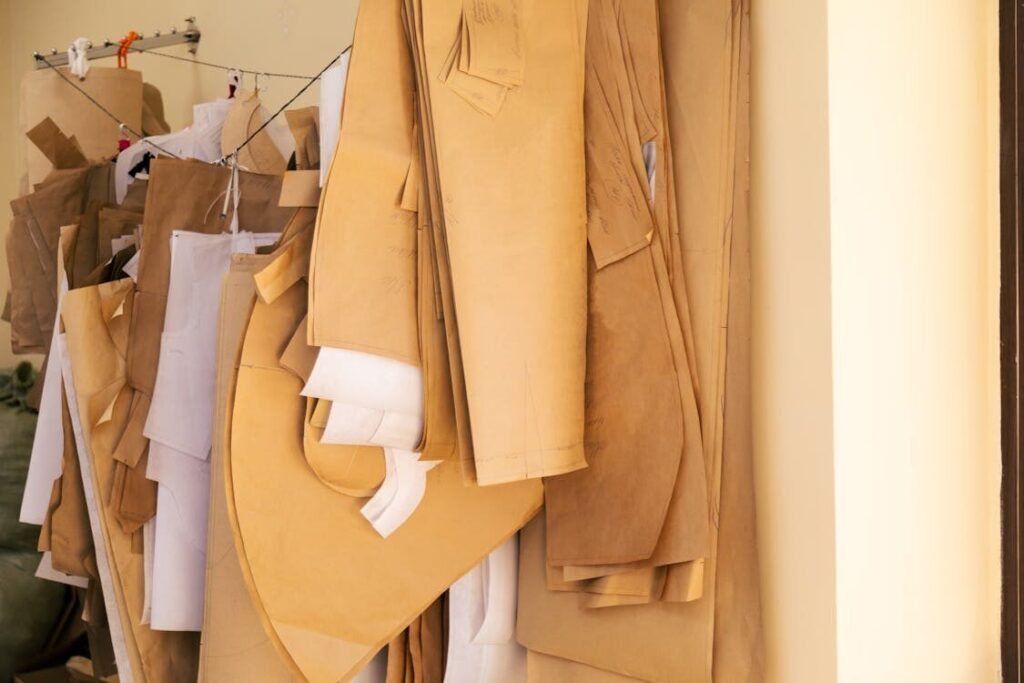
A garment pattern is a template that defines the shape, size, and construction of each part of a garment before the fabric is cut. Each pattern piece represents one section of the product, such as the front body, back body, sleeve, waistband, collar, cup, or lining.
In simple terms, the garment pattern is the technical version of the design. A sketch shows how a garment should look, but the pattern shows how the factory will actually build it. It turns design details into measurable pieces that pattern makers and sampling teams can test, adjust, and use for development or production.
In modern swimwear manufacturing, garment patterns are often developed in CAD software and then printed on large plotters or shared digitally as DXF files for automated cutting. In other words, the pattern may be digital in workflow, but its function remains the same.
What Is Included in a Garment Pattern?
A paper pattern includes far more than a simple outline. A well-made pattern contains technical markings that help the factory cut and assemble the garment correctly.
Common elements include:
- Pattern piece names: Each piece is clearly labeled so the factory knows what it is, such as front panel, back panel, sleeve, facing, or lining.
- Seam allowances: These show how much extra fabric is included around the edge for sewing. Without correct seam allowances, the final garment size can change.
- Grainline: The grainline shows how the pattern should be placed on the fabric. This affects drape, stretch direction, and stability.
- Notches: Notches are small marks used to match pieces during sewing. They help operators align seams accurately.
- Fold lines: If a piece needs to be cut on the fold, the pattern will indicate that.
- Size information: Patterns may include size markings, grading references, or labels for different size ranges.
- Cutting instructions: Some patterns also include notes such as fabric direction, quantity to cut, or whether a piece should be mirrored.
These details may seem small, but they play a major role in achieving consistency from sampling to bulk production.
Why Does a Garment Pattern Matter in Manufacturing?
Garment patterns play a critical role in manufacturing because they connect design intent with production reality. In swimwear especially, pattern making requires deeper technical expertise because the product must work with stretch fabrics like nylon-spandex and recycled Lycra, body movement, and precise fit.
1. Accounting for Fabric Stretch (Negative Ease)
Unlike a jacket or a dress, swimwear patterns are often smaller than the body measurements they are designed to fit. This is known as negative ease. Pattern makers must calculate the stretch percentage of a specific fabric so the garment provides the right level of compression without feeling restrictive.
2. Shrinkage and Heat Sensitivity
Many swimwear brands use sublimation printing or heat-press logos, both of which can affect fabric behavior. A skilled manufacturer adjusts the garment pattern in advance so the final product still matches the intended size chart after these processes.
3. Engineering Complex Fits
Cut-out designs, shaped cups, and multi-strap bikinis all increase pattern complexity. A single bikini top may include many separate pattern pieces, and strong pattern development helps keep the design balanced, functional, and symmetrical in wear.
How a Garment Pattern Is Developed?
A reliable swimwear manufacturer does more than cut fabric. They manage the full pattern development process.
The Master Pattern and Proto-Sample
The process The process usually starts with a master pattern built for one sample size, often Medium. The development team uses that pattern to create the first prototype. During fitting, they may move a strap, deepen a neckline, or adjust coverage. The pattern maker then updates the master pattern to reflect those changes.
Pattern Grading: Ensuring Consistent Sizing
Once the master pattern is approved, it goes through grading. This is the process of scaling the pattern into a full size run, such as XS to XXL. In swimwear, grading is rarely purely linear, since larger sizes may require changes in strap width, support, or construction details.
Marker Making
Before cutting begins, the pattern pieces are arranged into a marker. This layout helps maximize fabric utilization and reduce waste, which is especially important when brands use premium or sustainable swimwear fabrics.
Paper Pattern vs Digital Pattern
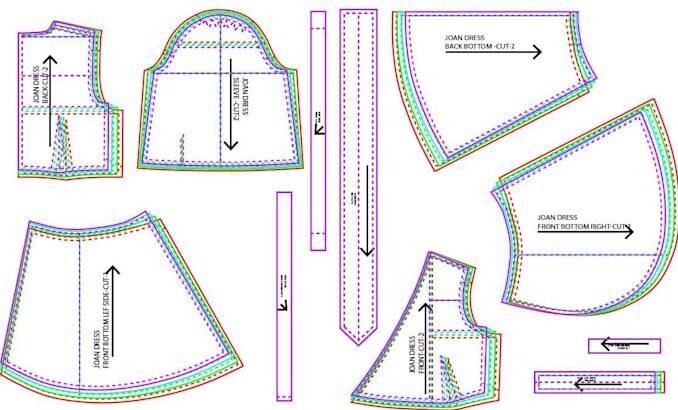
Many garment factories now use digital pattern systems, but paper patterns still have a practical role in development.
A paper pattern is a physical version of the garment pattern. Developers can handle it directly, check it on the table, and use it as a manual reference during sampling and development.
A digital pattern lives inside pattern software. Teams can edit, grade, duplicate, and share it more easily, and it works more efficiently with marker making and automated cutting systems.
The main difference is the format, not the purpose. Both paper and digital patterns define the structure of the garment and help guide the product from development to production.
At our factory, we work with both. We can take a client’s physical sample, digitize it into a CAD pattern, and then optimize it for bulk production.
Frequently Asked Questions
Yes. We can study the seams, stretch, and construction of your sample, then build a digital garment pattern that reproduces the fit as closely as possible.
Different fabrics behave differently in stretch, recovery, and weight. If you use the same pattern for two fabrics with different performance, the fit may change. That is why pattern adjustments are often needed when fabric type or fabric weight changes.
A garment pattern gives the factory a precise technical guide for shaping, cutting, and assembling the garment. It helps turn a design concept into a product the team can test, refine, and reproduce consistently.
Not exactly. A garment pattern is the broader concept, while a paper pattern is one physical form of that pattern. Today, many factories also work with digital patterns.
Because swimwear relies on stretch, support, and close body fit. Small pattern errors can affect comfort, balance, and overall performance much more quickly than in looser garments.
Conclusion
A garment pattern is one of the most important technical foundations in swimwear manufacturing. It gives structure to the design, supports fit development, and helps ensure the product can move from sampling to production with greater accuracy and consistency.
Whether it is developed on paper, in digital form, or through both formats, the pattern remains central to how a garment is built and how well it performs in real wear.
If you are developing a new swimwear style or collection, working with a manufacturer that understands both pattern development and production can make the process more efficient and the final result more reliable. Feel free to contact us to discuss your ideas, sampling needs, or production plans.