
When brands start developing custom swimwear, one of the first questions is always about price. But in real production, swimwear costing is rarely based on just one factor. Two styles may look similar on the surface, yet end up with very different prices once fabric, construction, trims, printing, and order quantity are taken into account.
That is why custom swimwear production often feels more complex than buyers expect at the beginning. The final cost is shaped not only by the design itself, but also by how that design is developed, sourced, and manufactured.
In this guide, we break down the main factors that affect custom swimwear cost, so brands can make better sourcing decisions and plan collections more efficiently.
Why Custom Swimwear Costs Vary
Custom swimwear is priced project by project because each style has its own material requirements, labor intensity, and development workload. A basic bikini with stock fabric and simple construction is very different from a fully custom one-piece with engineered print, molded cups, specialty hardware, and branded packaging.
In most cases, the total cost is shaped by a combination of three layers:
- Material cost
- Labor and construction cost
- Development and production setup cost
The more customized the style is, the more likely it is that all three layers will increase.
1. Fabric Cost
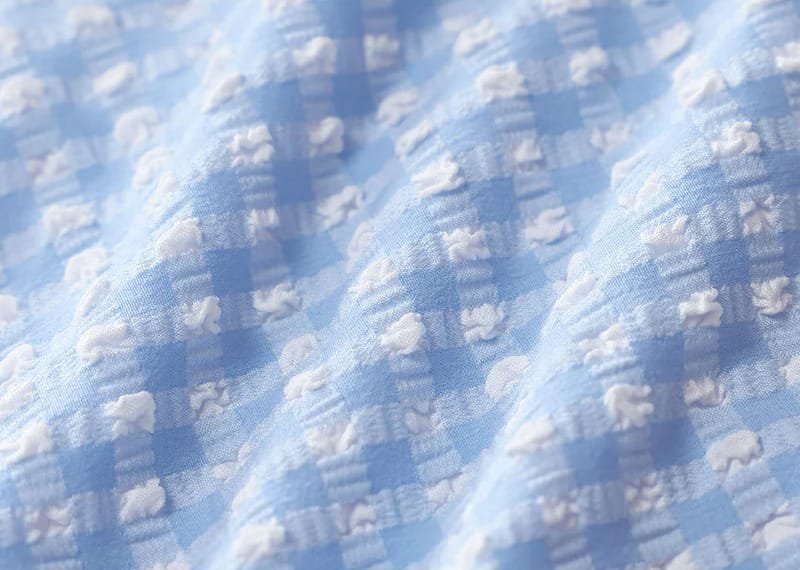
Fabric is usually one of the biggest cost drivers in swimwear production. Different materials perform differently in stretch, recovery, softness, durability, chlorine resistance, and color appearance, and these differences directly affect price.
Fabric composition
Common swimwear fabrics such as nylon-spandex and polyester-spandex can vary widely in price depending on the yarn quality and performance level. If a brand wants recycled fibers, chlorine resistance, compression, UV protection, or a more technical hand feel, the fabric cost will usually be higher.
Fabric quality level
Not all swimwear fabrics within the same composition have the same price. Yarn quality, knitting stability, colorfastness, and stretch recovery all matter. Higher-grade fabrics generally cost more, but they often perform better in production and end use.
Fabric weight
Heavier or more supportive fabrics may use more yarn and offer a different feel on body. In some cases, they also increase garment stability, but they can raise the cost compared with lighter standard swim fabrics.
Imported or specialty fabrics
If the factory needs to source a specific imported fabric, jacquard texture, metallic finish, ribbed surface, or eco-certified material, sourcing cost and lead time may both increase.
2. Printing Costs

Swimwear is often highly visual, so surface design plays a big role in cost.
Solid colors
Solid-color swimwear is usually more straightforward and cost-efficient, especially when the fabric is already available in stock colors.
Custom printing
Custom printed swimwear generally costs more because it adds design processing, color control, and production setup. The final cost depends on the print type, the number of colors, and the precision required.
Common cost differences come from:
- placement print vs. all-over print
- digital printing vs. sublimation printing
- engineered print matching across panels
- color complexity and artwork accuracy
If the print must align precisely at seams or cups, labor and waste rates can also increase.
Custom dyeing
If a buyer requests a specific Pantone-matched color for bulk fabric dyeing, MOQ requirements may be higher, and the price may increase compared with using existing stock colors.
3. Labor Cost
A simple triangle bikini and a structured one-piece do not take the same amount of work to produce. Even if the fabric is the same, labor cost can be very different.
Design details that usually raise production cost
- more pattern pieces
- shaped seams and contour panels
- built-in cups or padding pockets
- underbust support structures
- adjustable straps
- binding-intensive edges
- cut-outs
- asymmetrical construction
- contrast paneling
- lining in multiple sections
The more operations required to complete one garment, the more time the factory needs per piece. That increases labor cost and can also reduce production efficiency.
4. Trims and Accessories Costs
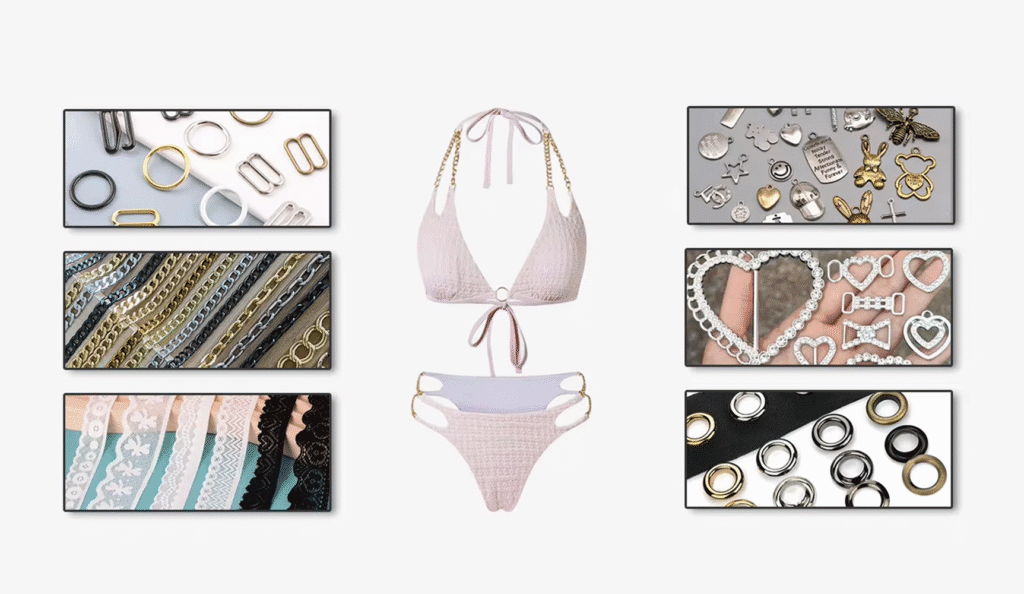
Many buyers focus on fabric and overlook trims, but trims can significantly affect swimwear cost, especially in custom projects.
Examples include:
- metal rings and sliders
- logo plates
- molded cups
- elastic quality
- drawcords
- branded labels
- silicone grips
- decorative beads or chains
- custom packaging
Basic trims are usually manageable, but custom hardware, branded accessories, or unusual materials can push cost up quickly. In some cases, a small trim may seem inexpensive on its own, but if it requires special sourcing, mold development, or higher assembly time, the actual cost impact is much larger.
5. Sampling and Development Costs
Bulk production is only one part of the project. Before bulk starts, there is usually a full development stage, and this stage also affects the overall cost structure.
Typical development stages include:
- tech pack review
- pattern making
- sample cutting and sewing
- fit revision
- material adjustment
- pre-production confirmation
If the design is straightforward and the tech pack is clear, development is usually more efficient. If the project starts with incomplete specifications or requires multiple rounds of revision, sample cost and development time increase.
This is especially common when brands are still refining:
- fit balance
- cup shape
- strap position
- lining method
- print scale
- support level
For new brands, this stage is often underestimated, but it can have a strong influence on the final cost structure.
6. MOQ and Unit Cost
MOQ, or minimum order quantity, is one of the most important pricing factors in custom swimwear production.
In general, lower quantities lead to higher unit costs because the factory still has to cover:
- sourcing time
- cutting preparation
- pattern and marker setup
- machine allocation
- quality control
- packaging setup
When the order volume is higher, these costs are spread across more units. That is why the same style may have a much higher unit price at a low MOQ than at a larger production quantity.
Why low MOQ is usually more expensive per piece
A small order does not reduce all production steps proportionally. The factory still performs many of the same processes, but with less scale efficiency. This is why highly customized swimwear in very small quantities often carries a noticeably higher per-unit price.
7. Quality and Finish
Two factories may quote different prices for the same design because their quality standards are not the same.
Higher production standards may include:
- more stable stitching
- cleaner edge finishing
- better elastic application
- improved symmetry
- stronger quality control
- more consistent sizing
- better lining attachment
- more secure hardware installation
A lower quote may look attractive at first, but if the product has fit issues, weak seams, fabric distortion, or poor finishing, the real commercial cost becomes much higher later through returns, complaints, or damage to brand reputation.
8. Performance Features
Performance-driven swimwear usually requires more technical materials or more precise construction. These functional upgrades often increase cost, but they may also improve the value of the product for the end customer.
Examples include:
- chlorine-resistant fabric
- UV-protective fabric
- compression support
- double-layer front panels
- anti-slip support areas
- reinforced bust support
- athletic construction for active use
These features are often worth the cost for training swimwear, athletic swimwear, or performance-focused collections, but they need to be defined clearly during quotation.
9. Packaging and Branding
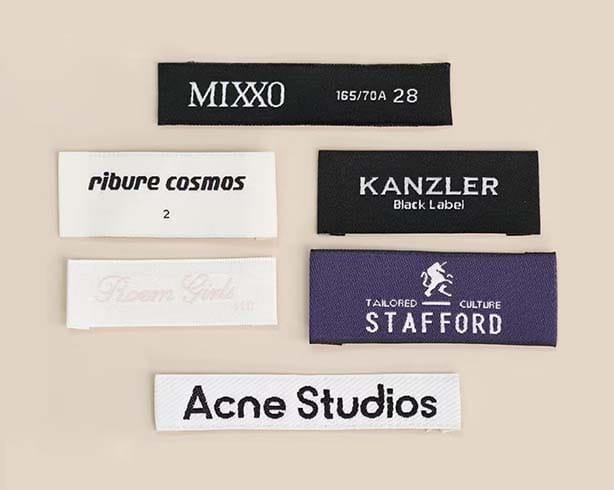
Many buyers focus only on garment cost, but packaging and branding details also add to the total.
This may include:
- custom hangtags
- woven labels
- heat transfer logos
- barcode stickers
- hygiene liners
- printed polybags
- branded boxes
For premium or retail-ready projects, these elements are important, but they should be included in the cost discussion from the start.
10. Clear communication
This factor is often overlooked. Clear communication reduces unnecessary cost. Unclear communication creates revisions, delays, errors, and rework.
Projects tend to run more efficiently when the buyer provides:
- a clear tech pack
- accurate size specifications
- fabric expectations
- trim references
- artwork files in usable format
- realistic timeline expectations
When factories need to repeatedly clarify missing information or correct development mistakes caused by incomplete inputs, the project becomes more expensive in both direct and indirect ways.
A Simple Way to Think About Swimwear Cost
If a brand wants to estimate custom swimwear cost more realistically, it helps to think in this order:
First: materials
What fabric, lining, elastic, hardware, and print method are required?
Second: construction
How difficult is the style to cut, sew, support, and finish?
Third: development
How much custom work is needed before bulk production can begin?
Fourth: volume
How many units will be produced per style, per color, and per size?
Once these four parts are clear, pricing becomes much easier to understand and compare.
How Brands Can Control Cost Without Sacrificing Quality
Lowering cost does not always mean choosing the cheapest option. In many cases, the better strategy is to simplify unnecessary complexity while keeping the product commercially strong.
Here are a few practical ways to manage cost:
Keep the design focused
Avoid adding too many decorative details unless they clearly improve product value.
Choose materials strategically
Use fabric that matches the target market and performance needs rather than automatically selecting the most expensive option.
Improve the tech pack
A clearer development package usually reduces sampling errors and shortens revision cycles.
Balance MOQ and customization
Too much customization at very low volume usually creates cost pressure. It is often better to prioritize a few strong styles first.
Work with a factory that understands swimwear
Specialized swimwear manufacturers can often identify cost-saving opportunities without damaging fit, quality, or production stability.
Conclusion
The cost of custom swimwear production is shaped by much more than fabric alone.For brands, the key is not simply to ask for the cheapest quote. It is to understand what is driving the quote and whether those cost elements support the product position, customer expectations, and margin goals of the brand.
If you are ready to developing your first swimwear sample, our team can help you evaluate fabric options, construction choices, and production details to build a solution that fits both your brand direction and your target cost.
FAQ
Fabric is often one of the biggest factors, but it is rarely the only one. Style complexity, trims, print requirements, MOQ, and sample development can also significantly affect cost.
In most cases, yes. Custom printing usually adds artwork processing, printing setup, and color control requirements, especially if print placement needs to be precise.
Because many setup and development costs remain similar even for small orders. With lower volume, those costs are spread across fewer units, so the unit price increases.
Yes. A clearer tech pack often reduces misunderstandings, sample revisions, and delays, which helps control both development cost and production risk.