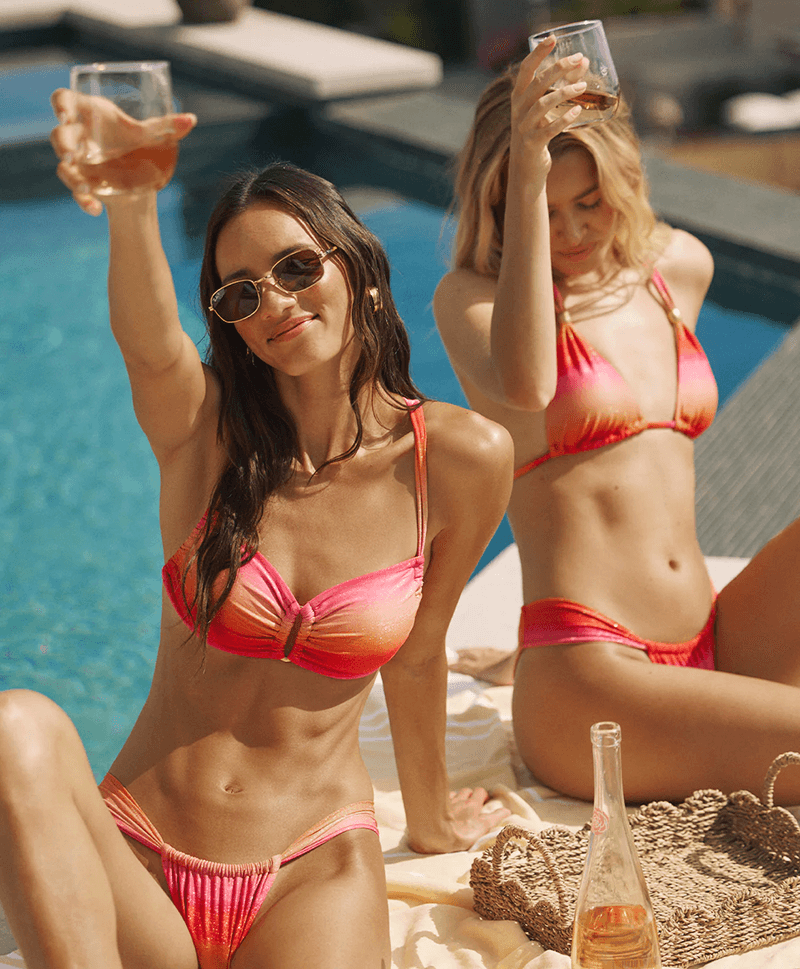
Choosing a swimsuit is no longer just about picking a color. In 2026, the swimwear industry has expanded into a complex architecture of silhouettes designed for specific body types, activities, and aesthetic subcultures. Whether you are training for a triathlon, lounging at a Mediterranean resort, or looking for maximum sun protection, the “type” of swimsuit you choose dictates your comfort and confidence.
In this comprehensive guide, we break down every major category of women’s swimwear, helping you navigate the terminology used by designers and retailers worldwide.
1. The One-Piece Family (The Maillot)
Once considered the “modest” choice, the one-piece has undergone a high-fashion revolution. It is arguably the most versatile category in swimwear.
The Classic Maillot
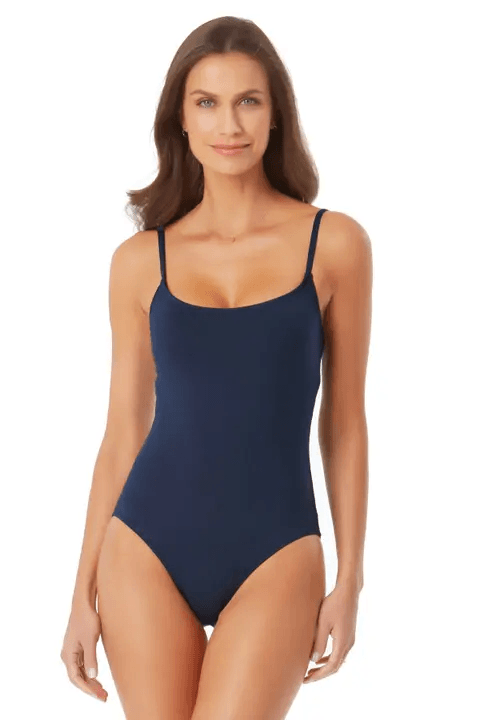
The Maillot is the standard, tank-style one-piece. It features simple straps and a moderate leg cut. It is the “little black dress” of the ocean.
- Best for: All-around swimming, timeless style.
The Monokini
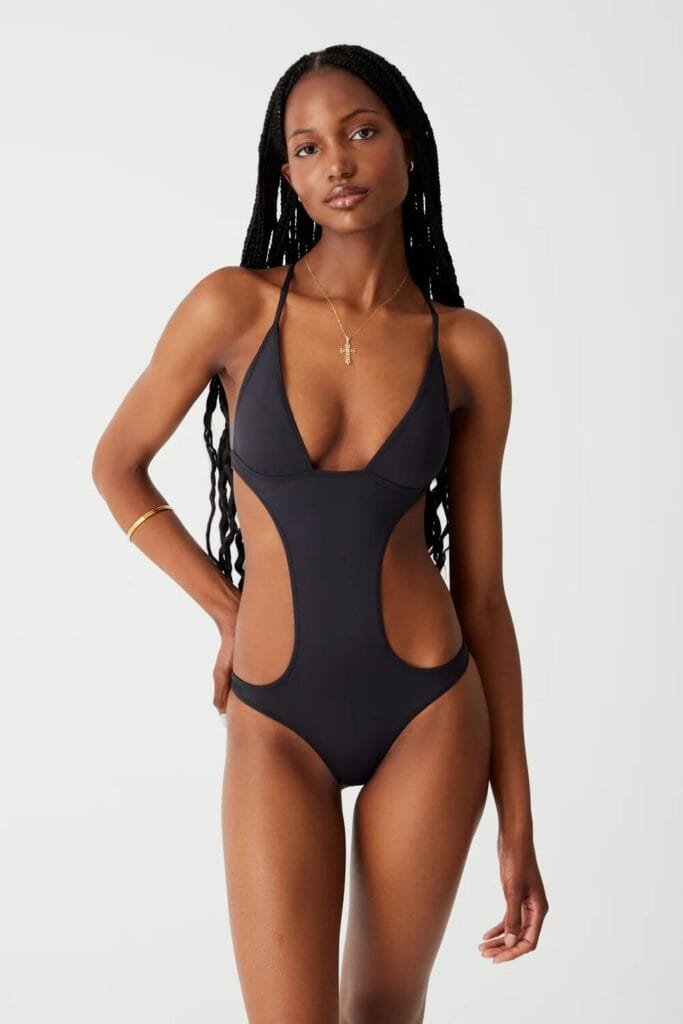
A hybrid between a one-piece and a bikini. The Monokini features significant cutouts along the waist or stomach, often leaving only a narrow strip of fabric connecting the top and bottom.
- Best for: Making a fashion statement; pool parties.
The Plunge One-Piece
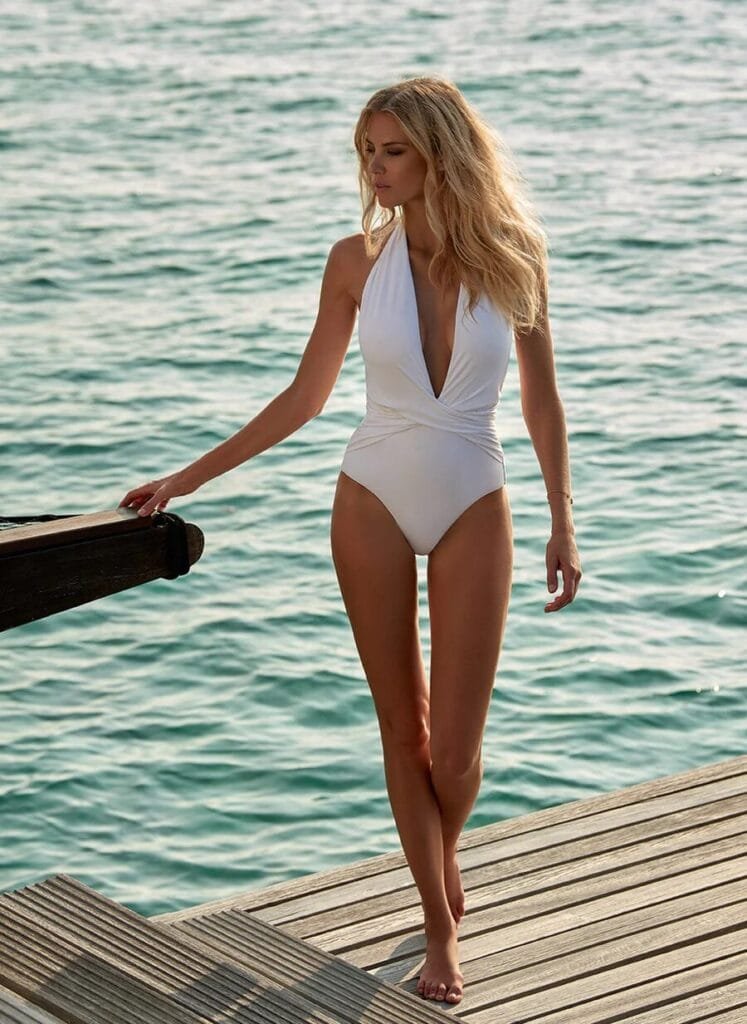
Characterized by a deep V-neckline that often reaches the midriff. These usually feature halter neck ties to provide lift.
- Best for: Smaller to medium bust sizes; creating an elongated torso silhouette.
2. The Two-Piece Family (Bikinis and Beyond)
The two-piece offers the most flexibility for mix-and-matching sizes—a crucial feature since many women are different sizes on the top and bottom.
The Triangle Bikini
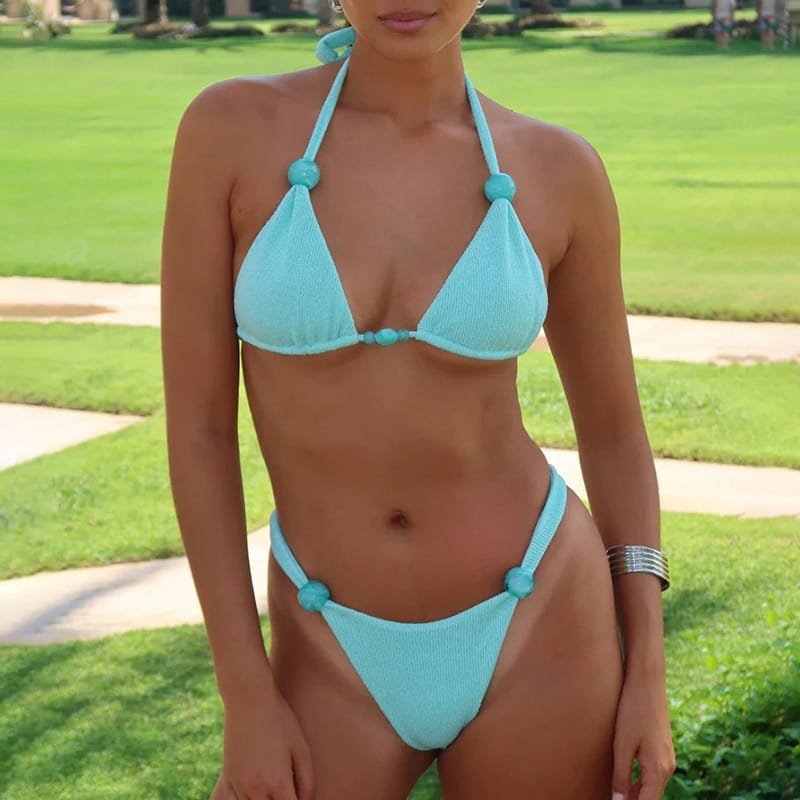
The quintessential bikini. It consists of two triangular fabric panels on the top and usually “side-tie” bottoms.
- Pros: Highly adjustable; minimal tan lines.
- Cons: Low support for high-impact activities.
The Tankini
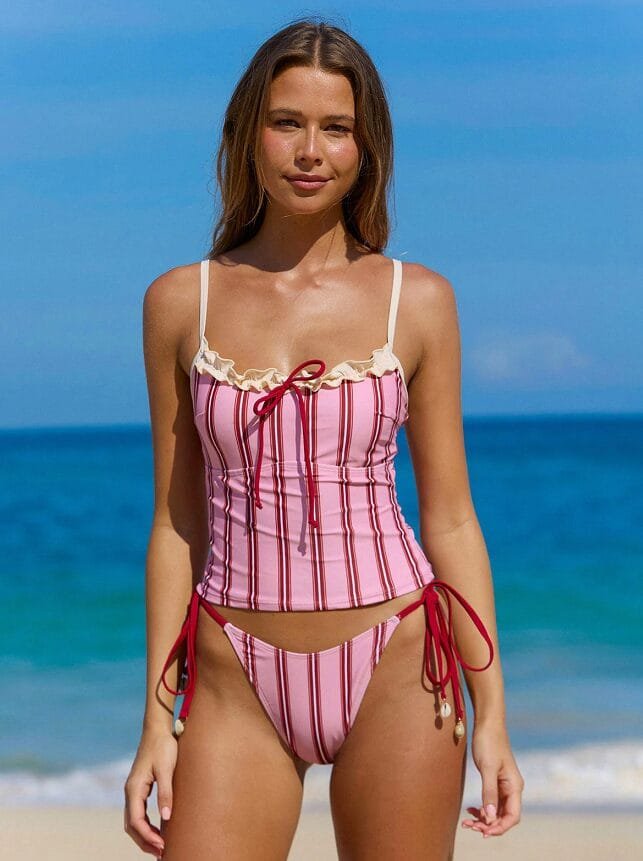
A Tankini combines a tank-top style upper with a bikini bottom. It offers the coverage of a one-piece with the convenience of a two-piece (making bathroom breaks much easier).
- Best for: Modesty, maternity wear, or active beach days.
The High-Waist Bikini
A retro-inspired style where the bottoms reach or cover the belly button.
- Best for: “Tummy control,” vintage aesthetics, and the pear-shaped body type.
The Bandeau Bikini
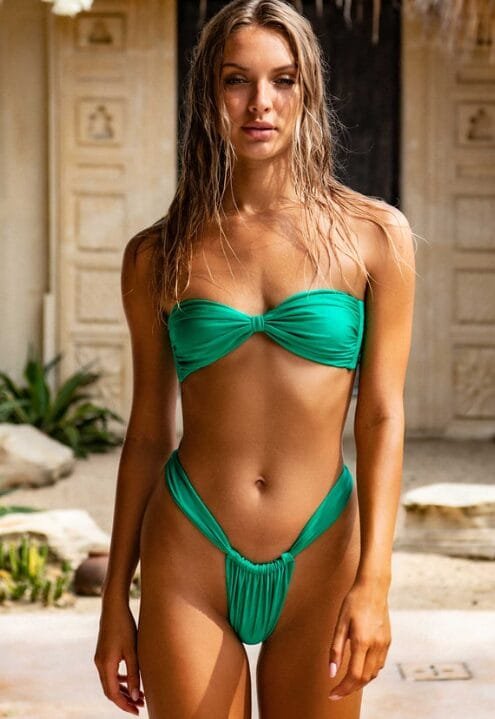
A strapless top that wraps around the bust. Most modern bandeaus come with a removable “halter” strap to prevent slipping in the waves.
- Best for: Avoiding tan lines on the shoulders.
3. Specialized and Performance Swimwear
For many, swimwear is a tool for sport rather than just a garment for leisure.
The Swim Dress
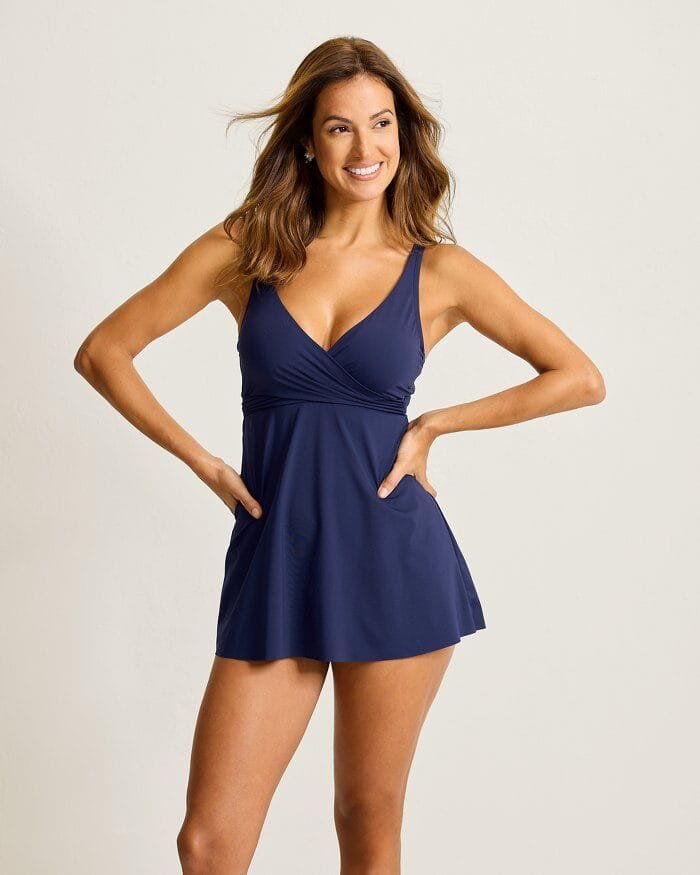
A one-piece with an attached skirt. This style provides the most coverage for the hips and upper thighs.
- Best for: Modesty, sun protection, and those who prefer a feminine, flared silhouette.
The Rash Guard and Surf Suit
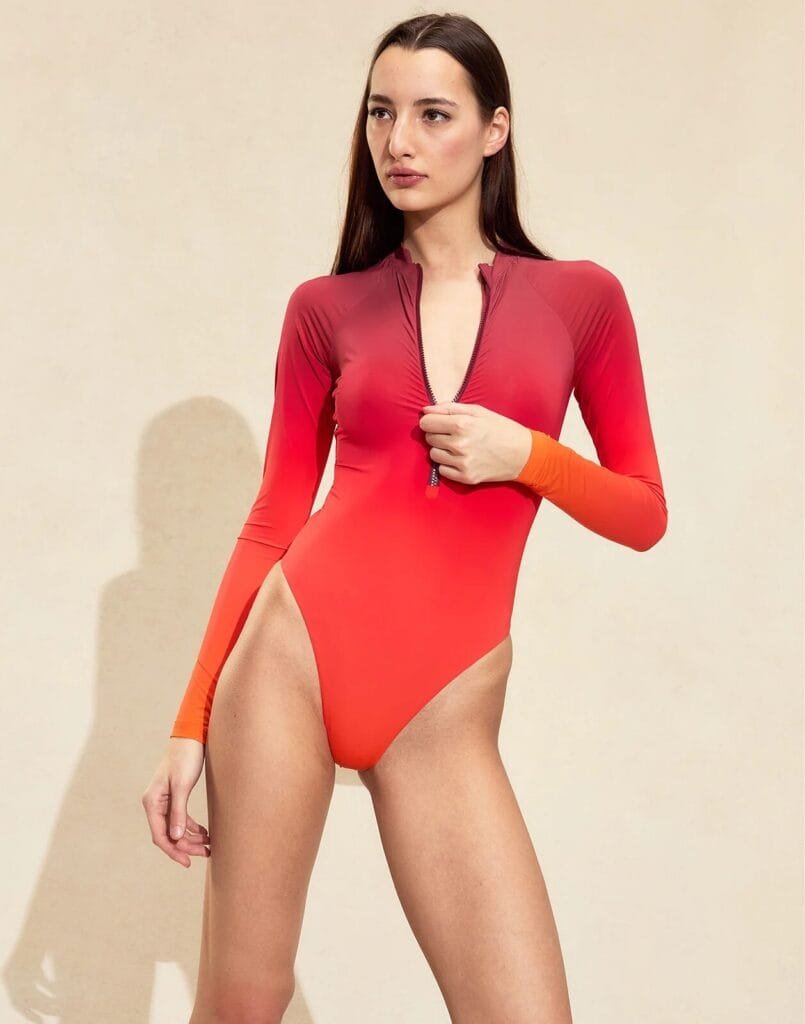
As we discussed in our “What is a Rash Guard?” guide, these are built for protection. A Surf Suit is essentially a one-piece swimsuit with long sleeves, often featuring a front or back zipper.
- Best for: Surfing, paddleboarding, and 100% UV protection.
The Burkini
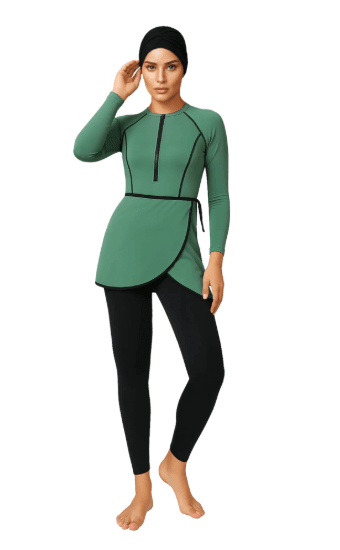
Designed to comply with modesty requirements, the Burkini covers the entire body except for the face, hands, and feet. It is made from high-quality, quick-drying swimwear fabric (usually PBT or Nylon) so it doesn’t get heavy in the water.
4. Bottom Coverage
When choosing a “type” of swimsuit, the cut of the back is just as important as the front.
| Coverage Type | Description | Best For |
| Full Coverage | Covers the entire seat; traditional fit. | Families, active swimming. |
| Cheeky | A V-cut that shows the lower curve of the glutes. | Tanning; modern fashion. |
| Brazilian | A very narrow cut, often with a “scrunch” seam. | Maximizing leg length; minimal tan lines. |
| Thong / G-String | Minimal coverage; only a thin strip of fabric. | Pro-tanning; extreme confidence. |
| Boyshorts | Shorts-style bottom with extra coverage,secure, sporty fit. | Active beach days |
5. Choosing by Body Type
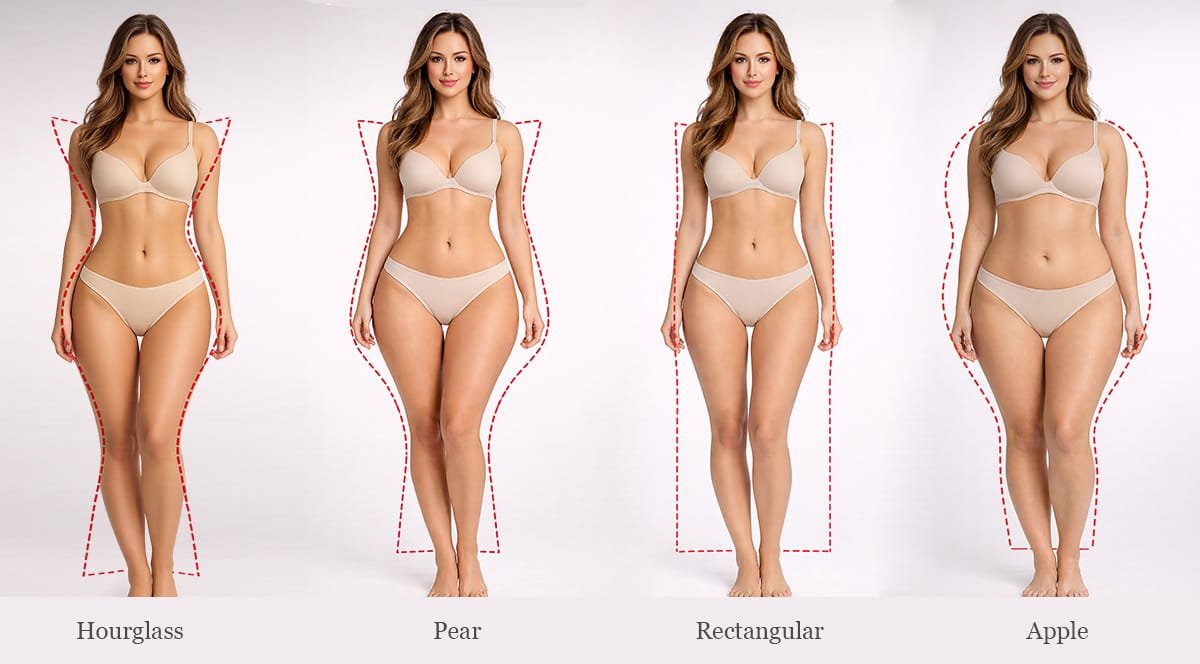
In 2026, manufacturers use “Visual Engineering” to help customers choose the right type of suit for their frame.
Hourglass (Balanced Shoulders and Hips)
- Goal: Emphasize the natural waist.
- Best Styles: Classic Maillots with belts, wrap-around bikinis, and high-leg cuts.
Pear Shape (Hips Wider than Shoulders)
- Goal: Balance the proportions by adding volume to the top.
- Best Styles: Ruffled tops, padded bandeaus, and solid-colored, high-waisted bottoms.
Athletic / Rectangular (Straight Up and Down)
- Goal: Create the illusion of curves.
- Best Styles: Monokinis with side cutouts, tie-side bottoms, and sweetheart necklines.
Apple Shape (Weight Carried in the Midsection)
- Goal: Elongate the torso and provide support.
- Best Styles: Ruched (gathered fabric) one-pieces, Tankinis, and deep V-necks.
6. Neckline Anatomy
The neckline of a swimsuit changes the entire “type” of the garment and how much support it provides.
- Halter: Straps that tie around the neck. Great for lift.
- Racerback: A “Y” or “T” shape on the back. Best for competitive swimming as it allows full shoulder rotation.
- Asymmetrical (One-Shoulder): A high-fashion look that is surprisingly supportive.
- Sweetheart: Shaped like the top of a heart. Great for enhancing the bust.
7. Materials Matter
The “type” of swimsuit you choose is only as good as the fabric it’s made from.
Spandex/Lycra: Provides the “snap” and stretch.
PBT (Polyester): Used in “Endurance” types for chlorine resistance.
Textured Fabrics (Ribbed/Crinkle): The biggest trend of 2026. These fabrics are “forgiving” and hide lumps and bumps better than smooth nylon.
8. How to Choose Swimsuit?
To find your perfect type, ask yourself these three questions:
What is the primary activity?
Laps = Racerback One-Piece; Tanning = Triangle Bikini; Surfing = Long-sleeve Surf Suit).
What is my sun exposure limit?
Choose UPF 50+ fabrics and more coverage for long days.
What part of my body do I want to highlight?
Cutouts highlight the waist; plunging necklines highlight the bust; high-leg cuts highlight the legs.
Conclusion
The “type” of women’s swimsuit has evolved from a simple functional garment into a sophisticated tool for self-expression and performance. Whether you opt for the retro charm of a high-waisted bikini or the sleek engineering of a bonded one-piece, understanding the anatomy of these garments ensures you make a purchase that lasts beyond a single season.