
In today’s era of “athleisure” and “quiet luxury,” fabric texture has become the new hallmark. This is particularly evident in swimwear: matte fabrics deliver a modern, sculptural minimalism, while shimmering sheens evoke the high-energy nostalgia of the 90s and the allure of luxury vacations.
To create a swimwear collection that looks stunning on the hanger and performs flawlessly in the ocean, you must understand the technical trade-offs of swimwear fabrics.
Below is an in-depth fabric comparison, along with sourcing and production recommendations brands can utilize during development
What “matte” and “shiny” really mean“
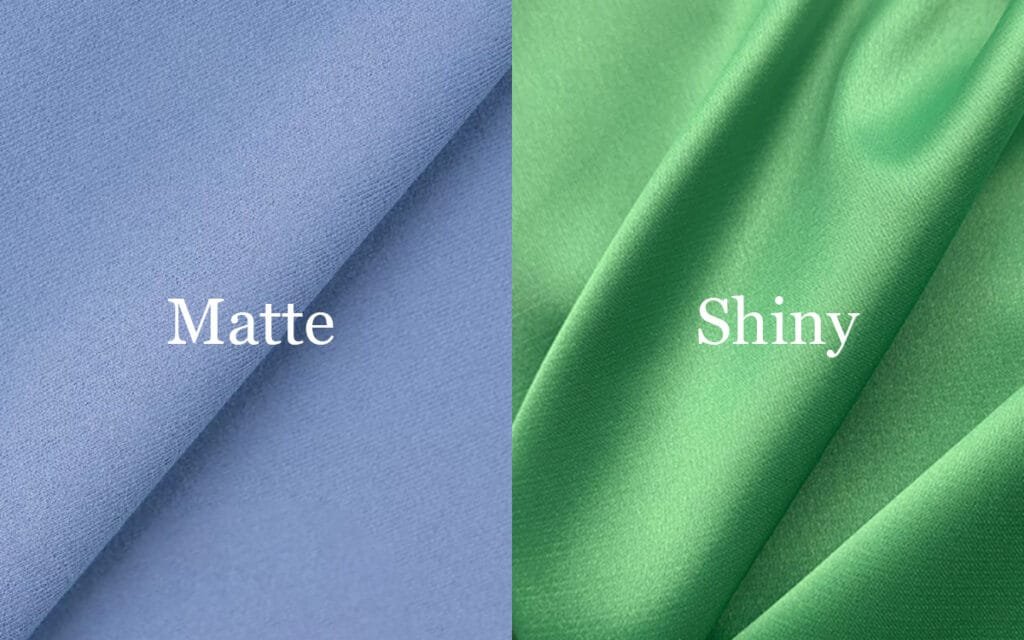
Most swimwear fabrics start with similar foundations: a knit base (often tricot or jersey) made from nylon/spandex or polyester/spandex. The difference comes from:
- Yarn choice : semi-dull/dull vs bright filament yarns
- Finishing : dulling agents, sanding/brushing, calendaring for sheen
- Surface treatments : foil, metallic coatings, laminations
- Knit structure & density : which influence how light reflects
So “matte vs shiny” is less about totally different materials and more about how the fabric is engineered and finished.
Quick comparison table
| Category | Matte Finish | Shiny Finish |
|---|---|---|
| Visual impact | Clean, modern, “premium minimal” | Bold, eye-catching, “statement” |
| Photography | More forgiving, fewer glare hotspots | High-impact but can reflect harshly |
| Body appearance | Smoother, subtle contouring | Highlights curves and texture more |
| Common positioning | Everyday swim, core basics, athletic | Fashion drops, glam, festival, resort |
| Opacity perception | Often reads more opaque | Can look less opaque under bright light |
| Surface durability | Usually more resistant to visible scuffs | Gloss/foil can show scratches or wear |
| Print compatibility | Great for many print methods | Depends—high gloss/foil may limit prints |
| Production ease | Typically easier and more consistent | Some shiny finishes are more delicate |
Matte swimwear fabric
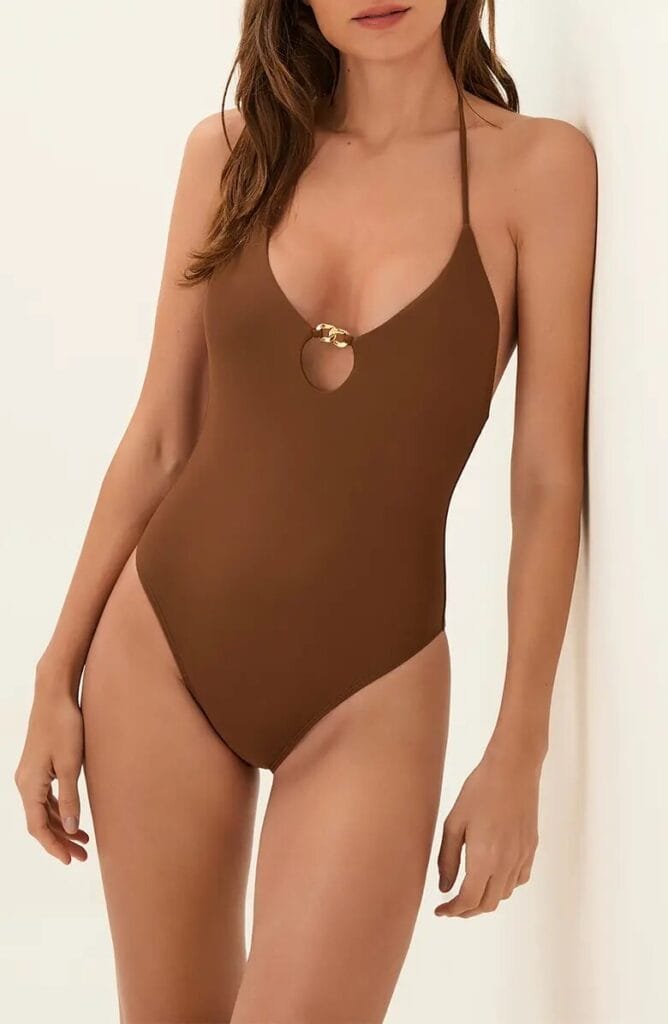
Matte swimwear has seen a massive surge in popularity over the last decade, riding the wave of the “athleisure” movement. It’s characterized by a flat, non-reflective surface that absorbs light rather than bouncing it back.
The Pros of Matte Fabric
1. Timeless, premium-looking basics
Matte finishes align well with “quiet luxury” aesthetics. They’re a strong choice for core programs because they don’t feel overly trend-dependent—ideal if you want colors to carry across multiple seasons.
2. Forgiving and Sculpting
Matte fabrics tend to soften visual texture. Seams, ruching, and panel lines look clean, and the fabric doesn’t spotlight every contour the way high gloss can. For many body types, that translates to higher try-on confidence and better return rates.
3.Durability and Wear
You know, matte fabrics, especially those cozy polyester blends, are great at hiding those little signs of wear and tear—like the pilling that happens when you sit on the edge of a concrete pool—much better than the shiny ones do!
4.Better for athletic
Matte finishes are common in performance-oriented swim because they read “sport” and “support.” If your line includes swim training styles, active beachwear, surf-inspired silhouettes, or supportive one-pieces, matte is usually the safer brand match.
5.Versatility
A matte bikini top can easily double as a sports bra or a crop top under a sheer linen shirt. It doesn’t scream “I’m wearing a swimsuit” the way a metallic gold bikini does.
The Cons of Matte Fabric
1.Can feel “basic” if design details are minimal
A matte black bikini can be incredibly chic—or it can disappear in a crowded market if the cut and trims aren’t doing enough. Matte shines when paired with:
- Strong silhouettes
- Elevated construction (clean binding, hidden seams, sculpting panels)
- Texture (rib, pique, crinkle) or hardware accents
2. Prone to Fading
High-quality matte fabrics are usually dyed deeply, but because they lack a protective “shiny” coating, they can sometimes show sun-bleaching or chlorine damage more quickly if not rinsed properly.
Shiny swimwear fabric

Shiny swimwear—often referred to as “lustrous,” “satin-finish,” or “Cire”—is for the person who wants to be noticed. It’s achieved by using high-denier nylon or adding a specific heat-pressed finish to the fabric to create a slick, reflective surface.
The Pros of Shiny Fabric
1. High Visual Impact
Shiny finishes catch light and create a premium, editorial feel. They’re excellent for:
- Resort capsules
- Party/holiday drops
- Trend-led silhouettes (high-cut, cut-outs, asymmetric)
- Metallic tones and jewel colors
If you want a style to stop the scroll, shine helps.
2. The “Glow” Factor
Just as a highlighter adds a glow to your cheekbones, shiny fabric adds a glow to your body. It highlights muscle definition and can make a tan look more vibrant.
3. Retro Appeal
If you love the 80s or 90s aesthetic—think Baywatch or vintage Bond films—the shiny finish is your best friend. It has an energetic, athletic, and glamorous feel that matte simply can’t replicate.
4. Water Shedding
While the difference is marginal for casual swimmers, “slick” shiny fabrics often feel less heavy when you step out of the water because they tend to shed droplets more efficiently than the more absorbent matte textures.
The Cons of Shiny Fabric
1. Surface wear can be more visible
Depending on how the shine is achieved:
- Bright filament knits can be durable, but may show snags
- Foil/metallic coatings can scratch, crack, or dull faster (especially with friction from sand, pool edges, or rough surfaces)
If your customer is active (beach sports, swimming laps), you may see more complaints with certain high-gloss finishes.
2. More complex production
Some shiny fabrics are less forgiving in production:
- Needle marks can be more visible
- Heat can damage coated/foil surfaces
- Elastic application and topstitching need careful tension control to avoid puckering
“Matte” and “Shiny”: Why They Differ
The difference between these two isn’t just magic; it’s chemistry and construction.
The Fiber Content
Most matte swimwear utilizes Polyester blended with Spandex (Lycra). Polyester is naturally more matte and holds its shape exceptionally well against chlorine.
Shiny swimwear almost always uses Nylon (Polyamide). Nylon has a natural luster and a softer, silkier hand-feel. When the nylon fibers are woven in a specific way, they catch the light.
The “Cire” Process
Some fabrics are made “extra shiny” through a process called cireing. This involves passing the fabric through heavy, heated rollers. The heat flattens the fibers, creating a mirror-like surface. This is why some shiny suits feel slightly “stiffer” or more “plastic-like” than matte suits—they’ve essentially been ironed into a permanent state of gloss.
Best use cases by product type
Matte is usually best for:
- Supportive one-pieces, underwire tops, bra-sized programs
- High-compression shaping swim
- Athletic bikinis and active swim sets
- Core colors you’ll reorder every season
Shiny is usually best for:
- Statement bikinis and fashion one-pieces
- Resortwear capsules and limited drops
- Metallic/party aesthetics, festival swim
- Campaign-led products designed for photos and social
Maintenance: Keeping the Magic Alive
Regardless of the finish, both require care to stay looking fresh.
- Rinse Immediately: Salt and chlorine are the enemies of both finishes. Rinse in cold, fresh water the second you take the suit off.
- Avoid the Dryer: Heat is the #1 killer of Spandex. It will turn your matte suit into a saggy mess and cause your shiny suit to lose its luster or even “crack.”
- Hand Wash Only: Use a mild detergent. Harsh soaps can strip the “glaze” from shiny fabrics and cause matte fabrics to pill.
FAQ
Not always. A glossy look made from bright filament yarn can be quite durable. The more delicate cases are often foil/metallic coatings or laminations, which can show wear faster under friction and heat.
Not necessarily, but it depends on the lining. Shiny fabrics are often made of Nylon, which can become slightly more translucent when stretched or saturated. Always look for “double-lined” shiny swimwear to ensure full opacity, regardless of the color.
Generally, shiny Nylon is more expensive to source than matte Polyester. High-quality Nylon has a softer “hand-feel” and requires more careful handling during the dyeing process to ensure color consistency.
Absolutely.
For Shiny: Look for Econyl®, which is recycled nylon made from discarded fishing nets and ocean plastic. It retains the same high-luster glow as virgin nylon.
For Matte: Look for Repreve®, a high-quality recycled polyester made from plastic bottles. It provides the classic, durable matte finish that eco-conscious brands love.
Conclusion
If you’re developing a collection and deciding between matte and shiny, the fastest way to get it right is to sample the same style in both finishes and compare.
If you want, share your target market, style range (bikinis/one-pieces), and price point, and we can recommend a fabric direction (matte, subtle sheen, high-gloss, or coated) plus a practical lining and construction plan for bulk production.