Children’s skin is more delicate than adults’ skin, which makes it more sensitive to chemical irritants and UV exposure. So choosing safe fabrics for kids’ swimwear goes far beyond aesthetics. It is about ensuring comfort, protection, and reliable performance at both the beach and the pool.
Fabrics with low-quality dyes, unsuitable finishes, or insufficient protection can compromise both the safety and durability of the garment. For brands developing kids’ swimwear lines, selecting the right fabric is an essential step in creating products that are safer, more comfortable, and better suited to real use.
1. Chemical Safety
The primary concern in children’s apparel is the presence of harmful substances used during the dyeing and finishing processes. In manufacturing, “safe” must be backed by certification.
OEKO-TEX® Standard 100 – Product Class I
While many adult garments meet Class II standards (skin contact), children’s swimwear—especially for infants and toddlers—should ideally meet Product Class I. This is the strictest category, testing for over 300 regulated and non-regulated substances, including Azo dyes, formaldehyde, pentachlorophenol, and nickel.
When vetting a fabric supplier, always request the valid certificate number to verify it covers the specific fiber blend you intend to use.
REACH and CPSIA Compliance
For brands entering the North American or European markets, compliance with the Consumer Product Safety Improvement Act (CPSIA) or REACH is mandatory. This includes ensuring that lead and phthalate levels in both the base fabric and accessories (like zippers or silicone grippers) are well below the legal limits.
We recommend batch-testing even for “standard” colors, as certain neon dyes can occasionally present higher risks of chemical migration.
2. Photoprotection: The Role of UPF 50+
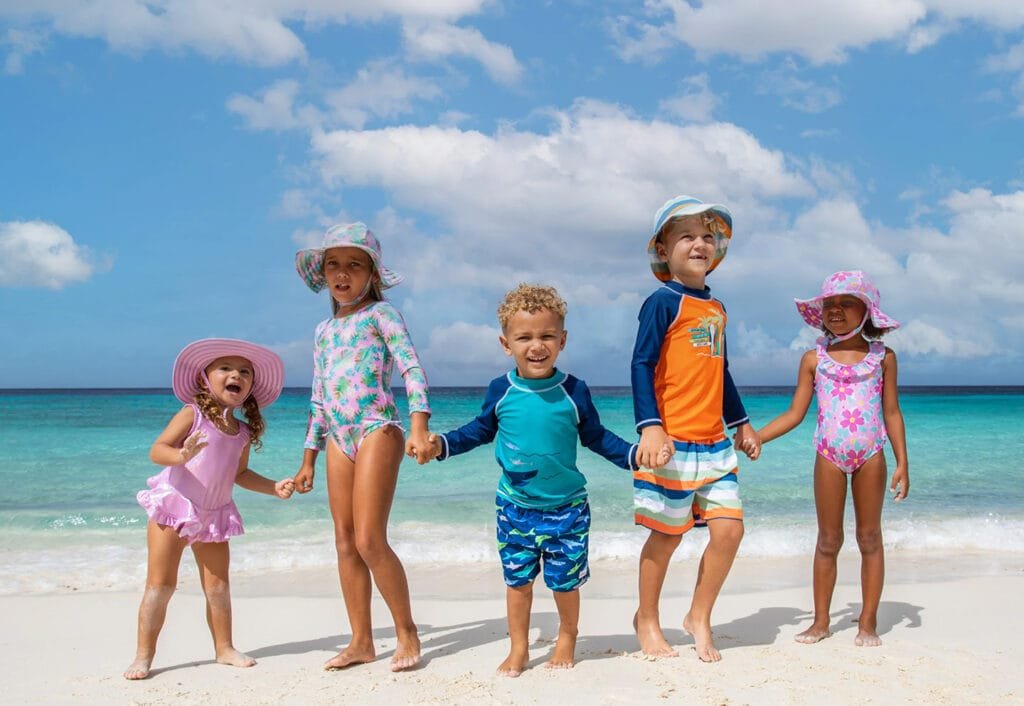
Unlike adult swimwear, where style often precedes function, kids’ swimwear serves as functional sun protection.
Physical vs. Chemical UV Blockers
High-quality kids’ swim fabric should achieve a UPF 50+. There are two ways to achieve this:
- Tight Weave Density: Fabrics with a higher GSM (Grams per Square Meter)—typically 200–220 GSM—provide a physical barrier that naturally blocks UV rays.
- UV Additives: Some fabrics are treated with chemicals to absorb UV. However, for children’s lines, we prioritize the physical weave method. This ensures that the protection level does not wash out over time, maintaining the garment’s safety throughout its lifecycle.
The “Dry vs. Wet” Factor
It is important to note that a fabric’s UPF rating can drop when stretched or wet. We utilize high-elastane blends (typically 18%–22% spandex or Lycra® Xtra Life™) to ensure the fabric maintains its density and shape-retention, keeping the UV protection intact even during active play.
3. Fiber Selection: Nylon vs. Polyester
The choice between Nylon and Polyester dictates the garment’s skin-feel and longevity in chlorinated environments.
Nylon : The Premium Choice for Skin Comfort
For premium children’s brands, Nylon is often preferred. It is softer and more “cool to the touch” than standard polyester, reducing the risk of chafing on sensitive skin. However, nylon is more susceptible to UV degradation and chlorine damage if not treated with high-quality stabilizers.
PBT/Polyester: The Performance Powerhouse
For swim schools or competitive youth lines, PBT (Polybutylene Terephthalate) or polyester blends are superior. They offer exceptional chlorine resistance and colorfastness. In our facility, we often suggest PBT for high-use garments because it resists the “bagging and sagging” that can lead to fit-related safety issues, such as straps slipping off shoulders.
4. Safety and Durability
Safety also pertains to the physical integrity of the garment. A fabric that pilling or thinning prematurely is a failure in quality control.
- Colorfastness to Chlorine and Saltwater: Children’s swimwear undergoes frequent washing and exposure to harsh chemicals. We test our fabrics according to AATCC 61 or ISO 105 standards to ensure that dyes do not bleed onto the skin or other garments.
- Pilling Resistance: Kids are active. Whether they are sitting on the edge of a concrete pool or playing in the sand, the fabric must resist abrasion.
- Sand Resistance: Traditional warp-knit fabrics can trap sand between the fibers, causing irritation. We offer specialized “tight-knit” constructions that prevent sand penetration, keeping the child comfortable.
5. Child comfort: Non-irritating, not tight
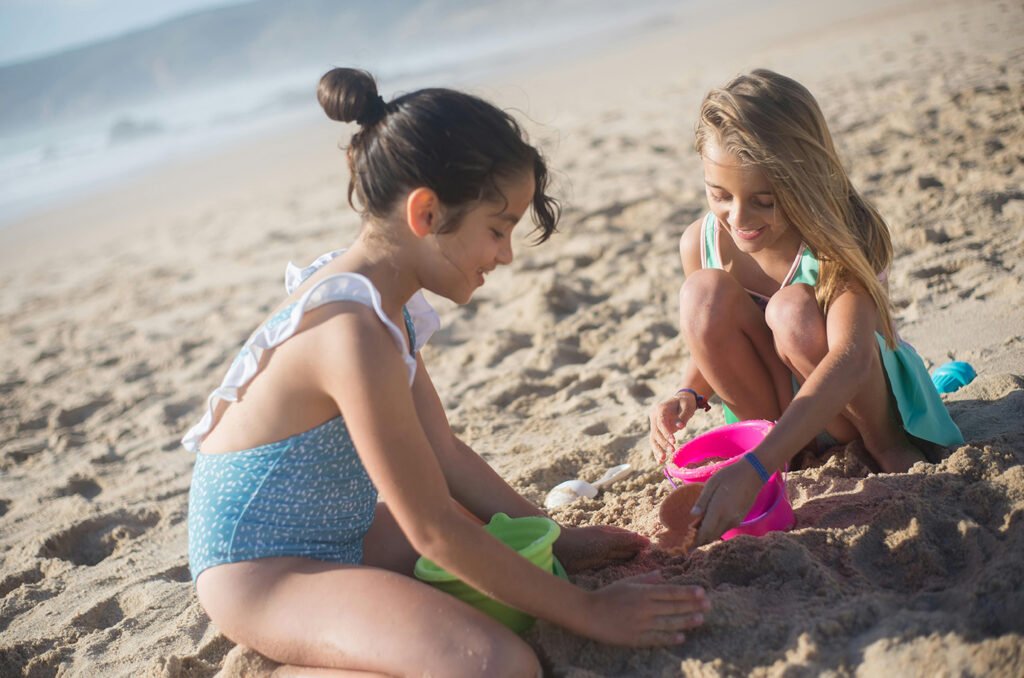
Safety isn’t just about chemicals; it’s also about physical contact. If a fabric causes irritation or restricts movement, children won’t wear it anymore. Designer should prioritize:
- Soft-touch finishes: Soft-touch surfaces, brushed finishes, or fine microfiber constructions can help reduce friction and make the garment more comfortable for extended wear.
- Breathability: Breathable materials help prevent overheating and reduce discomfort during outdoor play in warm weather.
- Stretch and recovery: Children’s swimwear needs enough flexibility for swimming, running, splashing, and general movement.
6. Sustainability as a Safety Metric
Modern swimwear brand increasingly view environmental safety as an extension of product safety. Utilizing Econyl® (recycled nylon) or REPREVE® (recycled polyester) ensures that the raw materials are traceable and free from the “mystery” chemicals often found in low-grade, non-certified virgin plastics.
FAQ: Sourcing Kids’ Swim Fabrics
No. While cotton is natural, it is unsafe for swimming. It absorbs large amounts of water, becoming heavy and saggy, which can impair a child’s buoyancy and increase the risk of drowning.
Request a lab report specifically for the fabric in its “finished” state. Legitimate manufacturers test the fabric after dyeing and finishing, as these processes can alter the UV protection levels.
For most children’s garments, 190 to 220 GSM is the “sweet spot.” It is thick enough to be opaque (especially for light colors) and provide UV protection, but light enough to dry quickly.
Yes, but it is more difficult. Neon dyes often require specific chemical formulations.
Partner With a Swimwear Expert
At Joy Sportwear, we help kids’ swimwear brands make the right choices from the very first step. From high-compliance fabric sourcing to full-scale production, we specialize in safe, durable, and trend-driven children’s collections.Contact us now.