
In men’s swimwear, board shorts and swim trunks are often treated as the same product. In retail and product development, however, they serve different purposes.
The difference is not just about length. Waist construction, lining, fit, fabric behavior, and end use all affect how each style performs and how it should be positioned in a collection. For brands, that distinction matters when planning product architecture, targeting the right customer, and building a clearer assortment.
Board Shorts vs. Swim Trunks: The Main Differences
| Feature | Board Shorts | Swim Trunks |
|---|---|---|
| Length | Longer, often close to the knee | Shorter, usually mid-thigh to above the knee |
| Waistband | Fixed or semi-fixed waistband, often with lace-up closure | Elastic waistband, usually with drawcord |
| Lining | Often unlined | Mesh lining is common |
| Fit look | Straighter, cleaner silhouette | Softer, easier, more relaxed fit |
| Style direction | Surf-inspired, sporty, more directional | Mainstream, casual, resort-friendly |
| Typical use | Surfing, beach sports, active beachwear | Swimming, holidays, poolwear, general beach use |
In simple terms, board shorts usually feel more sport-led, while swim trunks are easier for everyday wear and broader retail use.
What Are Board Shorts?

Board shorts developed from surf culture, and that background still shapes how they are designed today. They are typically longer than swim trunks and usually have a cleaner front appearance, which gives them a more athletic and purpose-built look.
Key Design Features
Most board shorts are defined by three construction details:
- Longer length, often reaching the knee or sitting just above it
- Fixed waistband, often with a lace-up front instead of full elastic
- Little or no mesh lining, which creates a smoother interior feel
This construction helps reduce bulk and keeps the short looking flatter and more structured on the body.
How They Are Usually Used
Board shorts are most closely linked to:
- surfing
- beach sports
- active beachwear
- youth-driven or surf-inspired collections
They are also a useful category for brands that want a slightly more technical or directional look in men’s swimwear.
Fabric Considerations
Board shorts are usually made from lightweight woven fabrics with fast-dry performance and good freedom of movement,such as polyester or recycled polyester with elastane. Because many styles are unlined, the fabric itself has to do more of the work in terms of comfort, durability, and clean appearance.
That is why board shorts should not be treated as simply “longer swim trunks.” The construction logic is different.
What Are Swim Trunks?
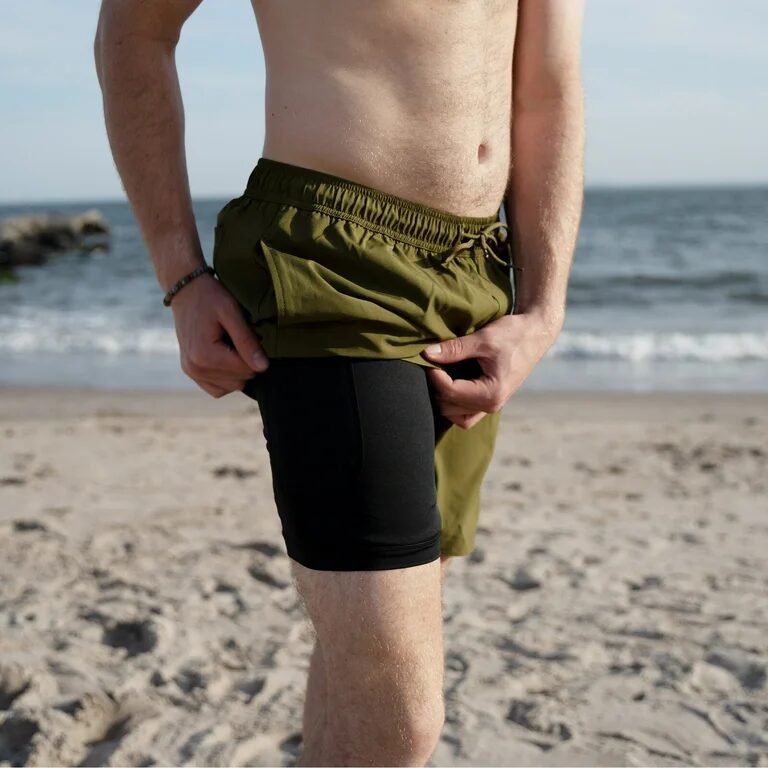
Swim trunks are the more familiar and commercially widespread category in men’s swimwear. They are designed for general swimming, holidays, resort use, and casual beachwear.
For many consumers, swim trunks are the default option because they feel easy, recognizable, and low-risk.
Common Construction Details
A classic swim trunk usually includes:
- a shorter length
- an elastic waistband
- a drawcord for fit adjustment
- a mesh lining for support and comfort
This combination makes swim trunks easy to wear across different body types and easier for brands to scale in volume programs.
Why They Sell So Broadly
Swim trunks work well because they fit a wide range of use occasions. They are not limited to one image or one activity. Depending on the cut, print, and fabric, they can feel:
- practical
- fashion-oriented
- conservative
- resort-driven
That flexibility makes them a strong core category for mainstream retail, private label programs, and entry-to-mid price collections.
Fabric Considerations
Swim trunks also rely on quick-dry woven fabrics(polyester or nylon), but the product focus is usually different. Compared with board shorts, swim trunks often place more emphasis on:
- soft hand feel
- lining compatibility
- easy daily comfort
- broad commercial wearability
So even when both categories use similar fabric families, the product priorities are not exactly the same.
How to Choose Between Board Shorts and Swim Trunks
For brands and buyers, the decision should start with market logic rather than personal preference. The question is not which style is better in theory. It is which style fits the customer, the price point, and the collection strategy.
1. Start with Brand Positioning
If the brand identity is built around surf culture, outdoor movement, or performance beachwear, board shorts usually make more sense.
If the brand is more focused on travel, leisure, or broad seasonal swim sales, swim trunks are often the stronger commercial base.
2. Consider the Target Customer
Customer expectations vary by market. In some regions, longer silhouettes still feel more wearable for men. In others, shorter swim trunks are already the standard commercial option.
Useful variables to consider include:
- customer age group
- price point
- geographic market
- retail channel
- expected use occasion
A brand selling to surf shops and active beach retailers may need a different length and waistband strategy than one selling into resort stores or online vacationwear categories.
3. Think About Price and Product Complexity
Swim trunks are usually easier to standardize and scale, especially in volume-driven programs.
Board shorts may require more development attention because details such as waistband engineering, closure balance, panel layout, and overall proportion have a bigger impact on the final look.
For brands aiming at a more premium or more performance-led men’s swimwear line, that added complexity can be worthwhile.
Can the Two Categories Overlap?
Yes. In the current market, the line between board shorts and swim trunks is often less rigid than it used to be.
Some products use the longer visual language of board shorts but add elastic features for easier wear. Others keep the comfort logic of swim trunks while adopting a cleaner outer look influenced by surfwear.That overlap is exactly why consumers sometimes use the terms interchangeably.
Even so, the distinction still matters in product planning because naming affects:
- customer expectations
- search behavior
- fit perception
- collection structure
A customer shopping for board shorts may expect a longer cut and a flatter waistband. A customer shopping for swim trunks may expect an elastic waist, mesh support, and easier everyday use.
FAQ
No. Both belong to men’s swimwear, but board shorts are usually longer and more surf-oriented, while swim trunks are shorter and more widely used for casual swimming and resort wear.
Because they are designed with active movement in mind. Removing the mesh lining can reduce bulk and create a smoother interior feel.
Yes. Board shorts are made for swimming, and they are commonly used for beach swimming, surfing, and other water activities.But Less ideal for competitive swimming or lap training
Conclusion
Choosing between board shorts and swim trunks is really a product positioning decision. Although both belong to men’s swimwear, they respond to different customer expectations, usage habits, and collection needs.
If you are developing a men’s swimwear collection, we can support your brand with style development, fabric recommendations, and production planning for both board shorts and swim trunks.