
Beachwear is arguably the most technically demanding category in the apparel world. It is a rare hybrid: it must perform like high-intensity activewear while draping with the elegance of luxury fashion. It faces a trifecta of “enemies”—UV rays, salt water, and pool chemicals—all while maintaining a precise fit on a diverse range of body types.
Choosing the right foundation for your collection is about balancing three pillars: Performance, Hand-feel, and Sustainability.
The Synthetic Core: Nylon vs. Polyester
While natural fibers have their place in cover-ups, the “swim” portion of beachwear relies almost exclusively on synthetics for their memory and quick-drying properties.
Nylon (Polyamide): The Luxury Standard
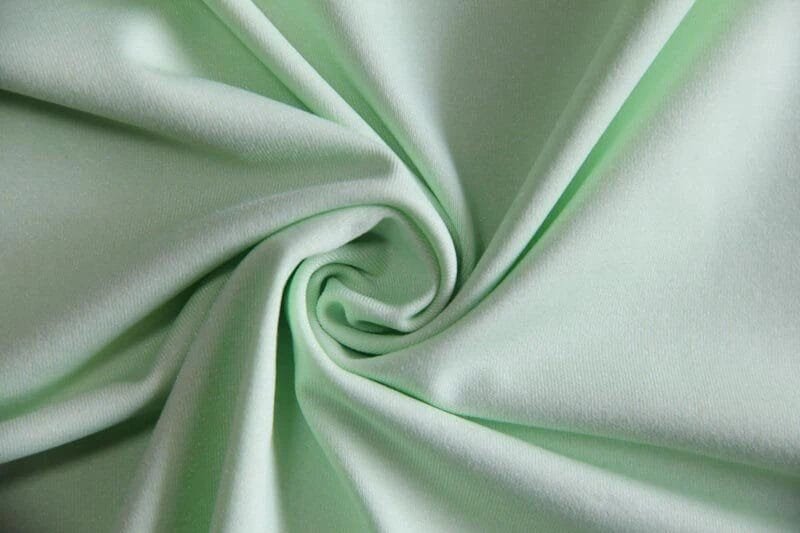
Nylon is the darling of the high-end beachwear world. If your brand identity revolves around soft textures and vibrant, saturated colors, nylon is the undisputed winner.
- The Feel: It has a “buttery” touch that feels expensive against the skin.
- The Look: It takes dyes beautifully, allowing for deep jewel tones and neon pops that stay vivid.
- The Drawback: It is naturally more absorbent than polyester. This means it takes slightly longer to dry and can be more sensitive to long-term chlorine exposure if not treated with a protective finish.
Polyester: The Performance Powerhouse
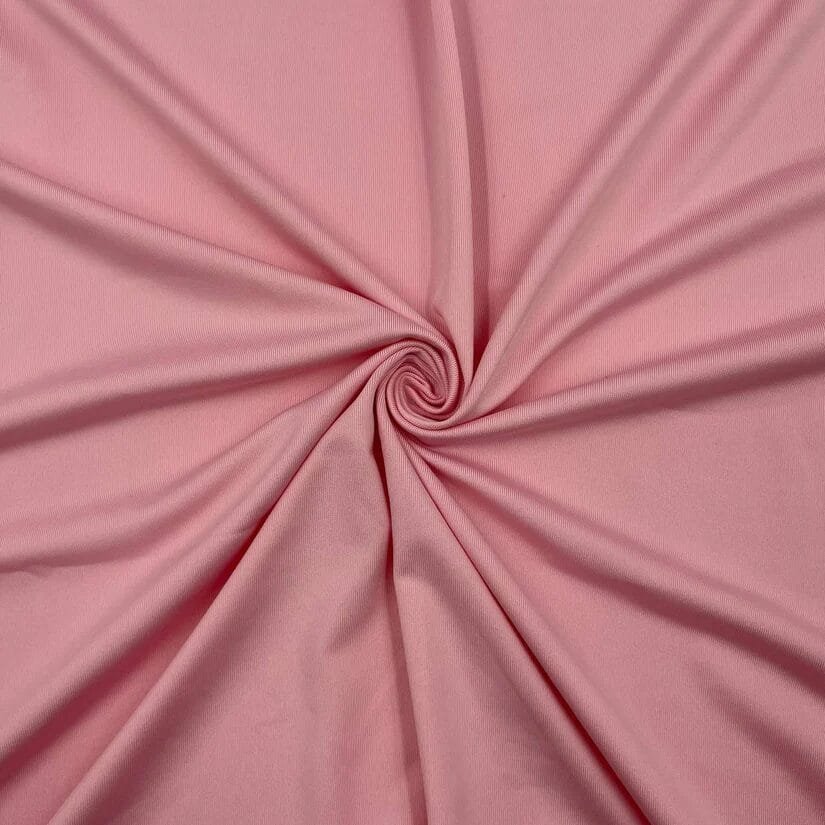
If you are building a line for active swimmers, surfers, or competitive athletes, polyester is your workhorse.
- The Durability: It is inherently more resistant to UV degradation and chlorine than nylon.
- The Printing: For those utilizing sublimation printing, polyester is a must. The heat-transfer process bonds perfectly with polyester fibers, resulting in crisp, high-definition patterns that won’t “crack” when stretched.
- The Innovation: Modern micro-polyesters have shed the “scratchy” reputation of the past. Today’s high-gauge polyester knits can mimic the softness of nylon while retaining superior technical resilience.
The “Snap Back” Factor: Elastane and PBT
A swimsuit is only as good as its recovery. Nobody wants a bikini that fits perfectly in the morning but bags at the waist by noon.
- Elastane (Spandex/Lycra): Most beachwear fabrics are a blend (usually 80/20). The quality of the elastane is what prevents the dreaded “sag.” We highly recommend looking for chlorine-resistant elastane (like Lycra Xtra Life), which lasts up to 10 times longer than standard spandex in treated pool water.
- PBT (Polybutylene Terephthalate): For labels focused on longevity, PBT is a secret weapon. It is a type of polyester with natural stretch. While it doesn’t have the “super-stretch” of elastane, it is nearly indestructible. Many high-performance brands use a PBT/Polyester blend to create suits that can survive years of daily training.
Sustainability: The 2026 “Must-Have”
In today’s climate, “recycled” is no longer a premium feature—it is an entry-level requirement. Consumers are increasingly scrutinizing the source of their clothing, especially when that clothing is worn in the very oceans we are trying to protect.
- ECONYL®: This is the gold standard for regenerated nylon. It’s made from recycled fishing nets and industrial plastic. It offers the exact same performance and luxury feel as virgin nylon, providing a powerful narrative for your brand’s commitment to the ocean.
- REPREVE®: If your focus is on polyester, REPREVE is the leader. Made from recycled plastic bottles, it is durable, traceable, and incredibly versatile for everything from boardshorts to rash guards.
Texture and Trend: Adding Dimension
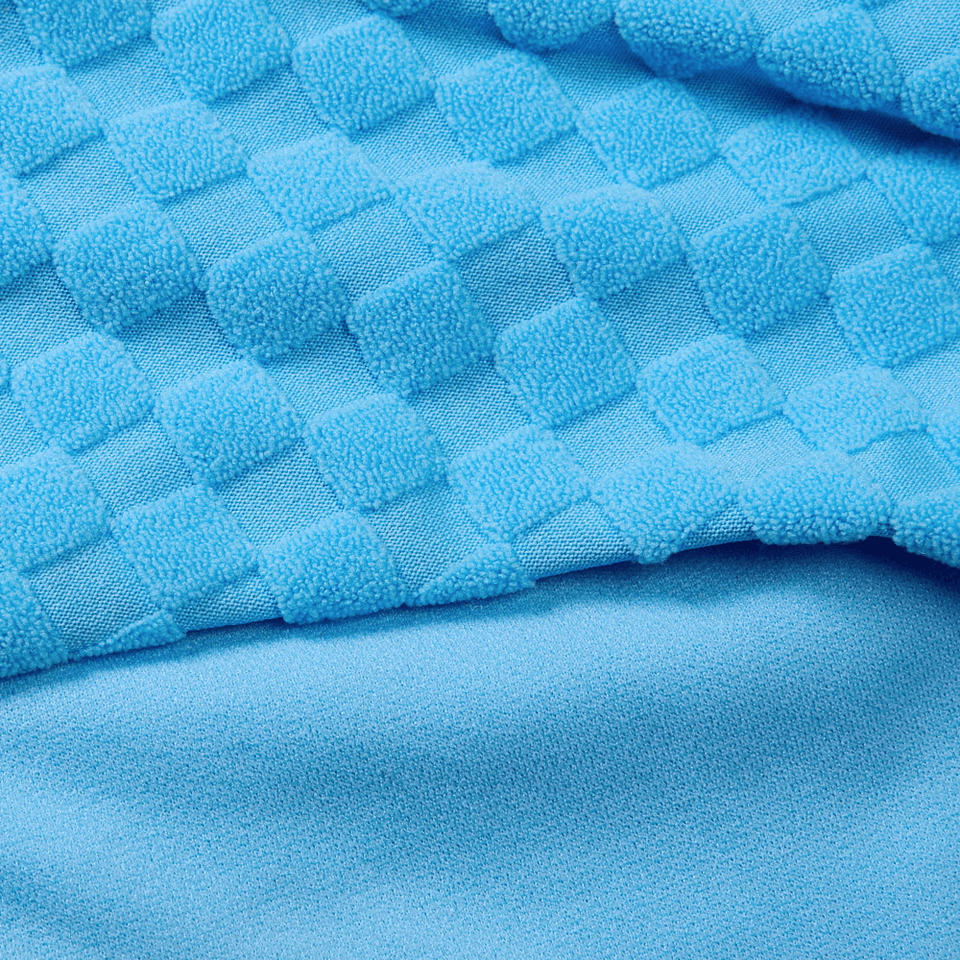
For the upcoming seasons, the trend is shifting from flat fabrics to tactile, 3D textures. Incorporating these textures into your beachwear line can transform a simple silhouette into a premium piece.
Here’s a look at some fabric styles and their associated benefits:
Ribbed Knits: This fabric brings a sporty and retro vibe to beachwear. Its naturally compressive texture helps to hide small imperfections in the fit, making it a great option for swimwear that needs to provide both style and support.
Seersucker: Known for its classic and preppy aesthetic, seersucker features a puckered texture that allows air to flow freely and dries exceptionally fast. This makes it ideal for hot weather, where breathability and moisture-wicking properties are essential.
Jacquard: Offering an intricate and luxurious feel, jacquard fabrics have patterns woven directly into the fabric, rather than being printed on the surface. This gives the fabric a high-end, heavyweight feel, making it perfect for upscale beachwear such as luxury swimwear and resort wear.
Waffle/Honeycomb: With its modern and tactile appearance, waffle or honeycomb fabric offers a unique hand-feel due to its high surface area. This texture leads to rapid evaporation, making it ideal for garments that need to dry quickly, such as beach towels or cover-ups.
Beyond the Suit: Resort Wear & Cover-Ups
A cohesive beachwear brand often expands into “apres-swim”—the clothing worn from the beach to the bistro. This is where natural fibers shine.
| Fabric | Best For | Why it Works |
| Linen | High-end tunics, trousers | Naturally cooling and highly breathable. It gains character as it wrinkles. |
| Hemp | Durable shorts, totes | Naturally antimicrobial and offers high UV protection. It’s the “rugged” eco-choice. |
| Organic Cotton | Sarongs, t-shirts | Soft and hypoallergenic. Best used in light weaves like voile or muslin. |
| Modal / Tencel | Flowy dresses | Derived from wood pulp, these “semi-synthetics” offer a silky drape and stay cool to the touch. |
Technical Checkpoints for Your Sourcing
When you are evaluating samples from mills, keep these metrics on your desk. They are the difference between a high-quality garment and a return-heavy disaster.
- GSM (Grams per Square Meter): For swimwear, aim for 190–220 GSM. If you go lower, the fabric may become transparent when wet (especially in lighter colors). If you go higher (250+ GSM), you move into “sculpting” or “shapewear” territory.
- Four-Way Stretch: Ensure the fabric stretches significantly both horizontally and vertically. Two-way stretch is generally unsuitable for modern swimwear.
- Colorfastness: Ask for the rating against Sea Water (ISO 105-E02) and Chlorinated Water (ISO 105-E03). You want a rating of 4 or 5.
- UPF Rating: In 2026, skin health is a major consumer driver. Fabrics with a UPF 50+ rating offer a significant competitive advantage.
Elevate Your Next Collection
The right fabric does more than just cover the body—it builds trust. When a customer feels the weight of a high-quality jacquard or the silky stretch of premium regenerated nylon, they perceive the value of your brand instantly.
Whether you’re launching your first capsule collection or looking to transition your existing line , we’re here to support you as your swimwear manufacturer—from fabric sourcing and sampling to fit refinement and scalable bulk production. Share your target market and price point, and we’ll recommend the right fabric options to match your brand positioning.