
Choosing the right fabric is one of the most important decisions in athletic swimwear development. For swimwear brands, fabric selection affects far more than appearance. It influences chlorine resistance, comfort, stretch recovery, durability, fit retention, and overall product positioning.
Among the most widely used options, PBT, polyester, and nylon each serve a different purpose. PBT is usually the strongest option for chlorine resistance and swim training. Polyester offers durability and reliable production performance. Nylon provides a softer hand feel and a more fashion-oriented finish, but is generally less suitable for intensive pool use.
In this article, we compare PBT vs polyester vs nylon and explain which fabric is best for different athletic swimwear applications.
Why Fabric Choice Matters in Athletic Swimwear
Athletic swimwear has very different requirements from fashion swimwear. A bikini designed mainly for sunbathing or resort wear may prioritize softness, color, and appearance. Athletic swimwear, on the other hand, must perform under more demanding conditions.
Compared with fashion swimwear, athletic swimwear usually places more emphasis on:
- good chlorine resistance
- reliable stretch and recovery
- shape retention over time
- comfort during repeated movement
- fast drying performance
- enough support and opacity
If the fabric is not matched to the product’s intended use, the result can be disappointing. A swimsuit may lose elasticity too quickly, feel less supportive in the water, become loose after repeated use, or fail to meet customer expectations for performance.
PBT Fabric in Athletic Swimwear
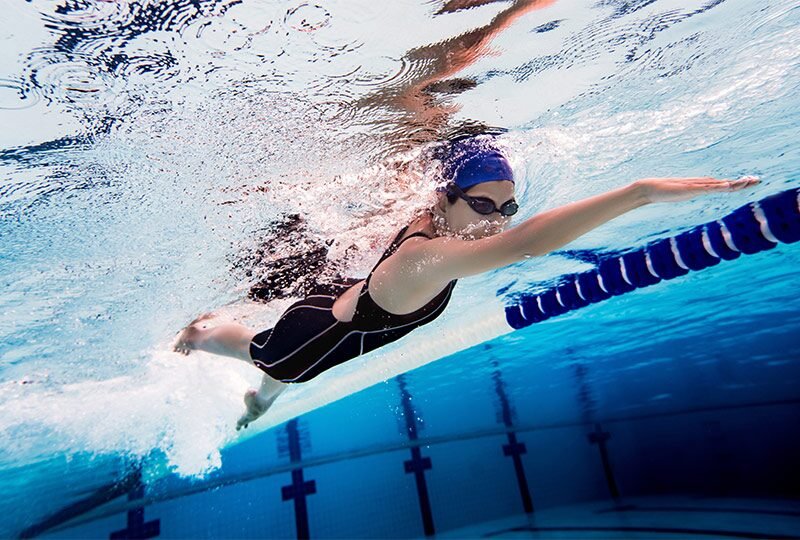
Polybutylene terephthalate (PBT) is a high-performance, semi-crystalline engineering thermoplastic polyester. In the swimwear industry, PBT is best known for its chlorine resistance and its ability to maintain shape well in repeated pool use.
PBT is often used in fabrics developed for training and functional swimwear, especially when long-term wear performance matters more than a soft fashion hand feel.
Advantages
PBT is widely valued because it performs well in demanding swim environments. Its main strengths include:
- strong chlorine resistance
- good shape retention over time
- reliable stretch recovery
- durability for frequent pool use
- reduced risk of the swimsuit becoming loose or baggy after repeated wear
For brands developing training-oriented products, these qualities make PBT a practical and performance-focused choice.
Limitations
PBT is highly functional, but it does not suit every product direction.
- it usually has a firmer hand feel than nylon
- it may feel more technical than soft or luxurious
- it is less suited to collections built mainly around fashion touch and drape
In other words, PBT is often chosen for performance first, not for softness first.
Best for
PBT is most suitable for products that need durability and chlorine resistance, such as:
- training swimsuits
- competitive training one-pieces
- team swimwear
- school or club swimwear
- chlorine-resistant athletic swimwear collections
Polyester Fabric in Athletic Swimwear
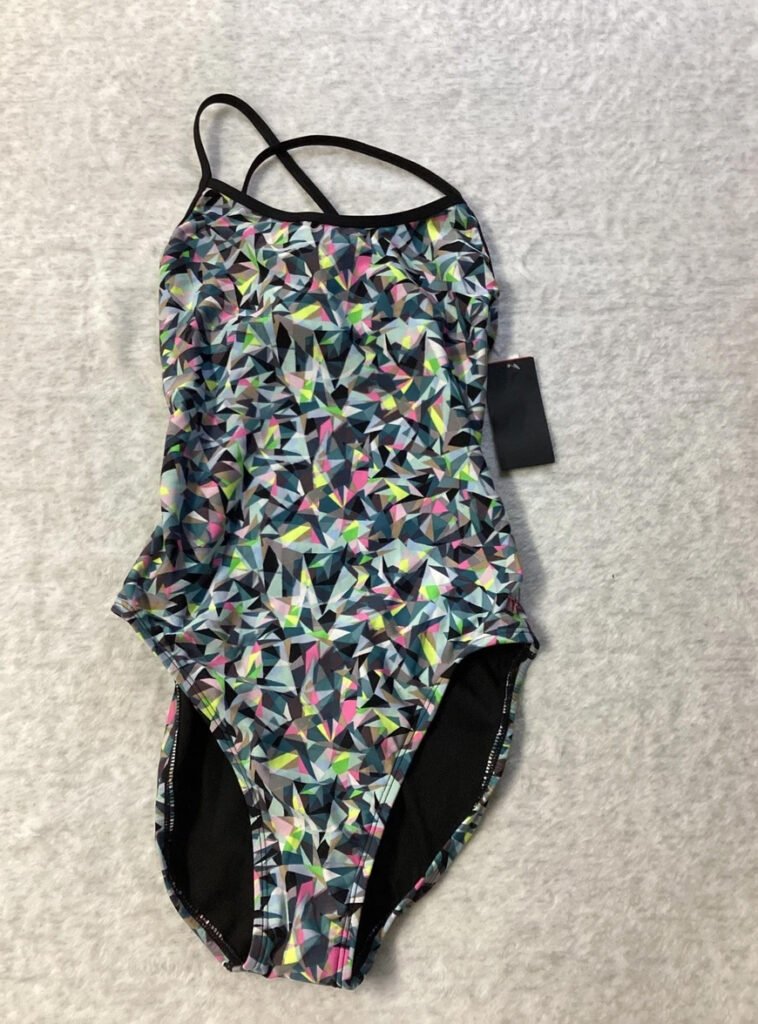
Polyester is one of the most widely used fibers in swimwear manufacturing. In athletic swimwear, it is commonly chosen for products that need dependable durability, stable production performance, and broad commercial practicality.
Polyester is used across many swimwear categories because it offers a balanced combination of function, availability, and production consistency.
Advantages
Polyester remains a strong option for athletic swimwear because it performs well in both development and bulk production.
Its main advantages include:
- good durability for repeated wear
- better chlorine resistance than many nylon-based fabrics
- stable color performance
- suitability for both solid colors and prints
- reliable sourcing and production consistency
- practical scalability for repeat orders and bulk programs
For many brands, polyester is attractive not only because of performance, but also because it supports smoother commercial production.
Limitations
Polyester is highly practical, but it may not deliver the same tactile feel as nylon.
- it is usually not as soft as nylon
- it may feel more functional than premium
- depending on the fabric construction, it may offer a more standard performance hand feel rather than a refined fashion finish
That does not make polyester a weaker option. It simply means it is often better suited to durability-driven products than to softness-led ones.
Best for
Polyester is most suitable for products that need durability, consistency, and scalable production, such as:
- teamwear
- swim school collections
- entry-level performance swimwear
- printed athletic swimwear programs
- commercially practical training collections
Nylon Fabric in Athletic Swimwear
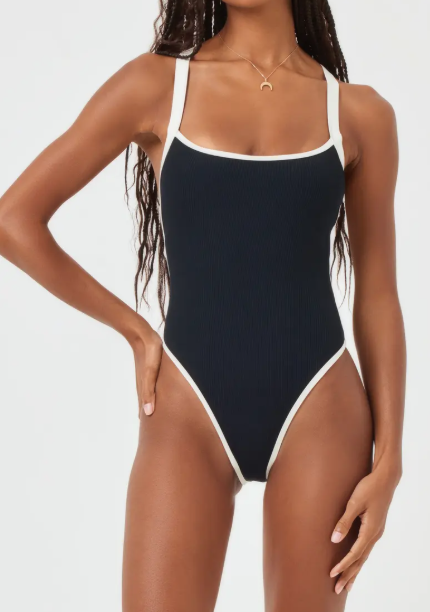
Nylon is a widely used swimwear fiber known for its soft hand feel, smooth surface, and comfortable stretch. It is especially common in fashion swimwear, but it is also used in athletic-inspired swimwear where comfort, body fit, and visual appeal are important.
For many brands, nylon helps create a product that feels more refined and premium.
Advantages
Nylon remains popular because it offers several qualities that are highly valued in modern swimwear development.
Its key advantages include:
- soft and smooth touch
- strong next-to-skin comfort
- flexible, body-hugging fit
- good elasticity
- a cleaner and often more premium-looking surface
- a stronger fit for fashion-led active swim styles
For collections that sit between swimwear and activewear, nylon can be a very appealing option.
Limitations
Nylon performs well in many areas, but it is usually less suitable for heavy chlorine exposure than PBT or polyester.
- lower chlorine resistance compared with PBT
- may lose performance faster in frequent pool use
- less ideal for intensive lap swimming or training use
- may not hold long-term shape as well in high-frequency chlorinated environments
This means nylon should be chosen carefully when the product is intended for real athletic use rather than simply a sporty appearance.
Best for
Nylon is most suitable for products that prioritize softness, comfort, and appearance, such as:
- fashion-led athletic swimwear
- active beachwear
- sporty bikinis and two-pieces
- paddle or surf-inspired swim styles
- women’s athletic swimwear with a softer premium feel
PBT vs Polyester vs Nylon: Key Differences
The clearest way to compare these three fabrics is to look at the performance areas that matter most in athletic swimwear development.
| Fabric | Chlorine Resistance | Softness | Stretch & Recovery | Durability | Best For |
|---|---|---|---|---|---|
| PBT | Excellent | Moderate | Very Good | Excellent | Training swimwear, chlorine-resistant suits |
| Polyester | Very Good | Moderate | Good | Very Good | Teamwear, practical athletic swimwear, scalable production |
| Nylon | Moderate | Excellent | Very Good | Moderate | Fashion athletic swimwear, comfort-led active styles |
In simple terms:
- PBT is usually the strongest option for chlorine-resistant training swimwear
- Polyester offers the most balanced choice for durable and commercially practical athletic swimwear
- Nylon is often the best fit for softer, more fashion-oriented athletic swimwear products
This is why fabric selection should always be linked to actual end use, not just fabric preference.
What Brands Should Consider Beyond Fiber Type?
In athletic swimwear manufacturing, fiber type is only one part of the fabric decision. How a fabric performs also depends on its construction, weight, stretch content, finishing, and how well it supports the intended style.
When evaluating swimwear fabrics, brands should also look at:
- fabric weight
- lining compatibility
- compression level
- whether the style is solid or printed
- support needs in different body areas
- target price point
- expected frequency of use
- consistency from sample to bulk production
For example, two polyester fabrics may fall under the same fiber category but still perform very differently once you look at knit structure, spandex content, weight, and finishing. The same applies to nylon. That is why fabric selection is usually considered together with style development, fit goals, and end use rather than treated as a separate sourcing decision.
Conclusion
There is no one-size-fits-all fabric choice in athletic swimwear. The right material should match the product’s function, fit goals, and market position.
If you are planning a new athletic swimwear collection, we can support you with fabric recommendations, sample development, and custom production. Get in touch with us to explore the right solution for your brand.
FAQ
Yes. Most high-performance suits use a PBT/Polyester blend (typically 53% Polyester and 47% PBT) to achieve the perfect balance of durability, stretch, and price point.
Generally, high-quality PBT carries a premium over standard Nylon. However, the “cost per wear” for the end consumer is significantly lower because the garment lasts three to four times longer.
Absolutely. PBT takes sublimation printing exceptionally well, allowing for sharp, high-definition graphics that won’t fade or peel during intense training sessions.
There is no single best fabric for every type of athletic swimwear. PBT is often preferred for chlorine-resistant training use, polyester is strong for durability and scalable production, and nylon is better for softness and fashion-led active swim styles.
Yes. Polyester is a strong option for athletic swimwear because it offers good durability, reliable production performance, and broad commercial practicality.