
The edge of a swimsuit may look like a small detail, but it has a direct effect on fit, comfort, and appearance. Poor edge construction can cause the neckline to gape, the leg openings to dig in, or the fabric to ripple after sewing.
Binding and turned edges are two common ways to finish swimwear openings. Binding creates a visible, defined border, while a turned edge keeps the finish more discreet. Neither method is automatically better. The right choice depends on the design, fabric, elastic, and level of support required.
Quick Answer
Binding works well when the edge is intended to become part of the swimwear design. It is commonly used for contrast details, sporty styles, and straps that continue from the neckline.
Turned edges are better suited to clean and minimal designs. The elastic and raw fabric edge are folded inside, leaving only the topstitching visible from the outside.
| Feature | Binding | Turned Edge |
|---|---|---|
| Appearance | Visible and defined | Clean and understated |
| Color options | Can use a contrast color | Matches the main fabric |
| Edge width | Clearly visible | Mostly hidden |
| Strap integration | Easy to continue into straps | Usually constructed separately |
| Production control | Requires consistent binding width | Requires accurate folding and tension |
| Best for | Sporty, contrast and strappy styles | Classic and minimal styles |
What Is Binding in Swimwear?
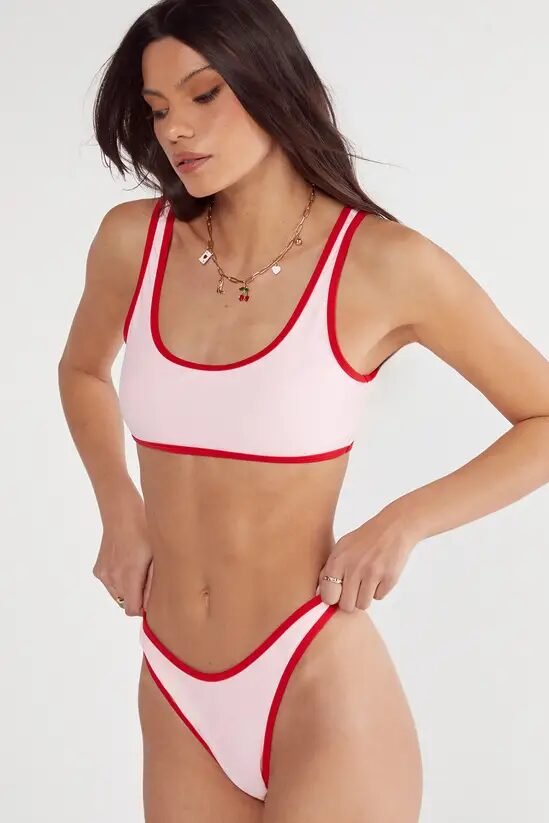
Binding uses a narrow strip of stretch fabric to cover the raw edge of a swimsuit. It can be made from the main fabric or a contrasting material.
The binding is folded around the neckline, armhole, back, or leg opening and then stitched into place. Swimwear elastic may also be added inside the binding to improve recovery and help the opening stay close to the body.
Binding should not be confused with decorative trim. In many designs, it performs both a visual and structural function.
Advantages of Binding
Binding creates a clear edge around the swimsuit. This makes it useful for color-blocked styles or designs that need a visible outline.
It can also continue directly into the shoulder straps. This reduces the need to attach a separate strap and creates a more connected design.
When properly constructed, binding provides good control around curved openings. It can help stabilize necklines and armholes that might otherwise stretch during sewing or wear.
Binding is particularly useful for:
- Contrast-edge swimsuits
- Sporty one-piece styles
- Triangle bikini tops
- Strappy and cutout designs
- Reversible swimwear
Disadvantages of Binding
The main challenge is maintaining an even width. Small changes in cutting, folding, or feeding can make the finished edge look inconsistent.
Too much tension can pull the opening inward and create tightness. Too little tension can produce rippling or gaping.
Binding may also become bulky when the fabric is thick or heavily textured. Several folded layers can build up around narrow curves and strap connections.
Printed fabric requires additional attention. If the strip is not cut and fed consistently, the print may twist or appear uneven along the finished edge.
What Is a Turned Edge?
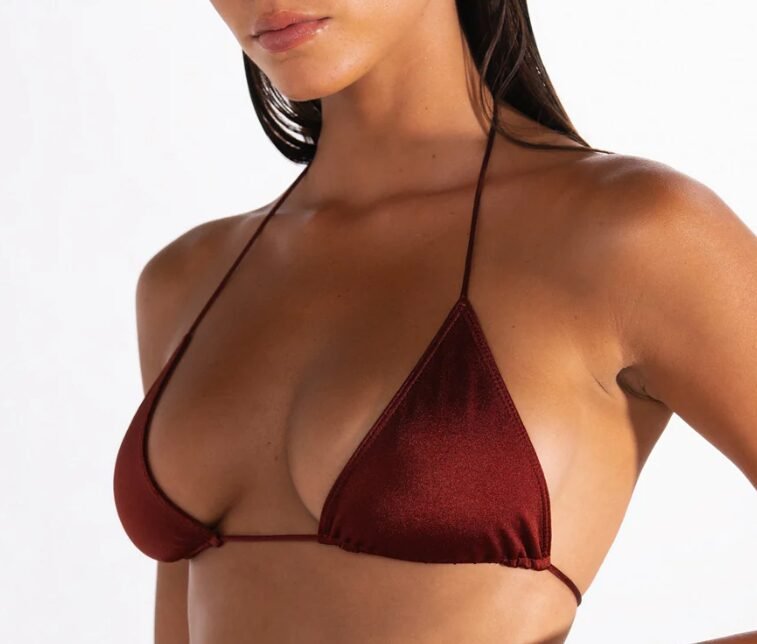
A turned edge uses elastic to support the opening without adding a visible binding strip.
The elastic is first sewn along the raw edge of the fabric. The edge is then folded toward the inside of the swimsuit and secured with zigzag stitching, cover stitching, or another stretch stitch.
From the outside, the main fabric continues to the edge. Only the topstitching remains visible.
Advantages of Turned Edges
Turned edges create a simple and uninterrupted appearance. There is no separate strip competing with the swimsuit’s fabric, print, or silhouette.
This method works particularly well for solid-color swimsuits and minimal designs. It can also help a detailed print remain the main visual feature.
The construction is flexible enough for many necklines and leg openings. When the elastic tension is correct, the edge sits smoothly against the body without appearing heavy.
Turned edges are commonly used for:
- Classic bikini bottoms
- Minimal one-piece swimsuits
- Printed swimwear
- High-cut leg openings
- Clean scoop and square necklines
Disadvantages of Turned Edges
A turned edge can still look uneven if the folding width changes during sewing. This becomes especially visible when the topstitching runs close to the edge.
Excessive elastic tension may cause the fabric to gather or dig into the body. Insufficient tension can allow the opening to gape when wet.
The folded elastic may also show through lightweight fabric. This can create a raised line along the neckline or leg opening.
Curved areas require careful handling. Stretching the fabric while sewing can produce a wavy edge that pressing alone may not correct.
Which Finish Works Best for Different Areas?
The same swimsuit does not always need to use one finishing method throughout. Binding may work better in one area, while a turned edge may create a cleaner result elsewhere.
Necklines
Binding gives the neckline more visual definition. It is useful when the edge color is part of the design or when the binding continues into the straps.
Turned edges work well for simple necklines where the fabric and shape should remain the main focus.
Leg Openings
Turned edges are commonly used around bikini bottoms and one-piece leg openings. They create a familiar, low-profile finish.
Binding can also be used, particularly for sporty or contrast styles. However, the width and tension need to remain consistent around the entire curve.
Shoulder Straps
Binding is practical for narrow straps that extend from the neckline. The same strip can finish the edge and form the strap.
Turned edges are less suitable for very narrow straps. These designs usually need separately constructed straps attached to the main swimsuit.
Cutout Designs
Binding can define complicated cutout shapes and make them stand out. It may also provide additional control around openings that are likely to stretch.
A turned edge creates a subtler result, but narrow curves can be more difficult to fold evenly.
What Matters More Than the Finish?
The finishing method alone does not determine whether the edge will perform well. Most problems come from incorrect tension, unsuitable materials, or poor sewing control.
Elastic Tension
The elastic must be slightly shorter than the opening, but the correct reduction depends on the location and fabric.
Using the same tension around every opening can create problems. Leg openings, necklines, and underarm areas may require different levels of control.
Fabric Thickness
Thick ribbed or textured fabrics can become bulky when folded into binding. A turned edge may look cleaner, although the elastic can still create a visible ridge.
Lightweight fabrics need enough elastic support to prevent gaping. They may also require lining so that the folded construction does not show through.
Stretch and Recovery
A fabric may stretch easily but recover poorly. In that case, the edge can loosen even when the sewing initially looks correct.
The binding fabric should have enough stretch for the curve it needs to follow. It should also return to its original length after repeated wear.
Wet-Fit Testing
Swimwear behaves differently after absorbing water. The fabric becomes heavier, and an edge that appears secure during a dry fitting may begin to gape.
Samples should be tested both dry and wet. The neckline, leg openings, and straps should return to their intended shape after swimming and drying.
Which Finish Is Better?
Binding is a strong choice when the edge should become part of the design. It works especially well for contrast details, sporty styles, cutouts, and straps that extend from the neckline.
Turned edges are more suitable when the goal is a clean and understated finish. They allow the main fabric and silhouette to remain the focus.
The final decision should be tested with the actual fabric and elastic. A finish that works well on smooth nylon may behave differently on thick ribbed or textured material.
Need help selecting the right edge finish for your swimwear? Contact us to discuss your design and sample requirements.