
The swimwear market appears highly lucrative from the outside, but it is notoriously unvulnerable to standard fashion designers. Why? Because swimwear operates more like performance hardware than standard apparel. A high-end swimsuit must function perfectly under elastic stress, endure chemical and UV erosion, and provide a flawless, non-slip fit on a moving human body while wet.
For independent brand or designer, scaling from a creative sketch to production run requires a rigorous understanding of the industry’s technical. This advanced guide will dissect the hidden engineering principles behind professional swimwear manufacturing.
1. Mastering Sizing & “Negative Ease”
The most common point of failure for emerging swimwear brands occurs during the pattern-making phase due to a fundamental misunderstanding of Negative Ease.
Unlike regular garments that are drafted with “positive ease” (larger than the human body to allow movement), a swimwear pattern must be drafted significantly smaller than the actual human body. The garment relies entirely on the fabric’s elastic memory to stretch and conform to the skin.
Calculating the Stretch Modulus
You cannot simply use a generic grading nest for swimwear. Your pattern-maker must test the specific fabric’s Four-Way Stretch Percentage before drawing a single line.
- If your fabric has a 60% horizontal stretch and a 40% vertical stretch, your pattern dimensions must be mathematically scaled down using a specific modulus formula.
- The Trap: If you switch fabrics from a Nylon-Elastane blend to a Recycled Polyester blend mid-development, your entire pattern nest must be recalibrated. If the fabric modulus changes by even 5%, the finished product will either dig into the wearer’s shoulders or sag at the glutes.
Sizing and Grading Across the Curve
Swimwear does not grade linearly. As sizes increase from M to XL and XXL, the human body does not just grow wider; bust and hip volumes expand exponentially, while vertical torso lengths increase at a much slower rate. Professional factories utilize non-linear grading rules to ensure that a plus-size piece maintains the exact same compression and coverage ratios as the sample size.
2. Material Engineering
Choosing a swimwear fabric goes far beyond picking a color or an eco-friendly narrative. You need specify the fabric’s precise physical and chemical metrics in your Tech Pack.
Understanding GSM (Grams per Square Meter)
GSM determines the density, thickness, and transparency of your swimwear fabric.
- 170 – 190 GSM: Lightweight. Typically used for fast-fashion or inner linings. It risks becoming translucent when wet if not double-lined.
- 200 – 230 GSM: The industrial sweet spot. Provides excellent compression, durability, and complete opacity for fashion and active swimwear.
- 240+ GSM: Heavyweight / Textured (e.g., ribbed, piqué, jacquard). Offers high structural shaping but takes longer to dry.
The Fiber Breakdown: Nylon vs. Polyester
As outlined in our core matrix, the chemical composition determines the end-use performance:
| Technical Metric | Nylon (Polyamide) + Elastane | Polyester + Elastane |
| Hand-Feel & Texture | Extremely soft, luxurious drape, buttery skin contact. | Slightly stiffer, crisp hand-feel. |
| Color Vibrancy | Absorbs acid dyes beautifully; yields deep, saturated neon and jewel tones. | Uses disperse dyes via sublimation; yields ultra-crisp, sharp graphic prints. |
| Degradation Profiles | Prone to pilling and losing elasticity when exposed to prolonged chlorine and high-heat jacuzzis. | Highly resistant to chlorine, salt, and UV radiation; maintains tension longer. |
The “Eco-Friendly” Premium Trap
Brands aiming for sustainability often source ECONYL® (regenerated nylon) or REPREVE® (recycled polyester). While these fabrics are brilliant for marketing and match the performance of virgin polymers, you must budget for a $20% to $40% cost premium on raw materials. Furthermore, many eco-fabrics require higher Minimum Order Quantities (MOQs) from premium Italian or Taiwanese mills, often starting at 500 to 1,000 meters per custom colorway.
3. Pre-Shrinkage & Precision Cutting
Swimwear fabrics are usually made with nylon, polyester, and elastane blends. These materials have good stretch, but they can also react to tension during production. If the fabric is cut while it is still under stress from rolling, spreading, or handling, the finished pieces may become slightly smaller or distorted after cutting.
That is why proper fabric preparation is important before cutting begins.
Fabric Pre-Shrinkage Before Cutting
Before cutting, the fabric should go through a pre-shrinkage process when required. This helps reduce size changes during later production and gives the fabric a more stable condition for cutting.
For many swimwear fabrics, once pre-shrinkage is completed and the fabric has been laid flat without excessive tension, cutting can begin.
Stable Laying and Electric Knife Cutting
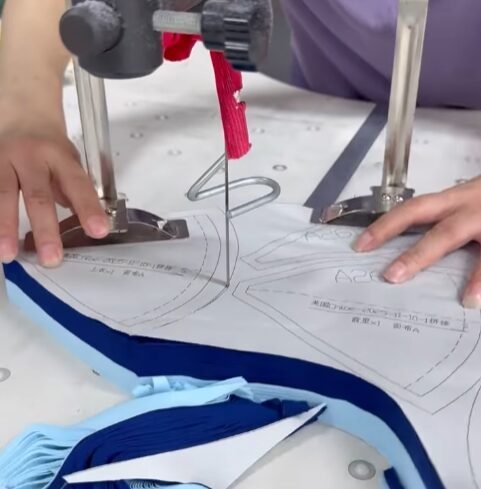
After preparation, the fabric is spread evenly on the cutting table. Because swimwear fabric is slippery and elastic, the layers need to be kept flat and controlled during cutting.
In bulk production, an electric cutting knife is commonly used for efficient and accurate cutting. The fabric layers can be fixed with clips or other holding methods to reduce shifting during the cutting process. The goal is not to press or stretch the fabric, but to keep it stable enough for clean cutting lines.
4. Stitch Type and Thread Specifications
The way a swimsuit is sewn affects not only how it looks, but also how it stretches, feels, and holds up in use. Because swimwear is made from elastic fabrics, the seam construction must allow movement while keeping the garment secure and comfortable.
Common Swimwear Stitching Methods
1. Zigzag Stitch
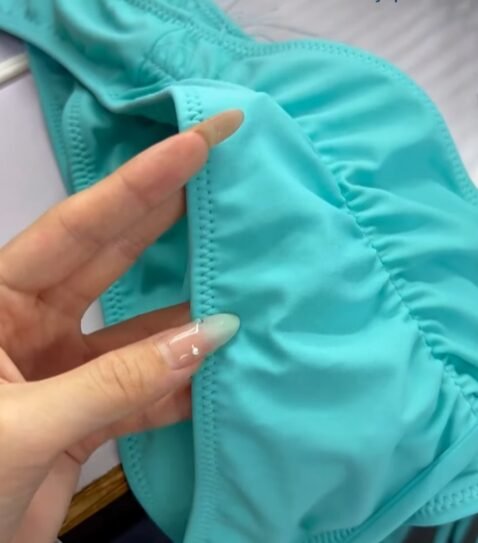
Zigzag stitching is one of the most common methods used in swimwear. Because the stitch can stretch with the fabric, it works well in areas that need flexibility.
It is often used when attaching elastic around leg openings, waist openings, or underbust areas. A good zigzag stitch helps the seam move with the body without breaking too easily under tension.
2. Binding Edge
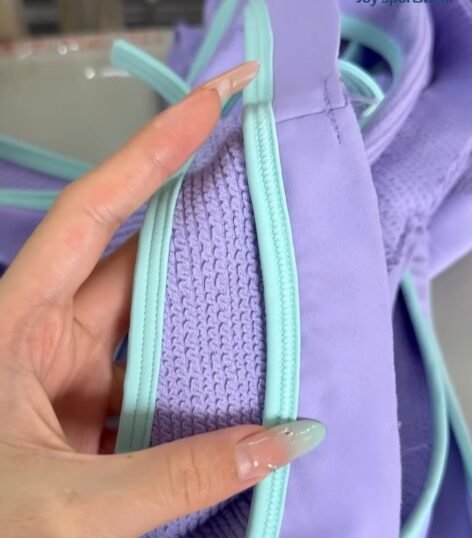
Binding is commonly used to finish the edges of swimwear neatly. In this method, a strip of fabric is folded over the raw edge and stitched down to create a clean and secure finish.
This method is often seen on neckline edges, armholes, straps, and bikini edges. It helps improve appearance, adds structure, and gives the edge a smoother feel against the skin.
3. Twin-Needle Stitching
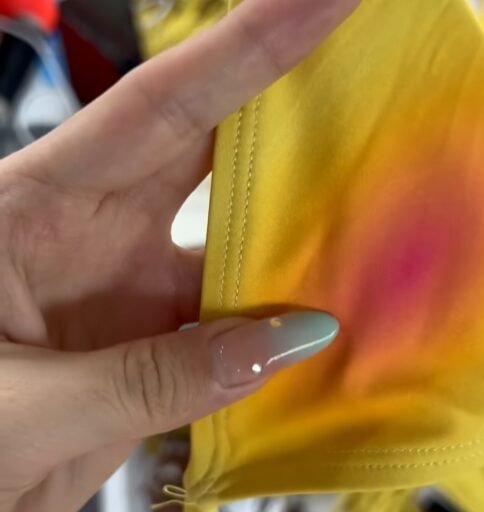
Twin-needle stitching creates two parallel rows of stitches on the surface. It is often used when a clean, balanced, and more polished finish is needed.
In swimwear, this method is commonly used on folded edges or elastic-secured areas. It can help keep the edge flat and add extra seam stability while maintaining a neat appearance.
4. Seamless Construction
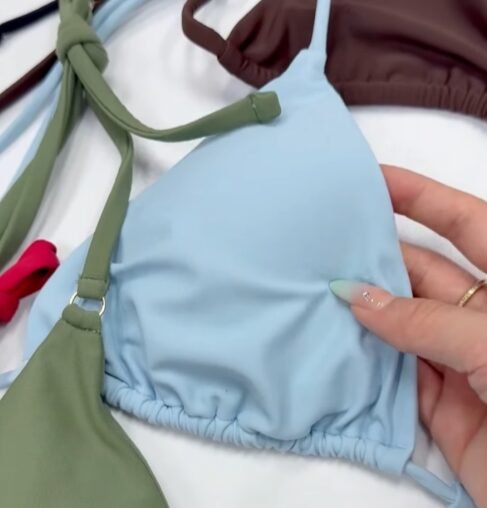
Seamless swimwear usually refers to bonded or clean-finish construction that reduces the look and feel of traditional seams. Instead of relying only on regular stitching, some edges are folded, bonded, or finished in a way that creates a smoother and more minimal appearance.
This method is popular in modern swimwear because it looks clean and feels soft against the body. It can also reduce bulk, although it requires the right fabric and suitable production techniques.
5. Four-Needle Six-Thread Stitching
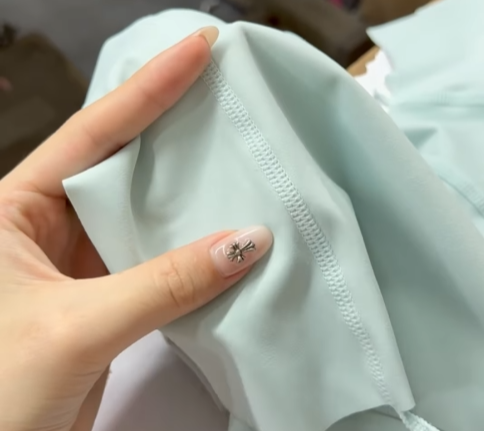
Four-needle six-thread stitching is used when more seam strength and durability are needed. This construction creates a more secure seam and is suitable for stretch garments that must handle repeated pulling during wear.
In swimwear production, it may be used in areas where the seam needs both flexibility and reinforcement. Compared with simpler seam constructions, it offers stronger holding power and can help improve durability in high-stress parts of the garment.
Thread Selection
Swimwear requires sewing threads that can handle stretch, water exposure, and repeated wear. In production, thread choice depends on both the seam position and the sewing method.
High-quality polyester thread is often used because it offers good strength, color stability, and resistance to chlorine, seawater, sweat, and sunlight. For areas that need more softness and flexibility, textured polyester thread, or woolly nylon thread may be used, especially in overlock seams, binding, coverstitching, and four-needle six-thread construction.
5. The Sampling Process
A swimsuit usually needs more than one sample before it is ready for bulk production.his is because swimwear fit depends on fabric stretch, lining, and how the garment sits on the body.
In our production process, sampling is used to check both the design and the technical details before bulk orders begin.
Prototype Sample (Proto)
The first sample is made with the fabric intended for the final product whenever possible. This allows the customer to check the real stretch, hand feel, thickness, coverage, and sewing quality from the beginning.
If the final fabric requires custom dyeing or a special color, we may use an available stock color for the first sample to save development cost and time. In this case, the purpose of the first sample is to confirm the fit, pattern, workmanship, and overall construction before moving into color-specific production.
2. Revised Sample
After the customer receives and tries on the first sample, they may request changes. These changes may involve fit adjustment, strap length, cup shape, leg opening height, or coverage.
A revised sample is then made based on this feedback. For swimwear, two to three rounds of sample adjustment can be normal, especially for new designs or styles that require a closer fit.
3. Pre-Production Sample
Once the fit, fabric, trims, sewing method, and design details are confirmed, a pre-production sample is made before bulk production.
The pre-production sample represents the approved standard for the bulk order. It is used as a reference for cutting, sewing, quality inspection, and final packaging. After the customer approves this sample, the factory can follow the confirmed specifications for mass production.
This step helps reduce misunderstandings and keeps the final bulk order consistent with the approved sample.
6. Quality control measures
Quality control is an essential part of swimwear manufacturing. For swimwear, small issues such as inaccurate sizing, loose stitching, or poor fabric performance can affect both the appearance and wearing experience of the final product.
Manufacturers usually check the following key points before shipment.
- Sizing and Fitting
During quality inspection, measurements are checked against the confirmed specifications, including bust, waist, hip, length, leg opening, strap length, and other key points depending on the style.
- Seams and Stitching
Seams should be clean, secure, and suitable for stretch fabrics. Inspectors check for loose threads, skipped stitches, broken seams, uneven stitching, and poor seam tension.
- Fabric and Color
The fabric should be the right weight and feel for swimwear. Colors should be vibrant and consistent throughout the trunks. Inspections ensure the swimwear look and feel exactly as designed.
- Durability
Swimwear should keep its shape and appearance after repeated use. Quality control may include checking fabric strength, seam durability, elastic recovery, lining stability, colorfastness, and resistance to common swimwear conditions.
A good inspection process helps reduce defects, maintain consistent quality, and make sure the final products meet the approved design and production standard.
7. Labels, Hardware, and Branding Details
Brand identity components on swimwear require unique materials to ensure they do not fail after exposure to seawater or pool water.
Main Labels & Care Labels
- Technical Specification: Labels used in swimwear should be soft, durable, and resistant to water exposure. Heat-transfer or printed labels should stretch with the fabric without cracking, peeling, or fading too quickly.
- Woven Labels: Woven labels are still used in swimwear, but they must be soft and carefully placed. Rough or bulky labels can feel uncomfortable when the swimsuit is wet or stretched.
- Printed Labels: Printed care labels are another comfortable option. The print should stay clear after repeated washing and exposure to chlorine, saltwater, sweat, and sunscreen.
External Hardware & Custom Accents
- Metal Hardware: Rings, sliders, hooks, and logo plates should be rust-resistant and smooth against the skin. The finish should remain stable after exposure to pool water, seawater, and sunlight.
- Plastic or Resin Hardware: Lightweight plastic or resin trims can be used for a softer feel. They should be strong enough for repeated stretching and movement.
- Custom Logo Details: Logo plates, cord ends, and decorative trims should match the swimsuit design without adding too much weight or discomfort.
8. Choosing the Right Swimwear Production Model
Before starting bulk swimwear production, it is important to choose a production model that matches your team, budget, and supply chain experience.
In swimwear manufacturing, the two common cooperation models are CMT and full package production.
CMT (Cut, Make, Trim) Production
Under this model, the customer provides the main materials and production requirements, while the factory is mainly responsible for cutting, sewing, and finishing the garments.
This model can work well when the customer already has reliable fabric and trim suppliers. It gives more control over material selection, pricing, color development, and supplier relationships.
However, CMT also requires stronger coordination. The customer needs to make sure all materials arrive at the factory on time and in the correct quantity. If one material is delayed or unsuitable, the production schedule may be affected.
FPP (Full Package Production)
Full package production means the factory supports more steps of the production process. Based on the customer’s tech pack, reference sample, or design requirements, the factory can help source fabrics, develop samples, arrange trims, handle bulk production, inspect quality, and prepare packaging.
For swimwear, this model is often more efficient because fabric stretch, lining, elastic tension, color matching, and sewing methods need to work together. When the factory manages these details, it can reduce communication gaps between material sourcing and garment production.
Full package production is usually suitable for customers who want a more streamlined process. It saves time and reduces the need to coordinate multiple suppliers. The unit price may look higher than CMT, but it often includes more service, sourcing work, development support, and production management.
Which Model Is Better for Swimwear?
There is no single best model for every order.
CMT gives more direct control over materials, but it also requires more management from the customer. Full package production is easier to manage and is often more practical for new swimwear projects, custom designs, or customers without a complete sourcing network.
For many swimwear orders, a flexible model works best. The customer may provide certain key materials, while the factory helps source the rest. The most important point is to confirm responsibilities clearly before production begins.
A clear production model helps avoid delays and ensures that the final swimwear matches the approved sample.
Conclusion
You now have everything you need to bring your swimwearto life from fabric and pattern making to stitch techniques and quality control.
The next step is finding the right production partner. Joy’s swimwear manufacturer team handles the full process end-to-end from fabric sourcing, tech packs, sampling, and bulk production from 50 pieces per colour.
Get in touch and let’s get your collection into production.