
Developing a junior bikini line is one of the trickiest balancing acts in the fashion industry. You’re designing for a demographic that is outgrowing the “cute” aesthetic of childhood but isn’t quite ready for the hyper-mature cuts of adult swimwear.
The junior market represents a growing segment for swimwear brands, offering long-term potential when approached with careful design, responsible positioning, and clear market understanding.
Here is your practical guide to building a brand that wins over both picky teens and protective parents.
1. Understanding the Junior Market Gap in Swimwear Production
The junior swimwear market is not simply a scaled-down extension of women’s collections. From a product development and manufacturing perspective, junior customers represent a transitional segment with distinct fit, comfort, and design requirements.
In most cases, junior bikini lines involve two key decision-makers:
- The end user often seeks modern, trend-aware designs that feel age-appropriate and confident.
- The buyer(typically a parent or retailer)—prioritizes coverage, comfort, sun protection, and overall product value.
Successful junior swimwear production balances these expectations through thoughtful design and reliable construction.
The Trend Cycle:
Trends continue to play an important role in shaping junior bikini collections, as visual culture and digital platforms influence how younger audiences engage with fashion.
However, in junior swimwear development, trends are typically interpreted through softer color palettes, clean silhouettes, and sporty or minimalist aesthetics rather than overly mature design elements. This approach allows brands to stay current while maintaining responsible positioning in the junior market.
2. Design & Aesthetics
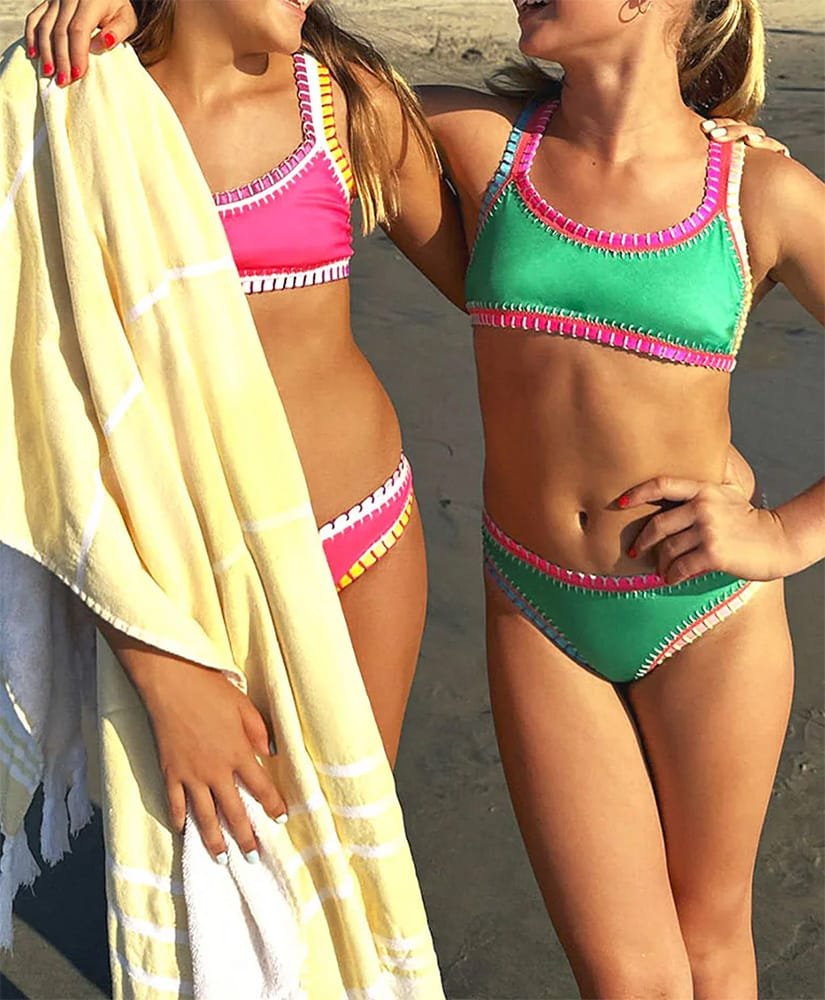
Success in junior swimwear lies in modesty-forward fashion. You want pieces that feel trendy but provide security.
Key Silhouettes to Consider:
- High-Waisted Bottoms: Extremely popular because they offer a vintage look while providing more stomach coverage.
- Racerback & Tankini Hybrids: Perfect for active juniors who want to swim or play beach volleyball without worrying about a wardrobe malfunction.
- Adjustable Everything: Tie-side bottoms and adjustable straps are essential, as junior bodies can change significantly in a single season.
Design “Don’ts”:
Avoid overly “cheeky” cuts or deep plunges. Not only do these often alienate parents, but they can also trigger negative feedback on retail platforms, harming your brand’s reputation.
3. The Technical Side: Sizing and Fabric
Because junior bodies are diverse, your sizing chart is your most important asset.
Precise Sizing
Don’t rely on “Small, Medium, Large.” Use age-based sizing (e.g., 10, 12, 14) but include height and hip measurements.
* Pro Tip: Incorporate removable padding in bikini tops for sizes 12 and up. It provides options for those who want extra coverage and those who don’t need it yet.
Performance Fabrics
- UPF 50+ Protection: This is a non-negotiable selling point for parents.
- Chlorine Resistance: Juniors spend more time in pools than the average adult. Use high-quality Lycra or recycled nylon (like Econyl) to prevent sagging and fading.
- Double Lining: Ensure every piece is fully lined to avoid transparency when wet—a common quality complaint in cheaper junior lines.
4. Marketing: How to Reach Your Audience
Marketing to juniors requires a dual-track strategy. You have to sell the “vibe” to the kid and the “value” to the parent.
For the Junior :
- Content Creator Partnerships: Partner with age-appropriate influencers. Avoid high-glamour, “model-esque” shoots in favor of authentic, fun, and active lifestyle content.
- UGC (User-Generated Content): Encourage customers to tag your brand in “beach day” photos.
For the Parent :
- Transparency: Clearly label your modesty features and fabric safety.
- Sustainability: Younger parents (Millennials) are highly motivated by eco-friendly practices. Highlight your use of recycled materials or ethical manufacturing.
5. Compliance and Safety Standards
When manufacturing for minors, you must adhere to stricter regulations than adult lines.
| Feature | Standard Requirement |
| Drawstrings | Avoid long neck ties that could pose a strangulation hazard (check local CPSC or EU regulations). |
| Dyes | Use OEKO-TEX certified non-toxic dyes to ensure no skin irritation. |
| Small Parts | Ensure beads, sequins, or charms are securely fastened to prevent choking hazards for younger siblings. |
Frequently Asked Questions
What is considered a junior bikini line?
A junior bikini line typically refers to swimwear designed for younger customers, with an emphasis on balanced coverage, comfort, and age-appropriate styling. Unlike adult bikini collections, junior bikini lines focus on fit, proportion, and design details suited to developing body shapes and family-oriented use scenarios.
How do junior bikini sizes differ from women’s sizes?
Junior bikini sizes are developed using different body proportions than women’s sizing. They usually feature adjusted bust, waist, and hip ratios, as well as modified strap lengths and coverage levels.
Can swimwear manufacturers help brands customize junior bikini collections?
Yes. Many swimwear manufacturers offer OEM and ODM services for junior bikini lines, including custom patterns, fabric selection, size grading, color matching, and private labeling. This allows brands to create collections that align with their market positioning and design requirements.
What fabrics are commonly used in junior bikini production?
Youth and junior bikini production mainly uses high-stretch synthetic blended fabrics. These fabrics are typically based on nylon (polyamide) or polyester, with approximately 15%–20% spandex (elastane) added to ensure excellent elasticity, shape retention, and long-lasting fit.
Conclusion
Developing junior bikini lines requires more than trend awareness. Brands must carefully consider design, sizing, comfort, fabric selection, and responsible positioning throughout the entire development process.
Working with an experienced swimwear manufacturer allows brands to smoothly develop junior bikini collections that align with market needs.From design to bulk production, the right manufacturing partner can help bring junior swimwear ideas to life with confidence and care.