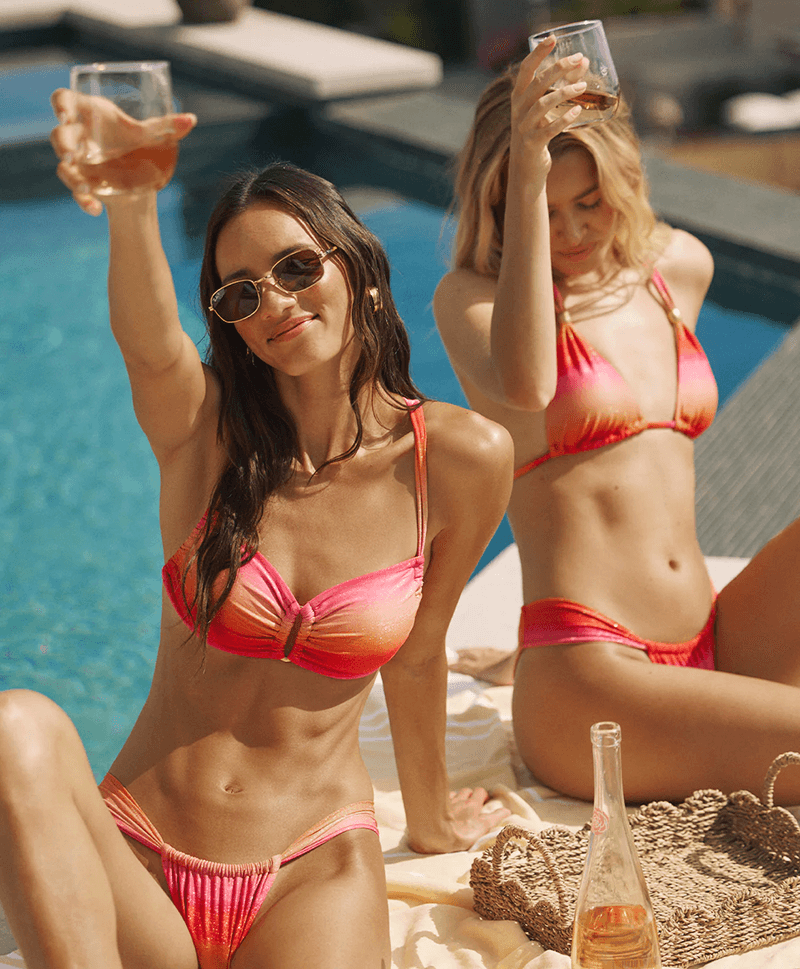
Cover-ups are an essential part of modern swimwear collections. Designed to be worn over swimsuits, they provide style, comfort, sun protection, and modesty, while helping consumers transition effortlessly from the beach or pool to casual social settings.
For swimwear brands, understanding the different types of cover-ups is key to building a competitive, trend-aligned product line.
In this guide, we explore the most popular types of cover-ups, categorized by garment style, function, and material, to help you choose the right options for your market.
What Is a Cover-Up?
A cover-up is a lightweight garment worn over swimwear. It can range from sheer and decorative to structured and functional, depending on the design and use case. Cover-ups are widely used at beaches, resorts, poolsides, cruises, and tropical vacations, making them a high-demand category in the global swimwear market.
Types of Cover-Ups by Garment Style
1. Sarongs / Pareos
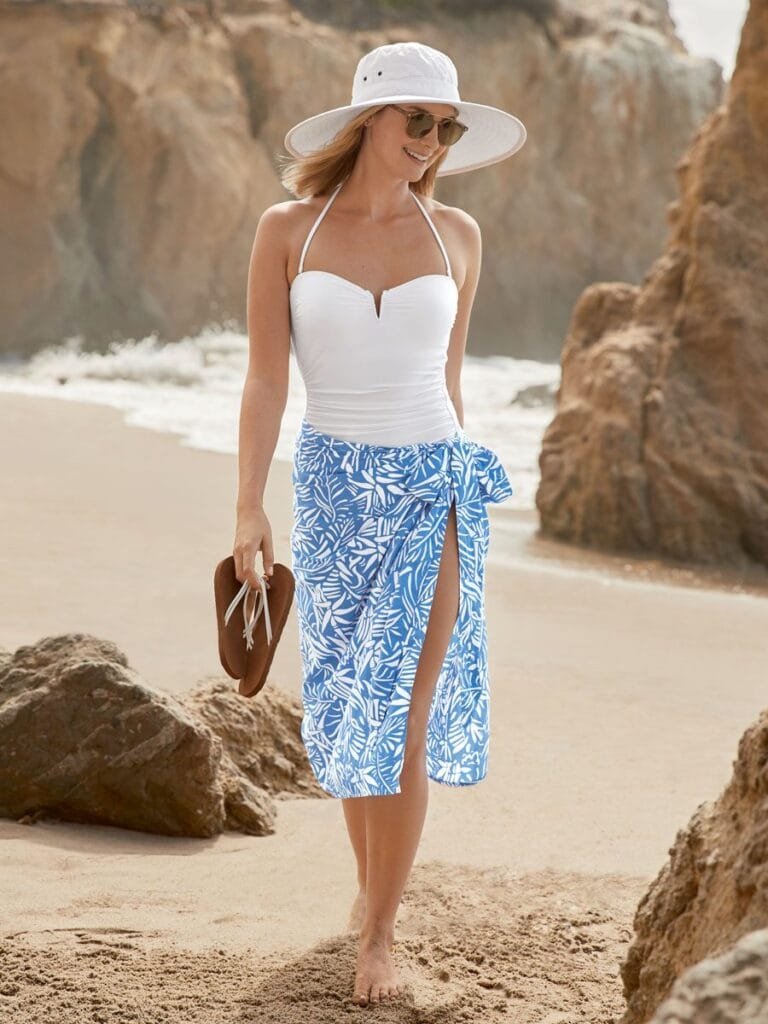
Sarongs, also known as pareos, are one of the most traditional and widely recognized cover-up styles. They are typically rectangular pieces of lightweight fabric that can be tied in multiple ways—around the waist, over the shoulder, or as a halter-style dress.
Key features:
- Lightweight and packable
- Adjustable sizing (ideal for retail)
- Popular in tropical and resort markets
Best for: Minimalist collections, travel-friendly swimwear lines
2. Kaftans / Caftans
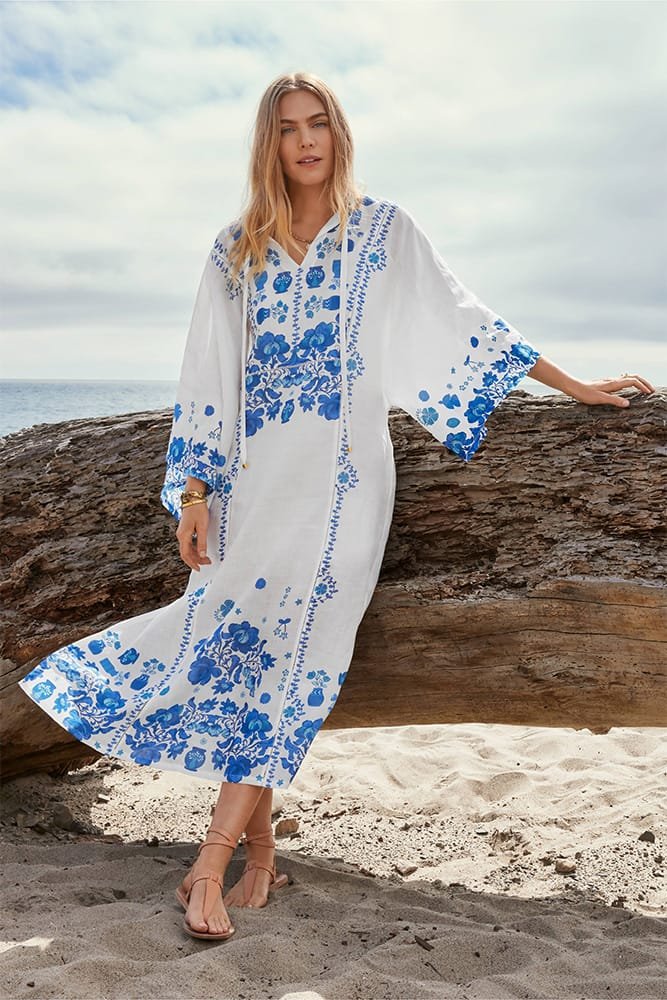
Kaftans are loose, flowing garments with wide sleeves and a relaxed silhouette. They offer excellent coverage while maintaining a luxurious, resort-ready appearance.
Key features:
- Comfortable and breathable
- Suitable for all body types
- Often used in premium or resort collections
Best for: Luxury brands, resortwear, Middle Eastern & European markets
3. Kimonos
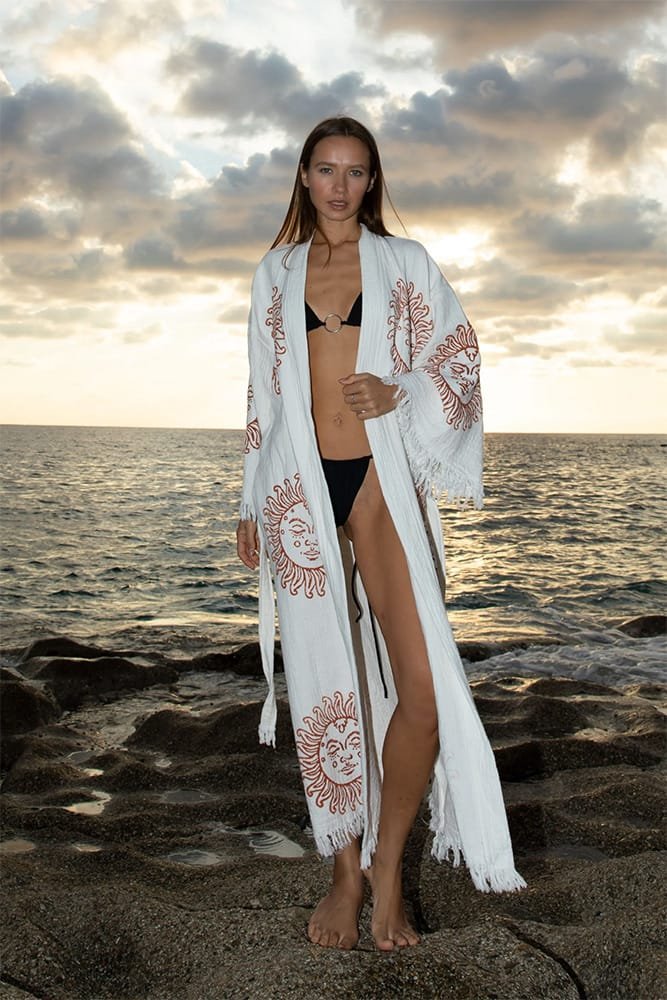
Kimono cover-ups are inspired by traditional Japanese silhouettes but adapted for modern beachwear. They are typically open-front garments, often sheer or semi-sheer, designed for layering.
Key features:
- Stylish, fashion-forward look
- Easy to pair with bikinis or one-pieces
- Popular in social media and influencer marketing
Best for: Trend-focused brands, younger demographics
4. Tunics
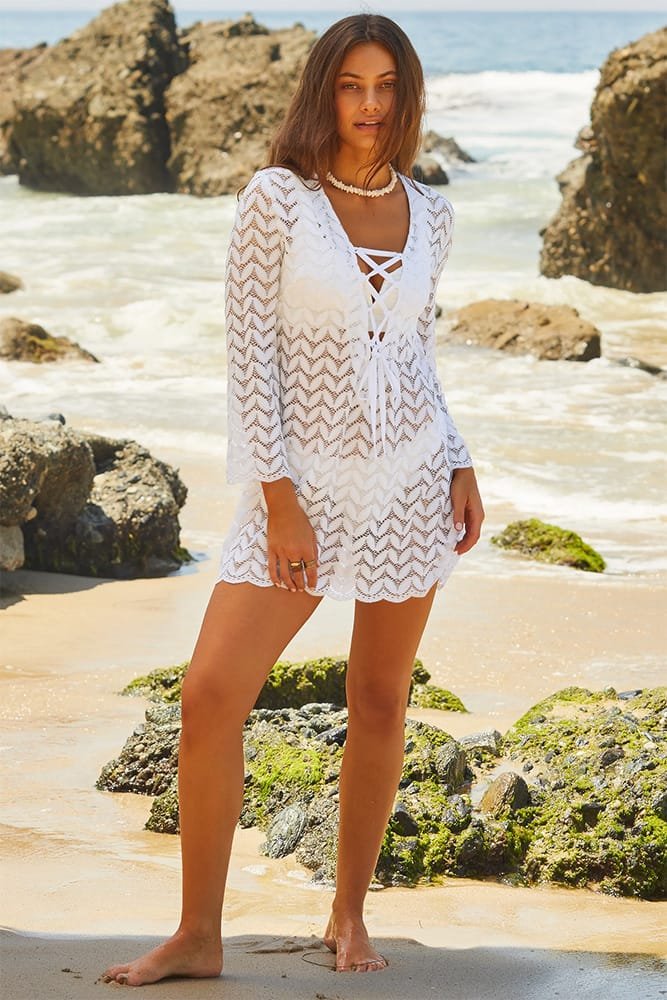
Tunics are simple, long tops that usually fall over the hips or mid-thigh. They offer moderate coverage while maintaining an easy, relaxed look.
Key features:
- Easy to wear and remove
- Works well with bikinis and tankinis
- Often cotton or rayon
Best for: Everyday beachwear, mass-market retail
5. Dresses & Sundresses
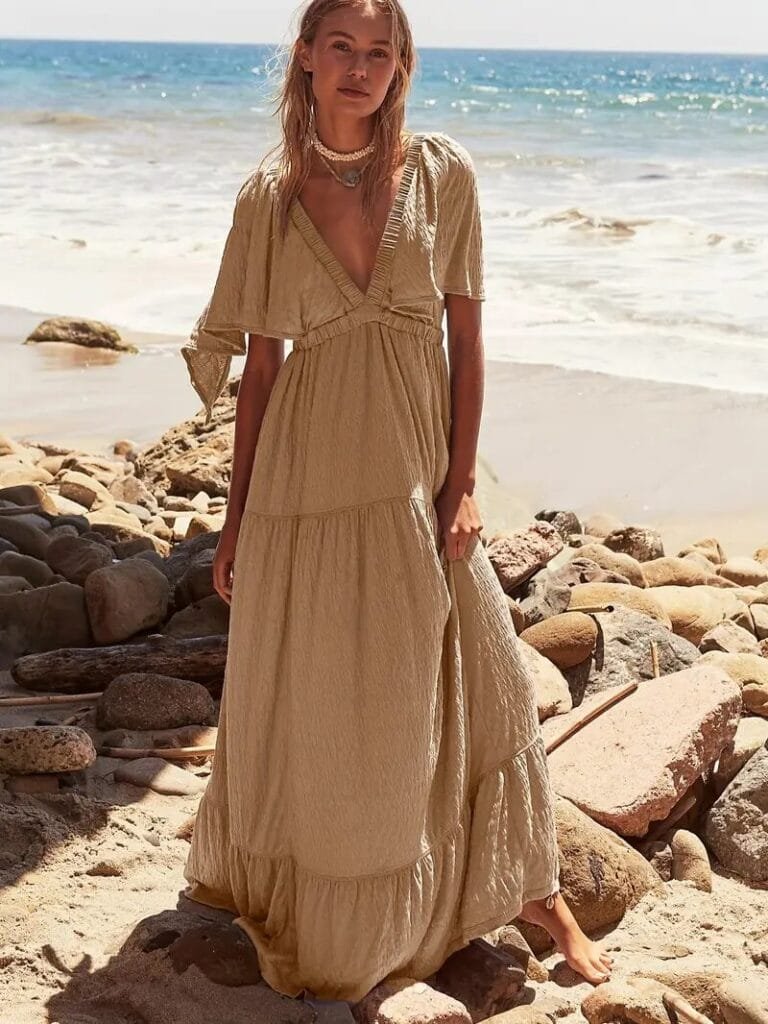
Cover-up dresses include maxi dresses, mini dresses, and sundresses designed specifically to be worn over swimwear. These pieces blur the line between swimwear and casual summer fashion.
Key features:
- Strong “beach-to-street” appeal
- Can double as casual summer wear
- High perceived value
Best for: Brands targeting versatility and lifestyle wear
6. Rompers / Playsuits
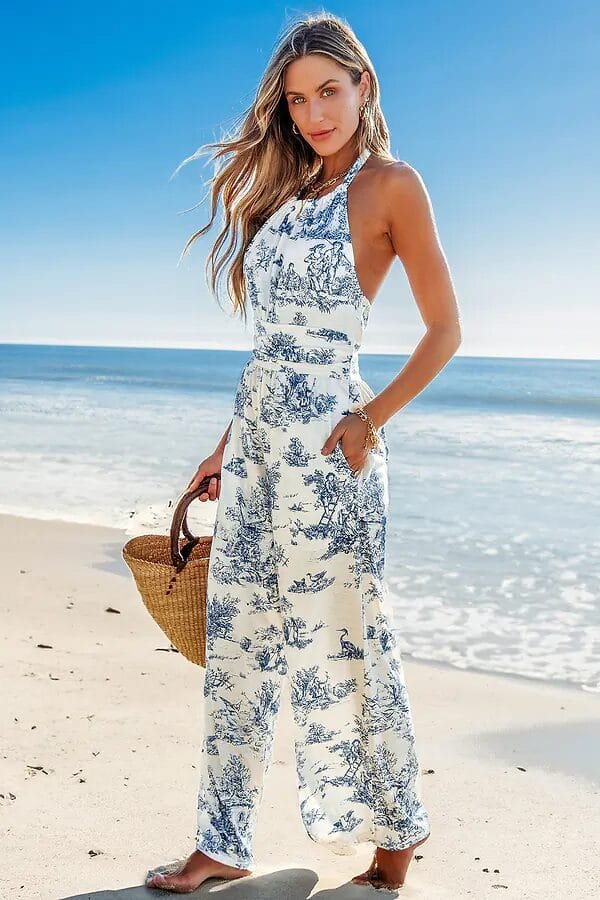
Rompers and playsuits are one-piece garments that combine tops and bottoms into a single design. As cover-ups, they offer full coverage with a modern, youthful style.
Key features:
- Trendy and youthful
- Secure fit for movement
- Suitable for beach clubs and resorts
Best for: Fashion-forward collections, Gen Z & Millennials
7. Skirts
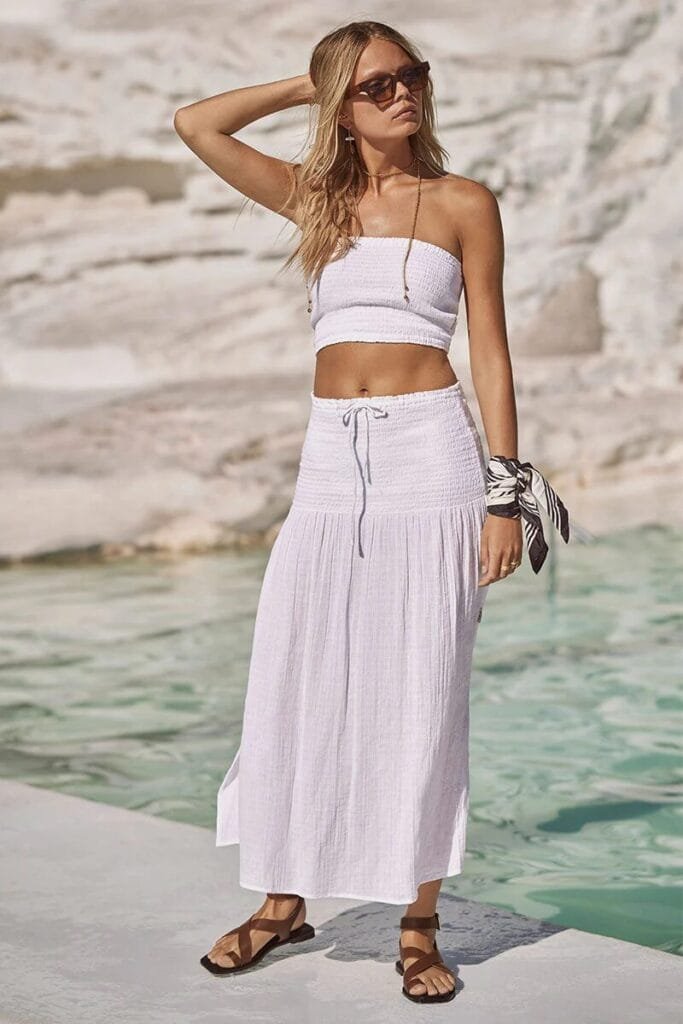
Cover-up skirts are designed to be worn over bikini bottoms and come in various styles, including wrap skirts, elastic-waist skirts, and button-front designs.
Key features:
- Easy add-on item
- Pairs well with bikini tops
- Good upsell product
Best for: Mix-and-match swimwear collections
8. Shorts & Pants
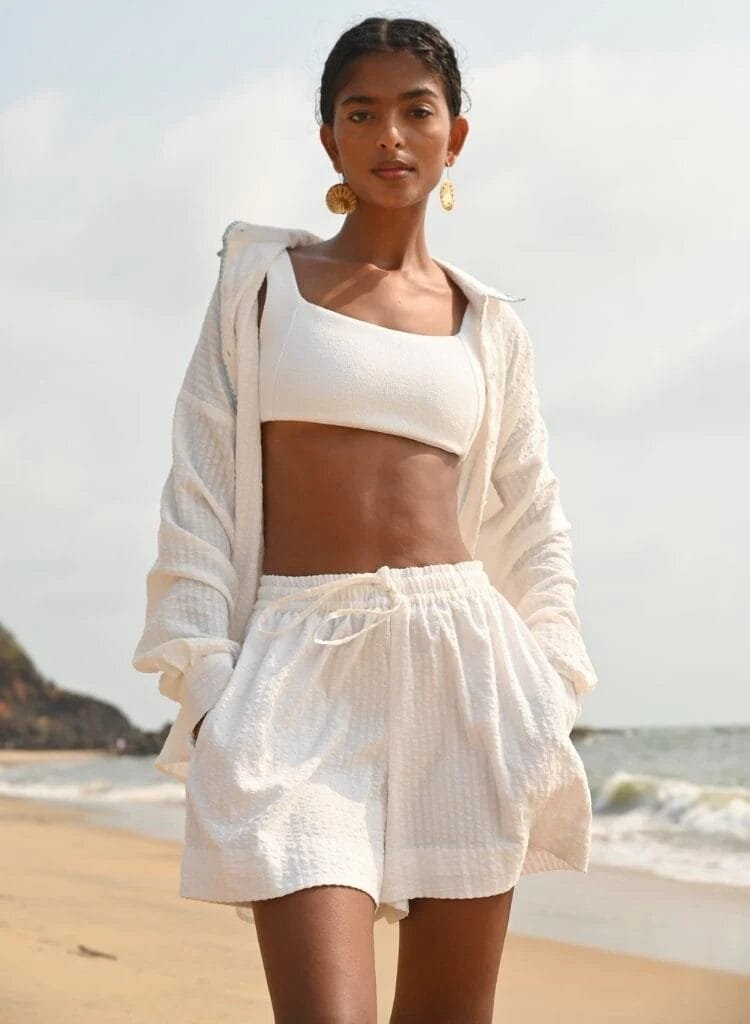
Shorts and pants provide lower-body coverage and are often chosen by customers seeking comfort or modesty. These cover-ups can be sporty or casual, depending on the fabric and cut.
Key features:
- Comfortable and practical
- Popular for active beachgoers
- Suitable for unisex or modest styles
Best for: Sporty, casual, or modest swimwear lines
9. Rash Guards & Swim Tees
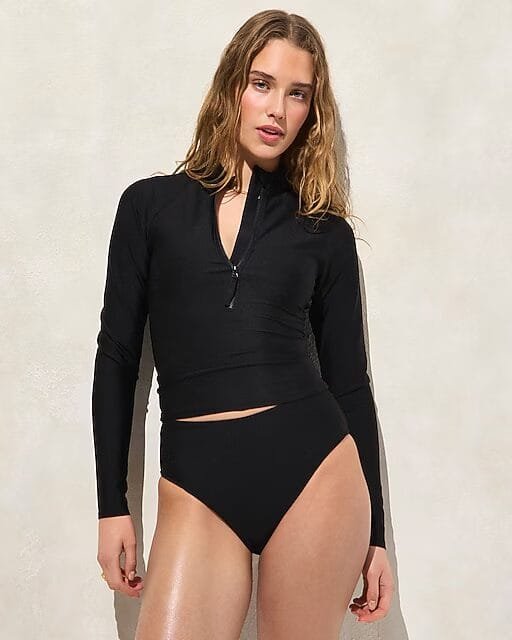
Rash guards and swim tees are functional cover-ups typically made from stretch performance fabrics with UV protection.
Key features:
- Sun protection (UPF rated)
- Quick-drying and durable
- Often used for surfing or swimming
Best for: Activewear, children’s swimwear, sun-safe collections
Types of Cover-Ups by Material & Design
Crochet & Lace Cover-Ups
Sheer and decorative, crochet and lace styles offer a boho-chic aesthetic and are highly visual for marketing.
Advantages:
- Lightweight and breathable
- Strong visual appeal
- Popular for social media marketing
Lightweight Woven Fabrics
Common materials include cotton, rayon, gauze, chiffon, and linen, chosen for breathability and comfort.
Advantages:
- Soft on skin
- Ideal for hot climates
- Easy to customize with prints or embroidery
Mesh & Performance Fabrics
Often used in sporty or modern designs, mesh fabrics provide ventilation while maintaining coverage.
Advantages:
- Quick-drying
- Lightweight
- Functional yet stylish
How Brands Should Choose the Right Cover-Up Types
Choosing the right cover-up styles is not only a design decision—it is a commercial strategy. The best-performing brands select cover-ups based on target customers, usage scenarios, brand positioning, and climate & season. Below are the key factors brands should evaluate before developing or sourcing cover-ups.
1. Define Your Target Market
Different cover-up types appeal to different consumer groups. Before choosing styles, brands must define who they are selling to.
Key Questions to Ask:
- Is your customer fashion-driven or function-focused?
- Are they shopping for resort vacations, family trips, or active water sports?
- Do they value modesty, trendiness, or versatility?
2. Align Cover-Ups with Brand Positioning
Cover-ups should visually and emotionally match your brand identity.
Brand Positioning Guide:
- Minimalist / Modern brands → Clean silhouettes, neutral colors, mesh fabrics
- Boho / Lifestyle brands → Crochet, lace, fringe, ethnic prints
- Luxury brands → Premium fabrics, embroidery, flowing kaftans
- Sporty brands → Functional fabrics, UV protection, fitted cuts
3. Consider Usage Scenarios (Where Will It Be Worn?)
Consumers buy cover-ups based on real-life use, not just appearance.
| Scenario | Best Cover-Up Types |
|---|---|
| Beach & poolside | Sarongs, tunics, kimonos |
| Resort & cruise | Kaftans, maxi dresses |
| Beach clubs | Rompers, sheer dresses |
| Family vacations | Tunics, loose dresses |
| Water sports | Rash guards, swim tees |
| Travel | Lightweight, packable styles |
👉 Brands that clearly communicate “where to wear” see higher conversion rates.
4. Choose Materials Based on Climate & Season
Fabric choice directly affects comfort, cost, and customer satisfaction.
Fabric Selection Strategy:
- Hot climates → Cotton, rayon, gauze, linen
- Resort & luxury → Chiffon, silk blends, lace
- Active use → Polyester blends, UV-protective fabrics
- Fast-drying needs → Mesh, performance textiles
Offering multiple types of cover-ups helps increase average order value and strengthens your swimwear assortment.
Final Thoughts
Cover-ups are no longer just accessories—they are key fashion items that add versatility and value to any swimwear line. From classic sarongs to modern rash guards, understanding the different types of cover-ups allows brands to meet diverse customer needs and stay competitive in the global market.
If you’re developing or expanding your swimwear collection, we can help you bring your designs to life. From fabric selection and pattern development to sampling and bulk production, our team supports brands at every stage of the manufacturing process.